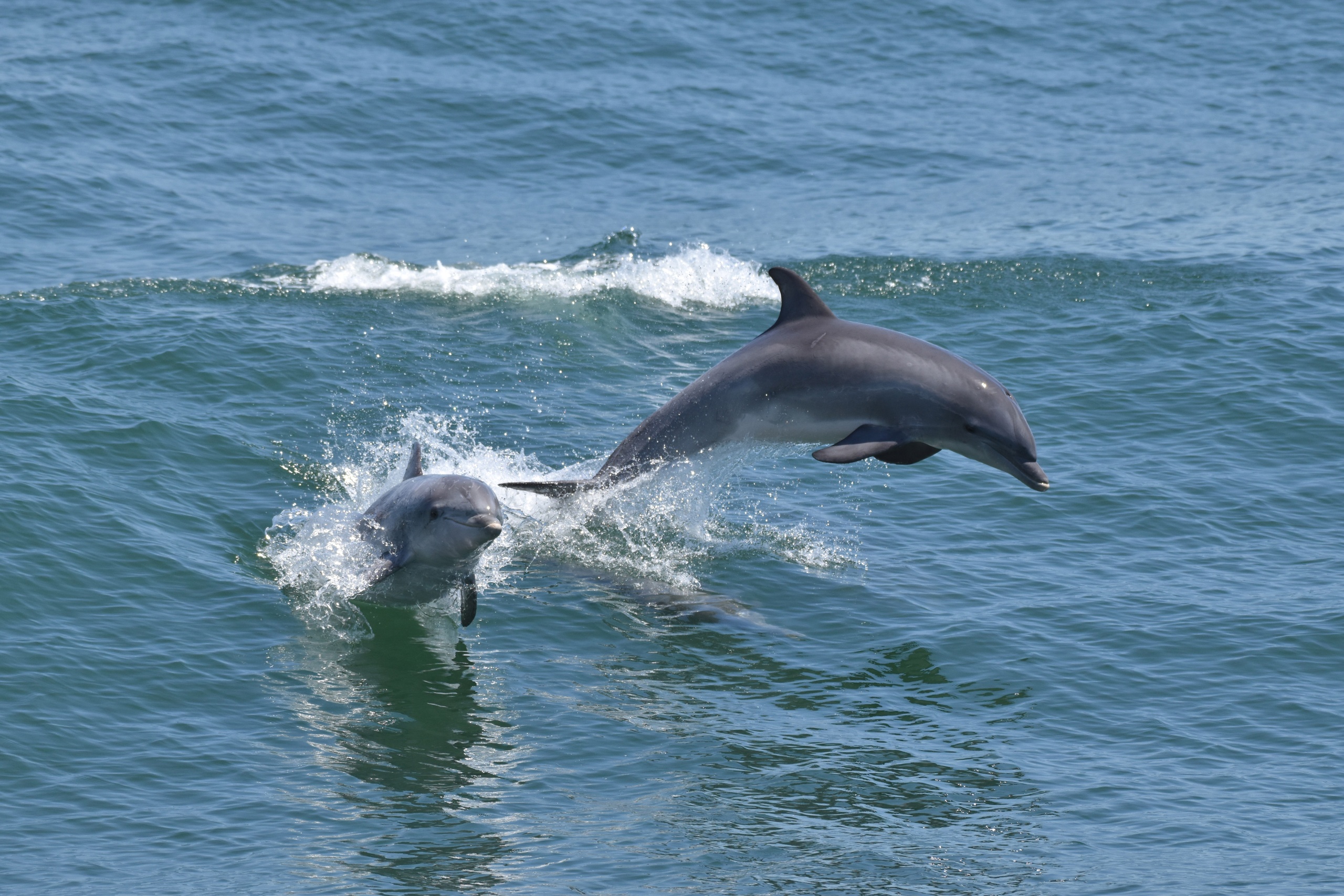
Bowers Beach sits at a quiet hinge between the open Atlantic and the shallow, productive waters of Delaware Bay. For generations the town has been defined by working boats, oyster racks, and a coastline of salt marshes that nurtures dense schools of fish. Where fish gather, dolphins follow; in Bowers the animals we most often see are Atlantic bottlenose dolphins—curious, social, and adapted to nearshore life. The bay’s shallow tidal flats and tidal-driven channels concentrate baitfish during spring high tides and summer nights, creating predictable foraging zones. That makes dolphin encounters here less about long-distance pelagic sightings and more about intimate, surface-level observations: bow-riding nearshore, coordinated feeding strands, and playful pods that arch through flat water within sight of the shoreline.
The place itself shapes the experience. Bowers Beach is small—low-slung houses, a handful of docks, and the smell of brine and diesel on the air—so you don’t need to be offshore to feel like you’re in among the animals. Kayakers glide into tidal creeks where dolphins sometimes parallel the channel; small charter boats launch from local slips for short bay cruises timed to tides and light. Because sightings are often close to shore, photographers can capture expressive portraits without heavy telephotos, and families can watch from piers or sandbars with minimal fuss. That accessibility makes Bowers a good option for travelers who want a low-effort, high-reward wildlife outing that pairs easily with crab shacks, birding stops, and the slower rhythms of Delaware’s bayshore communities.
But the intimacy of these encounters comes with responsibility. Dolphins are protected under federal law, and in a shallow bay environment it’s easy—sometimes too easy—for boats or paddlers to disturb feeding groups. The best experiences in Bowers are guided by local skippers and naturalists who know how to read tides, follow regulatory buffers, and prioritize the animals’ behavior over a close photo. Seasonality matters: late spring through early fall generally offers the most consistent sightings as water temperatures rise and bait concentrations peak. Weather patterns, moon phase, and tidal schedules also rearrange where fish and dolphins concentrate, so flexible timing—arriving at slack tide or a rising tide, or choosing morning hours when the bay is glassy—improves your odds. Onshore, combine a dolphin outing with oyster tasting, marsh walks, or a kayak trip through tidal creeks; or use a dawn or dusk excursion to catch golden light and cooler conditions for both animals and observers.
For the traveling naturalist, Bowers Beach is a study in small-scale coastal ecology: oyster reefs and eelgrass beds feeding baitfish, boats and bird flocks punctuating the horizon, and dolphins threading through it all. Whether you’re after a family-friendly shore sighting, a photographers’ dawn patrol, or a guided research experience, the town’s combination of working waterfront and bay dynamics creates a type of dolphin watching that’s immediate, approachable, and deeply tied to local maritime life.