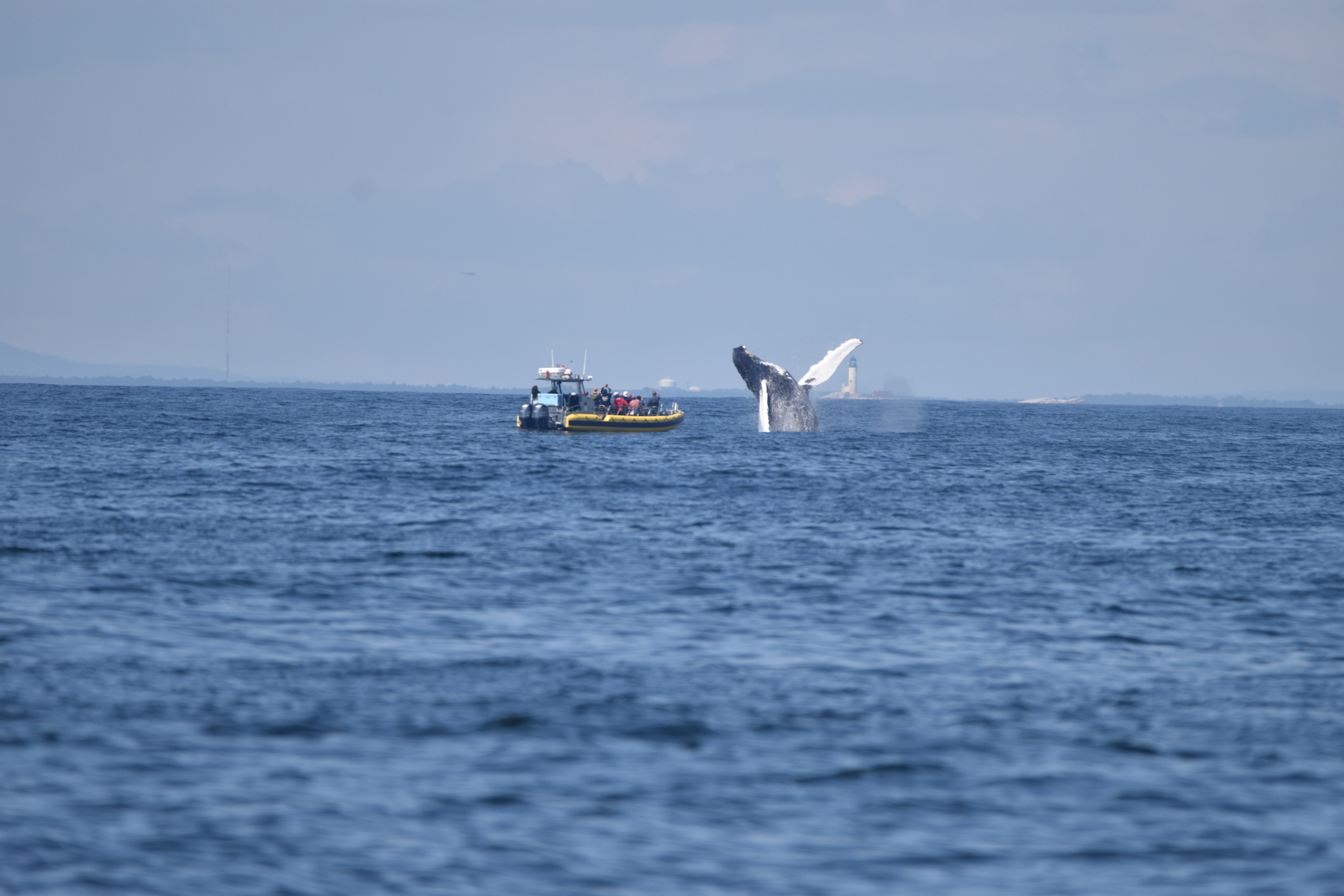
There’s a particular northern light off the Eliot shore that refracts differently when the Gulf of Maine is alive: it bounces off dorsal fins and the slick backs of humpbacks in the same way it hits the steel of a lobster boat. Eliot is not a whale-watch boomtown; it is a quiet seam between river, salt marsh, and open ocean where marine life surges in seasonal pulses. The town’s position on the Piscataqua estuary and easy access to coastal launch points make it a practical base for trips that cross tidal rips and slide into deeper channels where whales follow bait. The Gulf of Maine’s unusually rapid warming in recent decades has shifted prey and predator behavior—making local knowledge, timing, and flexible itineraries more important than ever for a successful sighting.
A whale watch out of Eliot feels like a conversation with New England’s maritime history: lobster boats cresting inshore, colonial-era granite marking headlands, and old wooden piers that creak with the same rhythm as the low, distant blows of a whale. That historic texture is part of the appeal, but the real draw is ecological. Humpback whales are the most commonly reported species during the season, often visible in dramatic surface behaviors—tail slaps, breaches, and prolonged bubble-net feeding—while minke and fin whales appear more opportunistically. Lesser-known residents and visitors—seabirds, porpoises, seals—compose the chorus, and on a good day a single trip can feel like a field guide come to life.
Practical considerations seat themselves alongside the poetry: tides matter; wind matters; the captain’s local reading of currents and bait concentrations matters. Eliot-based excursions are typically shorter than long-haul pelagics launched farther east, which makes them accessible for families and travelers who prefer a half-day at sea instead of a full expedition. That accessibility also opens the chance to pair whale watching with nearby coastal activities—sea kayaking in calmer estuary arms, shorebirding on mudflats, lighthouse photography along the coast, or a post-trip meal of fresh seafood in a nearby harbor town. Conservation-minded travelers will notice signs of stewardship: vessels operating under responsible-viewing guidelines, companies participating in local cetacean monitoring, and an increased emphasis on small-group tours to reduce disturbance. For anyone with a soft spot for salt and the sudden, considerate enormity of a whale, Eliot offers a dignified, authentic doorway to the Gulf of Maine’s marine life.