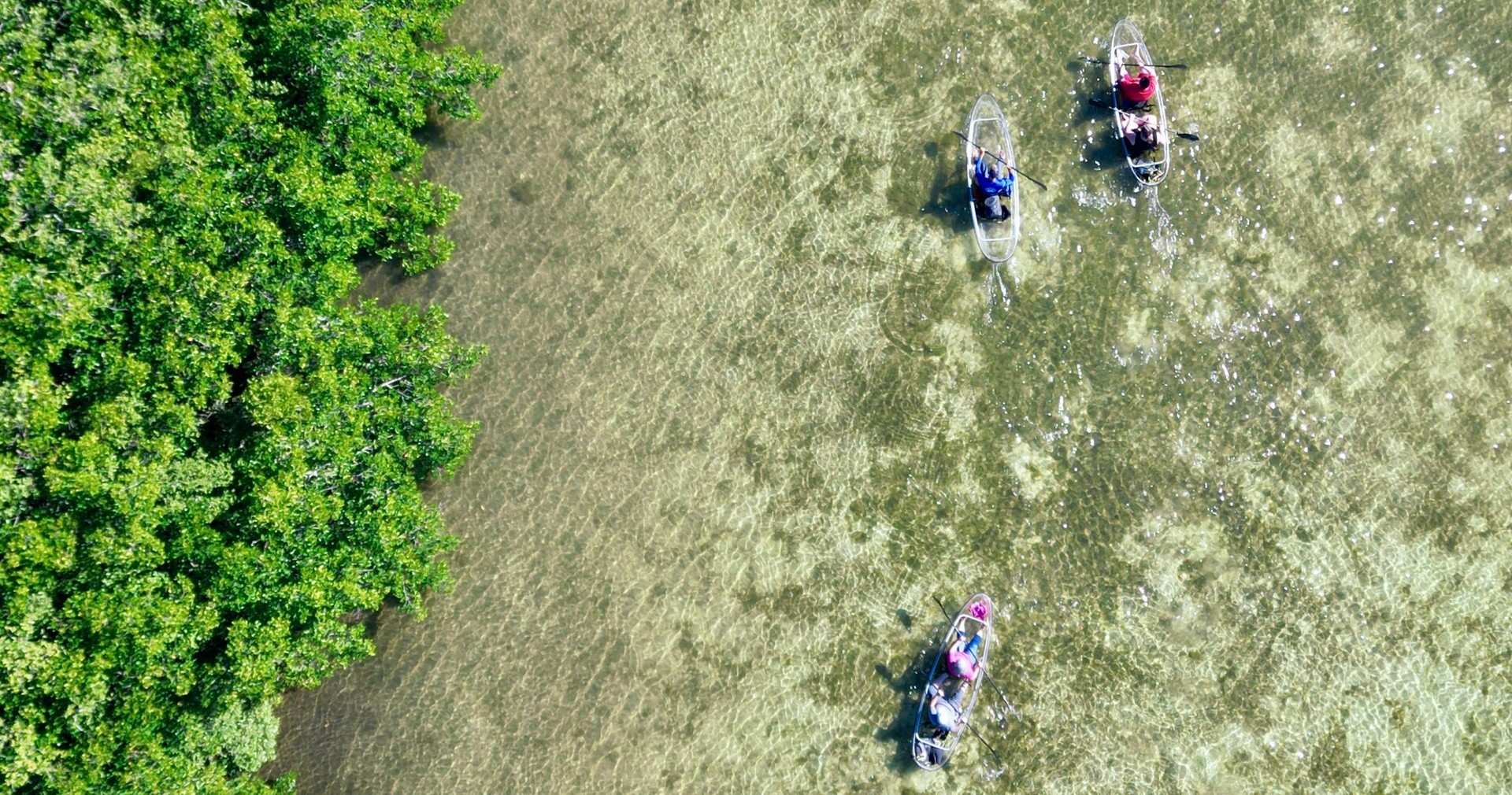
Paddling around Englewood is a study in gentle contrasts: quiet, glassy flats that reveal shoals of shimmering fish beneath the surface; narrow mangrove corridors where light falls in shafts and every bend promises another small discovery; broad blue openings where osprey hover over the water and bottlenose dolphins arc in the distance. The region sits where Pine Island Sound meets Lemon Bay, a mosaic of estuaries, oyster bars, seagrass meadows and barrier islands that together form a living classroom for paddlers. Because the water is shallow and the currents moderate in many spots, kayak excursions here are naturally accessible to beginners while still offering depth for the more experienced—navigational nuance, tidal planning, and wildlife timing become the real skills to master.
Kayaking in Englewood rewards a paced, observational style of travel. Launches are often quick—local parks, community boat ramps, and guided outfitters provide easy access—so a half-day excursion can reveal a surprising variety of environments. On any paddle you'll pass stands of red and black mangrove, cross wide seagrass plains carpeted in turtle grass, and skirt small islands where the Gulf's clean sand meets fan-shaped shells. These habitats support manatees, rays, juvenile fish, crabs, and migratory shorebirds; seasonal migrations and local feeding patterns shape the rhythms of the bay. For photographers and wildlife enthusiasts, the low angle of a sit-on-top or tandem kayak places you at eye level with the water's inhabitants and opens up opportunities for intimate encounters that are difficult to replicate from land.
Beyond nature, Englewood's human story is subtly woven into the paddling experience. Old fishing docks, shell middens on isolated keys, and small coastal communities reveal a history of working waterfronts and families who have long read the tides. Local outfitters and naturalists often blend environmental education into guided trips, helping paddlers understand the interplay between local fisheries, conservation efforts, and the delicate balance of estuarine ecosystems. For travelers, kayaking here is both active recreation and a way to connect with place—quiet, safe, and richly textured, it’s ideal for families, solo paddlers, and photographers alike.