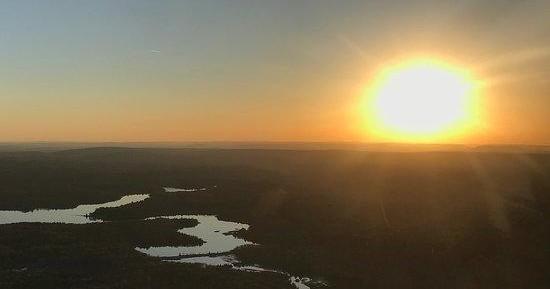
Frankford Township sits at a juncture of landscapes—the steep, forested spine of the Kittatinny Ridge, the broad floodplain of the Delaware River, and the patchwork of farmland and small towns that feels quintessentially Northeastern. From the air those contrasts become a story: a linear ridge that casts shadows at low sun, a river that snakes and widens, and forests that hold their seasonal drama in brilliant fall color and spring green. The compact scale of the region means meaningful variety in short flights; a 30- to 60-minute tour can deliver cliff-lined river corridors, wide valley views, and glimpses of neighboring Pennsylvania and the Pocono foothills.
The air-tour options around Frankford Township lean toward small, personal craft—two- and four-seat light planes, helicopters that can hover and bring ridgeline details into focus, and occasional hot-air balloon operations that drift over fields and creeks. That intimacy shapes the experience: you’re close to the landscape, you feel the light differently, and the pilot often doubles as a storyteller, pointing out geology, historic mills, migratory pathways, and the human imprint of roads and rail lines. For photographers and nature lovers, the low altitude and unobstructed lines of sight reward careful scheduling—early mornings and late afternoons produce the best light and calmer air.
Seasonality matters here. Spring brings a mosaic of wetland refills and the first flush of green; summer widens the agricultural palette and offers longer daylight for extended routes; and autumn is when the Kittatinny and surrounding hardwoods become a corridor of color that reads especially well from above. Winter can offer exceptional visibility on crisp days, but commercial operations are less frequent and flights are more weather-dependent. The area's proximity to regional hubs means Frankford Township is accessible for day trips, yet its skies feel remote—quiet airspace, generous landscape, and easy transitions between aerial touring and riverside paddling, ridge hiking, or small-town dining.
Practical considerations—safety, pilot qualifications, and weather—are integral to the experience. The region’s microclimates create quick changes in wind and visibility, and pilots prioritize visual flight rules; flight windows are chosen to minimize turbulence and maximize visibility. For travelers the payoff is immediate: the visual narrative of valley and ridge, geology and water, stitched into a short, powerful excursion that reframes how you think about the landscape beneath you.