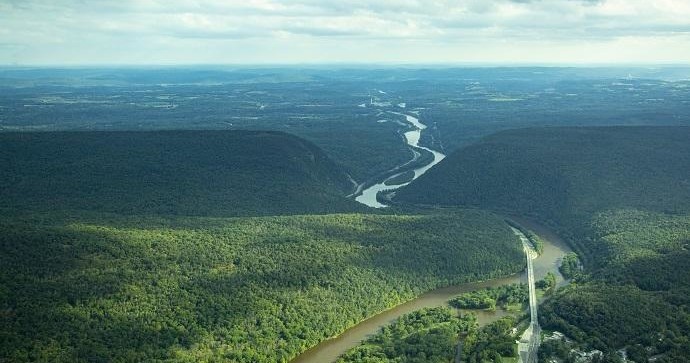
There’s a distinct hush that arrives in the moments before takeoff here — a hush that comes from open fields, quiet back roads, and ridgelines that run like the spine of the landscape. Newton sits near a transition zone: the low hills and farms of Sussex County give way to the more pronounced topography of the Kittatinny Ridge to the west. That intersection of open landing corridors, thermally active daytime air, and protected stretches of scenic forest makes the area a natural stage for multiple kinds of air activities.
For hot-air ballooning, Newton’s agricultural flats and small clearings make for gentle landings and spectacular sunrise or sunset flights. Balloons prefer early-morning windows when the winds are calm and thermals minimal; under those conditions the patchwork of fields, ponds, and the dark green hints of conifer stands read like a living map. For tandem paragliding enthusiasts, nearby ridgelines provide launch opportunities where ridge lift and manageable thermals allow longer, scenic glides that hug the contours of the land. Helicopter and light-aircraft scenic flights favor the same lower-traffic airspace; from above, the High Point overlook, serpentine streams, and old quarry ponds resolve into graphic lines and textures that shift dramatically with season. Aerial photographers and filmmakers prize Newton’s changeable palette: spring’s soft pastels, summer’s dense canopy, autumn’s saturated foliage, and the spare, graphic geometry of winter fields.
Beyond the visual payoff, Newton’s appeal is practical. The town functions as a quiet staging area where operators can access launch zones without the congestion of larger airports. For visitors, this means shorter walks from pickup points to launch, easier parking, and a friendlier cadence to the day — less time in transit, more time looking up. The landscape itself is forgiving; agricultural parcels offer wide landing options and local landowners are often familiar with occasional flights, which eases coordination. That said, air activities in and around Newton are shaped by the same variables anywhere in the Northeast: weather windows are narrow, mornings are advantageous, and operators prioritize the safety margins around wildlife areas and vineyards.
Culturally, flying here feels like a local rite rather than an extreme stunt. Families and photographers join dawn balloon festivals or book a tandem paragliding experience for a bucket-list view of the valley. Pilots value the predictable early-morning air and the scenic diversity within short distances — small lakes, farm stands, ridges, and town centers. Environmentally, operators and flyers in the region tend to be conscious of noise management and responsible landing practices; because much of the land is privately owned or managed for conservation, careful preflight coordination with landowners and adherence to local guidelines is standard practice.
If you’re planning an air-based adventure from Newton, expect a highly visual, seasonally driven experience with a strong emphasis on weather windows, operator communication, and combining the flight with ground-based exploration: sunrise landings that lead to farmhouse breakfasts, helicopter drop-offs for ridge hikes, or balloon mornings that segue into a day of leaf-peeping. Newton’s sky is approachable — intimate enough for first flights, varied enough to reward repeat visits, and quiet enough to let the landscape tell its own story from above.