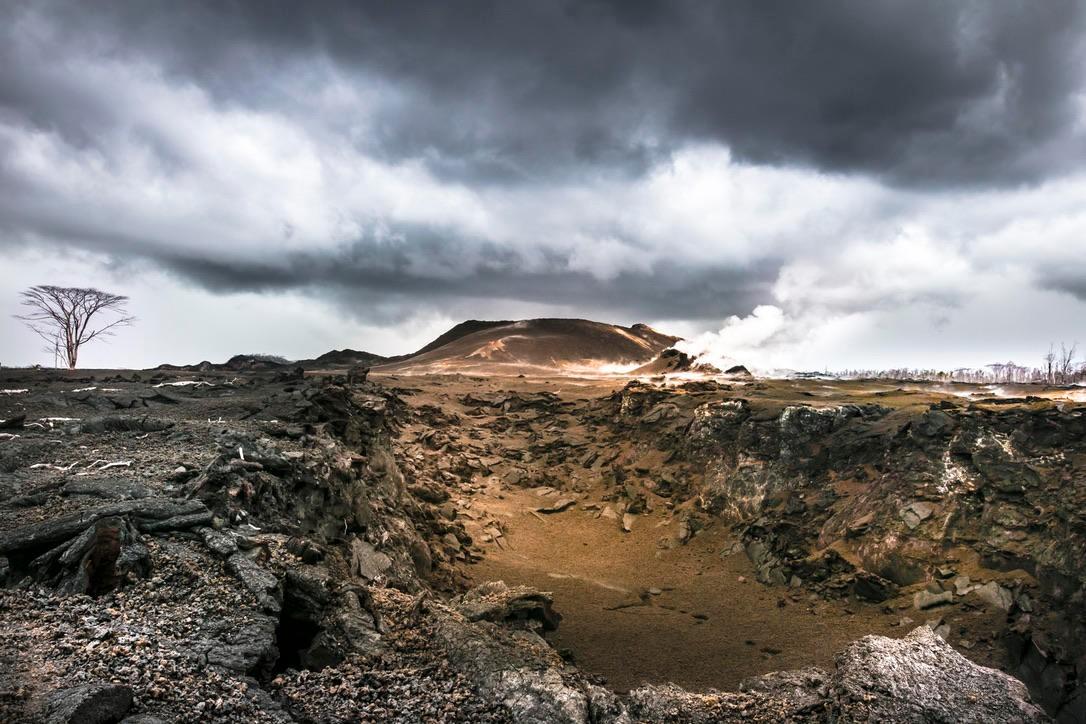
Pahoa sits on the softer edge of the island of Hawai‘i — where the raw geometry of fresh and old lava fields meets a slow tropical reclamation. Climbing here doesn’t follow the polished logic of sport crags or the tidy topo of guidebook classics; it is an improvisational practice, a study in texture, tide, and weather. Basalt flows produce a palette of features: sharp edges and bulbous pockets, fractured columns, and horizontal benches that make for memorable scrambling and bouldering sessions. Where the coastline drops away, sea cliffs offer dramatic exposure with surf as the soundtrack, while inland, jungle can conceal steep, surprisingly tall outcrops that require route-finding and a careful approach.
The appeal is both aesthetic and elemental. Climbers come for the geology — the way black lava absorbs heat, how the ocean spray polishes handholds, and how the land is still young enough to change in visible ways after eruptions. They also come for low-traffic experiences: short approaches, variable problems, and a sense of exploration that rewards humility and planning. But Pahoa is not a white-box climbing playground. Access is often dictated by land ownership, fragile ecosystems, and the aftershocks of recent volcanic activity; sections of coast or lava field can be closed on short notice, and many of the best features lie on uneven, sharp terrain that punishes slackness in footwear and attention.
That combination of intimacy and unpredictability shapes the local climbing ethos: prepare for heat and humidity, respect tide lines and cultural sites, and carry the gear and knowledge to climb unbolted or sparsely bolted lines. Complementary activities are abundant and logical — tidepool exploration after a morning boulder session, surf checks off black-sand beaches, or a restorative dip in a freshwater stream after a hot day on basalt. For travelers, the Pahoa climbing experience is more about curiosity than conquest. It rewards those who come prepared to move light, read rock, and improvise solutions where modern hardware is sparse and nature still writes the route descriptions.