THE ADVENTURE COLLECTIVE® · Independent discovery and booking for outdoor travel

Dust, date palms and open desert tracks — this full-day quad tour runs from Marrakech’s Palmeraie into the Jbilet scrublands. Expect varied terrain, local lunch, and a guided ride tailored for beginners and seasoned riders alike.
Dust, date palms and open desert tracks — this full-day quad tour runs from Marrakech’s Palmeraie into the Jbilet scrublands. Expect varied terrain, local lunch, and a guided ride tailored for beginners and seasoned riders alike.
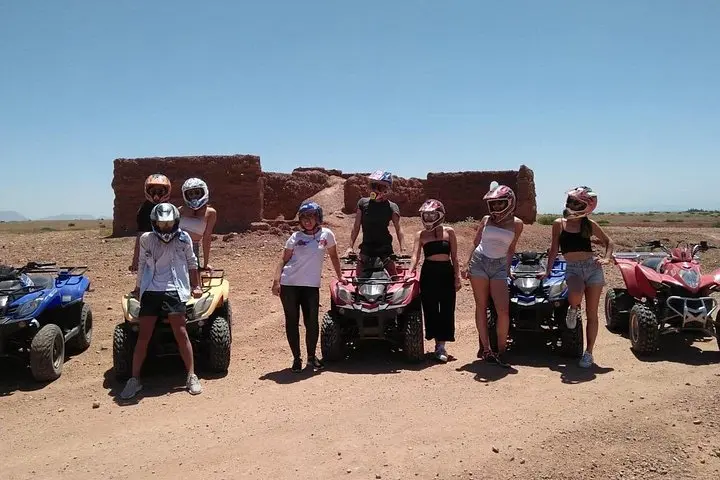
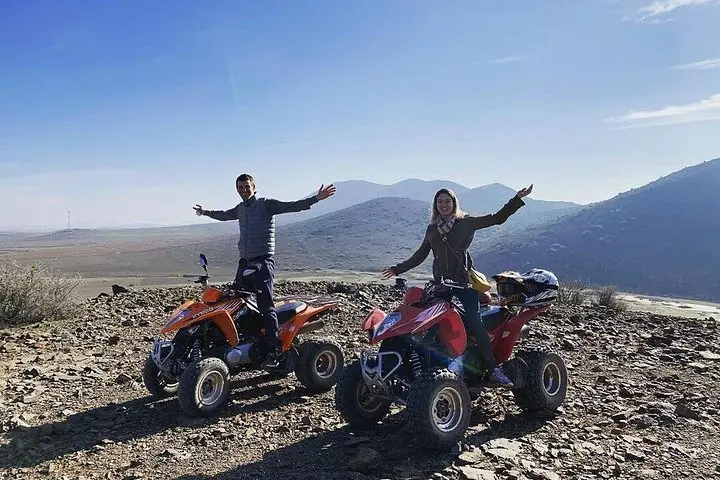
The engine kicks to life and the palm grove loosens its shade as you push away from Marrakech — dust rising like a promise. Tracks cut between date palms and scrub; the quad leans into dusty switchbacks, the Jbilet hills sliding into view. Wind tugs at your scarf, the desert daring you to speed up, and every bend opens a new light on ochre rock and sun-baked earth.
Verified experiences and guided adventures in the surrounding area.
Operated by Oniva Quad Marrakech · Marrakech, Marrakech-Safi
The engine kicks to life and the palm grove loosens its shade as you push away from Marrakech — dust rising like a promise. Tracks cut between date palms and scrub; the quad leans into dusty switchbacks, the Jbilet hills sliding into view. Wind tugs at your scarf, the desert daring you to speed up, and every bend opens a new light on ochre rock and sun-baked earth.
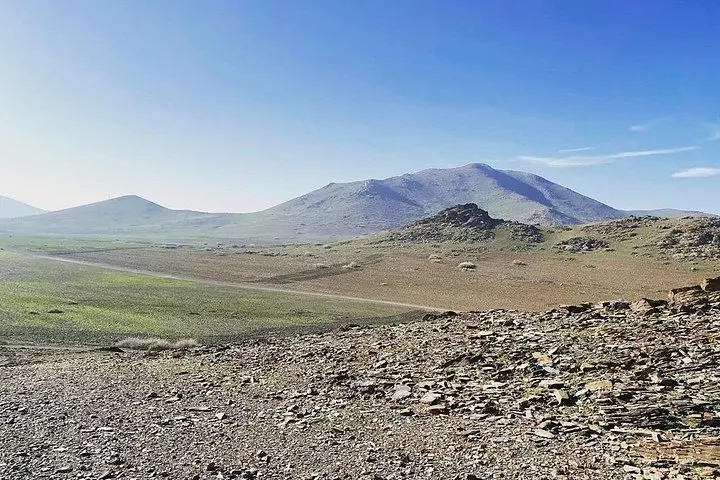
Palmeraie is a working oasis shaped over centuries by irrigation and farming, once prized by Marrakech’s elites for cool retreats and date cultivation. The Jbilet area to the north is a low, arid belt of rocky plateaus and sandy washes formed by erosion of ancient sedimentary layers — a stark contrast to the stitched canopy of palms. Local guides often pause at a roadside village or an old irrigation channel to point out traditional khettara systems and to explain how water drives life here.
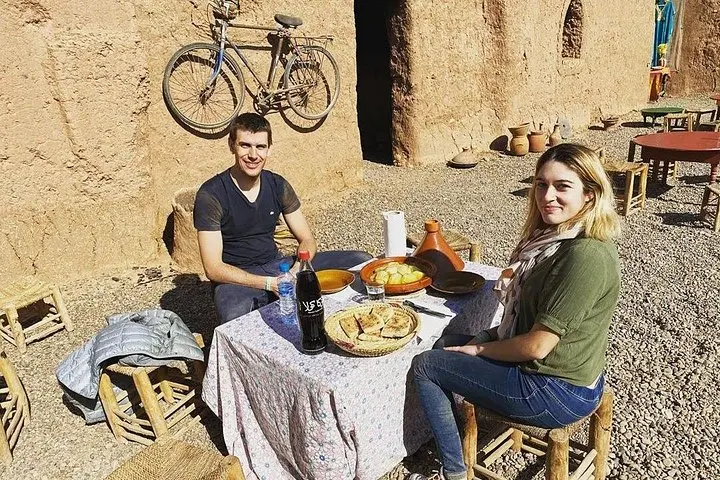
Practically, expect six hours of guided riding on varied terrain: palm-track dirt, rocky farm roads, and open desert tracks. Operators provide helmets, bottled water, and a lunch with dessert; riders should be ready for sun, fine dust, and occasional bumps. Keep your posture slightly forward on rough sections, look ahead through corners, and follow the guide’s pace — that’s how you get the best photos and the cleanest lines.
Timing matters: mornings are cooler and softer for photography; late afternoons cast long shadows across the dunes. Follow local guidance on conservation: stay on established tracks and avoid driving across fragile palm root zones. With good footwear, sun protection, and an appetite for wide horizons, this is a compact, high-energy way to see two very different faces of the Marrakech region.
No — guides provide a safety briefing and route choices suitable for beginners; basic comfort with vehicle controls helps.
Private transportation is included; confirm pickup point when booking and give full names for the transfer.
The tour is marketed as suitable for all physical fitness levels, but drivers should be old enough to control the quad safely — check operator age bands when booking.
The operator may cancel for poor conditions; their policy allows full refunds if you cancel at least 24 hours before departure or if the operator cancels due to weather.
Oniva Quad Marrakech operates guided outdoor trips and adventures with an emphasis on safety, stewardship, and memorable experiences.
The engine kicks to life and the palm grove loosens its shade as you push away from Marrakech — dust rising like a promise. Tracks cut between date palms and scrub; the quad leans into dusty switchbacks, the Jbilet hills sliding into view. Wind tugs at your scarf, the desert daring you to speed up, and every bend opens a new light on ochre rock and sun-baked earth.
The engine kicks to life and the palm grove loosens its shade as you push away from Marrakech — dust rising like a promise. Tracks cut between date palms and scrub; the quad leans into dusty switchbacks, the Jbilet hills sliding into view. Wind tugs at your scarf, the desert daring you to speed up, and every bend opens a new light on ochre rock and sun-baked earth.
Palmeraie is a working oasis shaped over centuries by irrigation and farming, once prized by Marrakech’s elites for cool retreats and date cultivation. The Jbilet area to the north is a low, arid belt of rocky plateaus and sandy washes formed by erosion of ancient sedimentary layers — a stark contrast to the stitched canopy of palms. Local guides often pause at a roadside village or an old irrigation channel to point out traditional khettara systems and to explain how water drives life here.
Practically, expect six hours of guided riding on varied terrain: palm-track dirt, rocky farm roads, and open desert tracks. Operators provide helmets, bottled water, and a lunch with dessert; riders should be ready for sun, fine dust, and occasional bumps. Keep your posture slightly forward on rough sections, look ahead through corners, and follow the guide’s pace — that’s how you get the best photos and the cleanest lines.
Timing matters: mornings are cooler and softer for photography; late afternoons cast long shadows across the dunes. Follow local guidance on conservation: stay on established tracks and avoid driving across fragile palm root zones. With good footwear, sun protection, and an appetite for wide horizons, this is a compact, high-energy way to see two very different faces of the Marrakech region.