THE ADVENTURE COLLECTIVE® · Independent discovery and booking for outdoor travel
A compact 10-day itinerary that pairs Cairo’s must-see monuments with a relaxed 4-night Nile cruise between Luxor and Aswan. Expect temple visits, museum highlights, and a dawn excursion to Abu Simbel.
A compact 10-day itinerary that pairs Cairo’s must-see monuments with a relaxed 4-night Nile cruise between Luxor and Aswan. Expect temple visits, museum highlights, and a dawn excursion to Abu Simbel.
Stand on the Giza plateau at dawn and the desert quietly reasserts its scale: the Great Pyramid rises like a geological argument against time, and the Nile slips through the country below as the engine of civilization. This 10-day circuit threads Cairo’s dense streets with the slow river rhythm between Luxor and Aswan, giving travelers a clear view of Egypt’s layered history — Pharaonic mortuary fields, Ptolemaic temple courts, and modern river towns backed by red granite quarries.
Verified experiences and guided adventures in the surrounding area.
Operated by Bastet Travel · Cairo, Cairo Governorate
Stand on the Giza plateau at dawn and the desert quietly reasserts its scale: the Great Pyramid rises like a geological argument against time, and the Nile slips through the country below as the engine of civilization. This 10-day circuit threads Cairo’s dense streets with the slow river rhythm between Luxor and Aswan, giving travelers a clear view of Egypt’s layered history — Pharaonic mortuary fields, Ptolemaic temple courts, and modern river towns backed by red granite quarries.
Geology and history are visible here: limestone ramps at Saqqara, the piled sandstone and granite of Thebes, and the sculpted cliffs around Abu Simbel where Ramses II’s colossi face the horizon. Culturally, the trip balances museum rooms of Tutankhamun’s treasures and the daily markets of Khan el-Khalili; expect calls to prayer, bargaining stalls, and meals centered on fresh flatbreads and grilled fish.
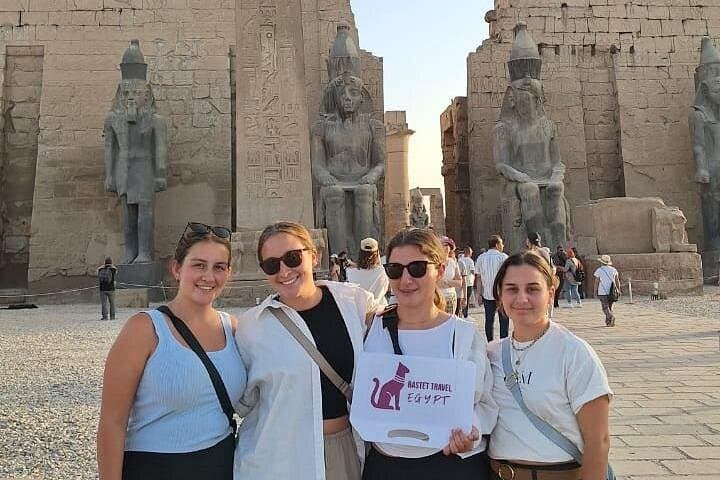
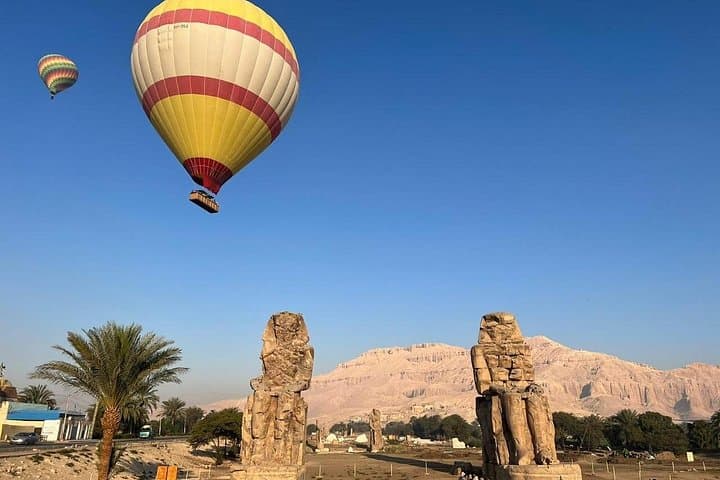
Practically, four nights aboard a 5* Nile cruise cover roughly 200 river kilometers between Luxor and Aswan, with stops at Karnak, Luxor Temple, the Valley of the Kings, Edfu, Kom Ombo, Philae, and a dawn visit to Abu Simbel. Walking is on flat roads, temple steps, and occasional uneven stone; cumulative daily walking can reach 3–6 miles. Temperatures can climb quickly — plan early starts and mid-day breaks. Bring comfortable walking shoes, sun protection, a light layer for evenings on deck, and photocopies of travel documents. Allow buffer time for domestic flights (Cairo–Luxor, Aswan–Cairo) and factor in local tipping customs. For travelers who want history with manageable logistics, this itinerary pairs the pace of the river with concentrated cultural immersion.
Flights are short (about 1–1.5 hours) but allow extra time for airport transfers and security; the itinerary includes these flights.
This package states admission is included for listed sites; specific tomb access can be restricted and may incur extra fees on site.
Yes — Abu Simbel is typically an early morning excursion from Aswan and often included; it involves a longer road transfer or short flight depending on the operator.
Tipping is customary for guides, drivers, and cruise staff; budget a modest amount per day for different service providers and carry small local bills.
Bastet Travel operates guided outdoor trips and adventures with an emphasis on safety, stewardship, and memorable experiences.


Stand on the Giza plateau at dawn and the desert quietly reasserts its scale: the Great Pyramid rises like a geological argument against time, and the Nile slips through the country below as the engine of civilization. This 10-day circuit threads Cairo’s dense streets with the slow river rhythm between Luxor and Aswan, giving travelers a clear view of Egypt’s layered history — Pharaonic mortuary fields, Ptolemaic temple courts, and modern river towns backed by red granite quarries.
Stand on the Giza plateau at dawn and the desert quietly reasserts its scale: the Great Pyramid rises like a geological argument against time, and the Nile slips through the country below as the engine of civilization. This 10-day circuit threads Cairo’s dense streets with the slow river rhythm between Luxor and Aswan, giving travelers a clear view of Egypt’s layered history — Pharaonic mortuary fields, Ptolemaic temple courts, and modern river towns backed by red granite quarries.
Geology and history are visible here: limestone ramps at Saqqara, the piled sandstone and granite of Thebes, and the sculpted cliffs around Abu Simbel where Ramses II’s colossi face the horizon. Culturally, the trip balances museum rooms of Tutankhamun’s treasures and the daily markets of Khan el-Khalili; expect calls to prayer, bargaining stalls, and meals centered on fresh flatbreads and grilled fish.
Practically, four nights aboard a 5* Nile cruise cover roughly 200 river kilometers between Luxor and Aswan, with stops at Karnak, Luxor Temple, the Valley of the Kings, Edfu, Kom Ombo, Philae, and a dawn visit to Abu Simbel. Walking is on flat roads, temple steps, and occasional uneven stone; cumulative daily walking can reach 3–6 miles. Temperatures can climb quickly — plan early starts and mid-day breaks. Bring comfortable walking shoes, sun protection, a light layer for evenings on deck, and photocopies of travel documents. Allow buffer time for domestic flights (Cairo–Luxor, Aswan–Cairo) and factor in local tipping customs. For travelers who want history with manageable logistics, this itinerary pairs the pace of the river with concentrated cultural immersion.
