THE ADVENTURE COLLECTIVE® · Independent discovery and booking for outdoor travel

A 10-day, gradual ascent via the Lemosho Route gives climbers the best chance to summit Kilimanjaro with strong acclimatization and remote camps. This guide outlines what to expect day-to-day, how the mountain’s geology and local culture shape the trek, and practical tips to prepare for summit night.
A 10-day, gradual ascent via the Lemosho Route gives climbers the best chance to summit Kilimanjaro with strong acclimatization and remote camps. This guide outlines what to expect day-to-day, how the mountain’s geology and local culture shape the trek, and practical tips to prepare for summit night.
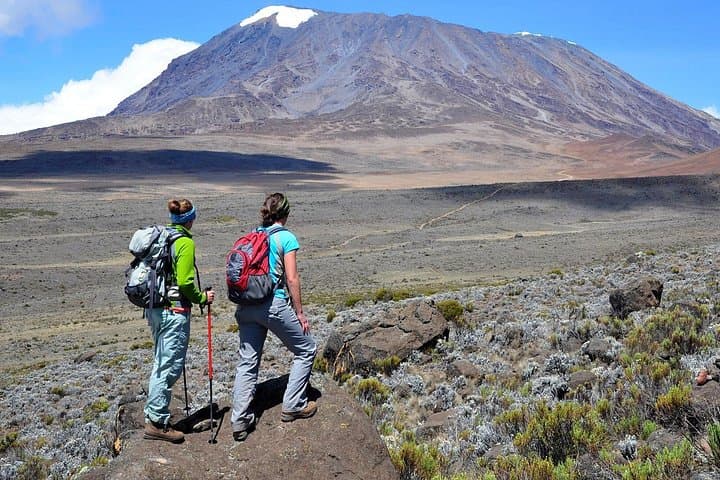
You step off the jeep at the forest edge and the mountain fills the horizon—Kibo’s flanks drape into cloud, the trail rising like a challenge that won’t be rushed. Early days thread through mossy montane forest where colobus monkeys call and the air tastes of damp earth; higher, the landscape opens to the windswept Shira Plateau and the alpine desert that dares you onward.
Verified experiences and guided adventures in the surrounding area.
Operated by Gracepatt Ecotours Kenya · Moshi, Kilimanjaro Region
You step off the jeep at the forest edge and the mountain fills the horizon—Kibo’s flanks drape into cloud, the trail rising like a challenge that won’t be rushed. Early days thread through mossy montane forest where colobus monkeys call and the air tastes of damp earth; higher, the landscape opens to the windswept Shira Plateau and the alpine desert that dares you onward.
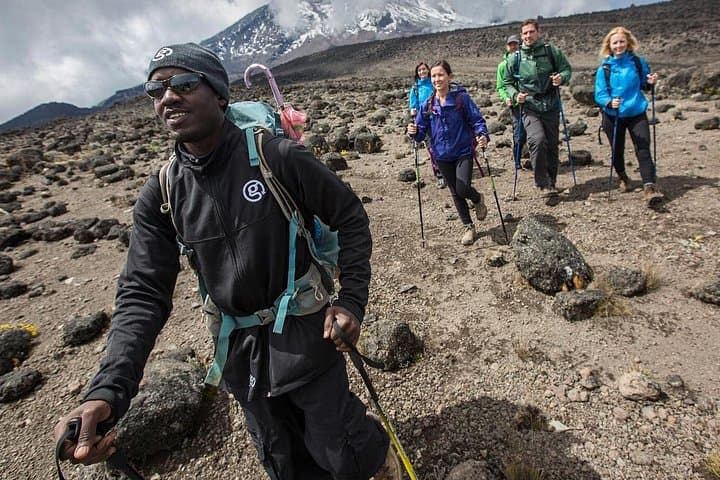
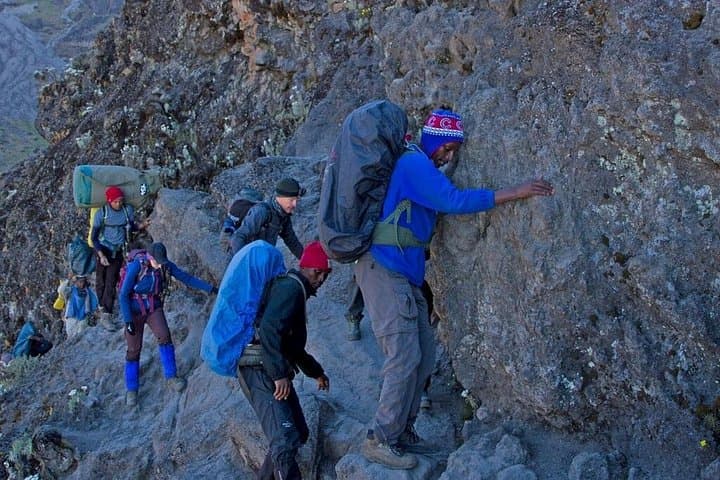
Kilimanjaro is an ancient stratovolcano with three volcanic cones—Kibo, Mawenzi and Shira—shaped by eruptions and glacial action. The Lemosho Route approaches from the west, prized for remote lines of camp and a gradual profile that boosts acclimatization. The Chagga people farm the lower slopes; porters and guides from nearby towns carry culture and practical knowledge up each day.
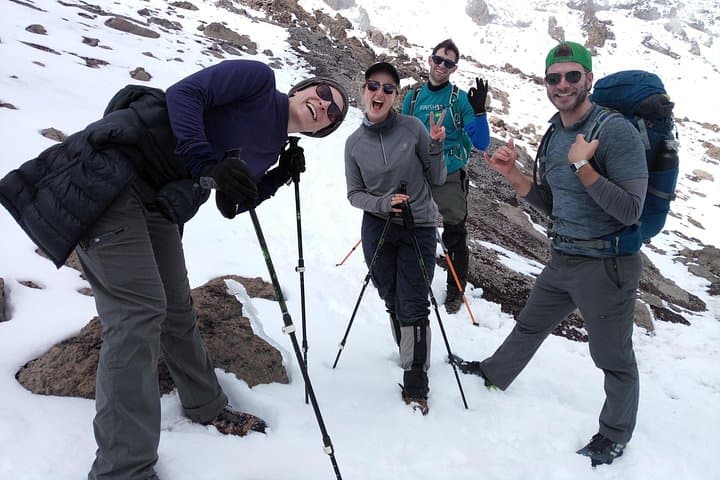
Expect long walking days on well-marked trails, campsite nights under thin-air skies, and a summit push that tests pace, patience, and breathing. Terrain shifts from humid forest to heath and moorland, then lichen-scarred rock and scree; elevation gain to Uhuru Peak tops 5,895 m (19,341 ft).
Practical guidance: pace yourself—short days early, slow steady steps on summit night, and regular hydration and electrolytes. Layer for big temperature swings: sweaty exertion by day, single-digit Celsius and below at night. Bring a lightweight first-aid kit and follow guide instructions on altitude symptoms; turn-back decisions save lives. Plan arrival and departure in Moshi for acclimatization buffer and reliable transfers. With realistic expectations and measured preparation, the Lemosho Route rewards climbers with quiet camps, panoramic approaches, and one of East Africa’s most memorable summit experiences.
Lemosho is considered one of the more gradual and scenic routes; its longer profile increases acclimatization time and tends to produce higher summit rates than shorter routes.
Common signs include headache, nausea, dizziness and severe fatigue; communicate symptoms immediately to your guide—descent is the primary treatment for serious cases.
No technical gear like crampons or ropes is required on the standard Lemosho route; basic high-altitude hiking equipment and warm clothing are essential.
The clearest windows are generally late June–October and late December–February; avoid the long rains (March–May) if possible for drier trekking conditions.
Gracepatt Ecotours Kenya operates guided outdoor trips and adventures with an emphasis on safety, stewardship, and memorable experiences.
You step off the jeep at the forest edge and the mountain fills the horizon—Kibo’s flanks drape into cloud, the trail rising like a challenge that won’t be rushed. Early days thread through mossy montane forest where colobus monkeys call and the air tastes of damp earth; higher, the landscape opens to the windswept Shira Plateau and the alpine desert that dares you onward.
You step off the jeep at the forest edge and the mountain fills the horizon—Kibo’s flanks drape into cloud, the trail rising like a challenge that won’t be rushed. Early days thread through mossy montane forest where colobus monkeys call and the air tastes of damp earth; higher, the landscape opens to the windswept Shira Plateau and the alpine desert that dares you onward.
Kilimanjaro is an ancient stratovolcano with three volcanic cones—Kibo, Mawenzi and Shira—shaped by eruptions and glacial action. The Lemosho Route approaches from the west, prized for remote lines of camp and a gradual profile that boosts acclimatization. The Chagga people farm the lower slopes; porters and guides from nearby towns carry culture and practical knowledge up each day.
Expect long walking days on well-marked trails, campsite nights under thin-air skies, and a summit push that tests pace, patience, and breathing. Terrain shifts from humid forest to heath and moorland, then lichen-scarred rock and scree; elevation gain to Uhuru Peak tops 5,895 m (19,341 ft).
Practical guidance: pace yourself—short days early, slow steady steps on summit night, and regular hydration and electrolytes. Layer for big temperature swings: sweaty exertion by day, single-digit Celsius and below at night. Bring a lightweight first-aid kit and follow guide instructions on altitude symptoms; turn-back decisions save lives. Plan arrival and departure in Moshi for acclimatization buffer and reliable transfers. With realistic expectations and measured preparation, the Lemosho Route rewards climbers with quiet camps, panoramic approaches, and one of East Africa’s most memorable summit experiences.