THE ADVENTURE COLLECTIVE® · Independent discovery and booking for outdoor travel

A 10-day circuit across Kyrgyzstan from Bishkek to Issyk-Kul, mixing mountain hikes, yurt nights and Silk Road history. Expect high pastures, glacier-fed gorges and long drives between cultural stops.
A 10-day circuit across Kyrgyzstan from Bishkek to Issyk-Kul, mixing mountain hikes, yurt nights and Silk Road history. Expect high pastures, glacier-fed gorges and long drives between cultural stops.
Morning light breaks over Bishkek and the first long road unwinds toward the Tian Shan — a ribbon of asphalt that climbs, dips and opens into high pastures where yurts scatter like punctuation on the horizon.
Verified experiences and guided adventures in the surrounding area.
Operated by Kyrgyz Nature Travel Company · Bishkek, Chuy Region
Morning light breaks over Bishkek and the first long road unwinds toward the Tian Shan — a ribbon of asphalt that climbs, dips and opens into high pastures where yurts scatter like punctuation on the horizon.
This 10-day route threads city markets, Silk Road ruins and alpine lakes. Travelers move from Ala-Archa’s glacier-carved cirques (40 km south of Bishkek) up to Song-Kul at 3,016 m, where summer pastures host nomad families. Issyk-Kul, the vast saline lake 182 km long and plunging to about 668 m depth, frames the north and south shores with sandy beaches and rugged gorges. Eastward, Karakol and the Jeti-Oguz red cliffs offer short hikes and horse riding; Altyn-Arashan valley climbs toward glaciers near 3,900 m.
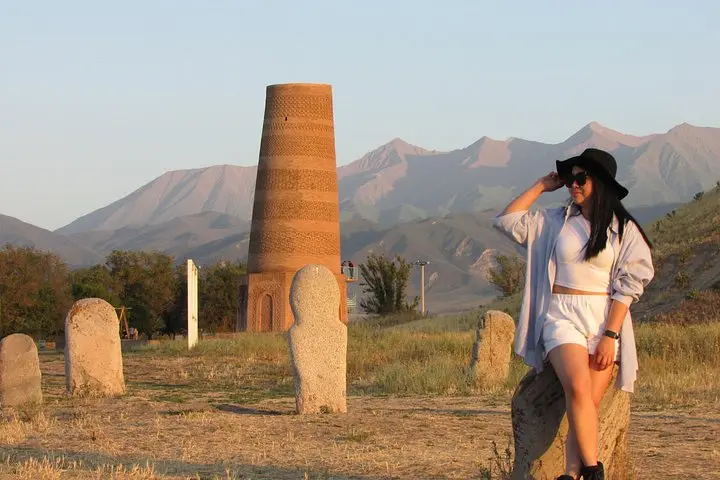
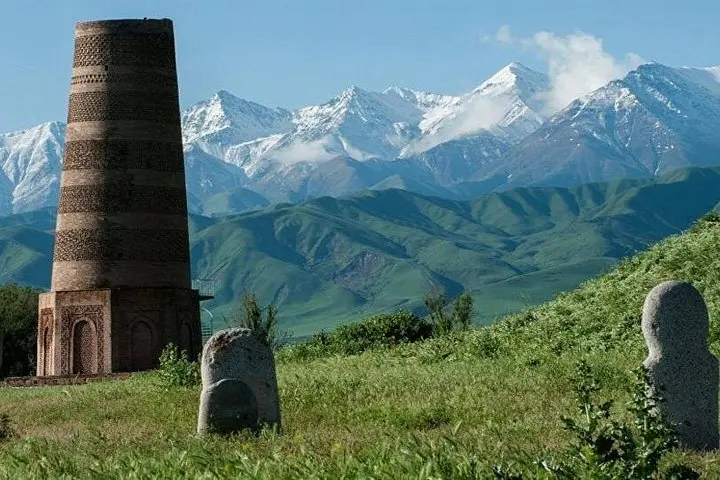
History is tangible: Burana tower and Balasagyn recall 10th–11th century Silk Road settlements; felt-making and eagle-hunting preserve living skills. Geology here is young and active—the Tian Shan’s uplift produces steep valleys, scree slopes and thermal springs; expect mixed terrain: paved highways, gravel passes and single-track pasture trails.
Practical guidance: plan for long drives (several 4–6 hour transfer days), nights in shared yurts and guesthouses, and altitude swings over 1,000–2,000 m. Hydrate and pace the first high nights (Song-Kul), pack breathable layers for hot days and cold nights, and bring sturdy boots for uneven trails. Carry local currency and a small first-aid kit; guides handle navigation, permits and vehicle logistics so you can focus on the landscapes and cultural exchanges.
No technical trekking experience is required; basic walking fitness and comfort on uneven trails is sufficient—guides manage routes and logistics.
Late June through early September offers the most reliable weather, open mountain roads and active yurt camps.
Yes—most breakfasts, lunches and dinners are included; tents, sleeping bags and mats are listed in inclusions, and overnighting alternates between yurts and guesthouses.
Altitude varies from roughly 700 m in Bishkek to 3,900 m at some passes; allow time to acclimatize and monitor for mild symptoms of altitude sickness.
Kyrgyz Nature Travel Company operates guided outdoor trips and adventures with an emphasis on safety, stewardship, and memorable experiences.
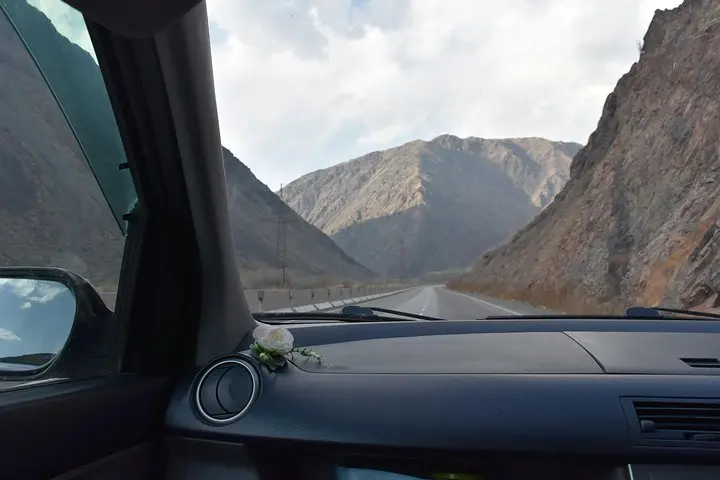
Morning light breaks over Bishkek and the first long road unwinds toward the Tian Shan — a ribbon of asphalt that climbs, dips and opens into high pastures where yurts scatter like punctuation on the horizon.
Morning light breaks over Bishkek and the first long road unwinds toward the Tian Shan — a ribbon of asphalt that climbs, dips and opens into high pastures where yurts scatter like punctuation on the horizon.
This 10-day route threads city markets, Silk Road ruins and alpine lakes. Travelers move from Ala-Archa’s glacier-carved cirques (40 km south of Bishkek) up to Song-Kul at 3,016 m, where summer pastures host nomad families. Issyk-Kul, the vast saline lake 182 km long and plunging to about 668 m depth, frames the north and south shores with sandy beaches and rugged gorges. Eastward, Karakol and the Jeti-Oguz red cliffs offer short hikes and horse riding; Altyn-Arashan valley climbs toward glaciers near 3,900 m.
History is tangible: Burana tower and Balasagyn recall 10th–11th century Silk Road settlements; felt-making and eagle-hunting preserve living skills. Geology here is young and active—the Tian Shan’s uplift produces steep valleys, scree slopes and thermal springs; expect mixed terrain: paved highways, gravel passes and single-track pasture trails.
Practical guidance: plan for long drives (several 4–6 hour transfer days), nights in shared yurts and guesthouses, and altitude swings over 1,000–2,000 m. Hydrate and pace the first high nights (Song-Kul), pack breathable layers for hot days and cold nights, and bring sturdy boots for uneven trails. Carry local currency and a small first-aid kit; guides handle navigation, permits and vehicle logistics so you can focus on the landscapes and cultural exchanges.