THE ADVENTURE COLLECTIVE® · Independent discovery and booking for outdoor travel

Spend ten days chasing the great wildebeest migration across Tarangire, Ngorongoro and the Serengeti. This practical guide describes what to expect, where to watch the Mara River crossings and how to prepare for long game-drive days.
Spend ten days chasing the great wildebeest migration across Tarangire, Ngorongoro and the Serengeti. This practical guide describes what to expect, where to watch the Mara River crossings and how to prepare for long game-drive days.
Dawn spills across endless grass, and the plain exhales: thousands of wildebeest are already on the move. Engines hum low as guides scan the horizon; the Mara River waits like a dark mouth where crocodiles lie in patient watch. This is the Serengeti — wide, weathered, and shaped by water, wind and the slow thrum of hooves.
Verified experiences and guided adventures in the surrounding area.
Operated by NATOKA AFRICA SAFARI · Arusha, Arusha Region
Dawn spills across endless grass, and the plain exhales: thousands of wildebeest are already on the move. Engines hum low as guides scan the horizon; the Mara River waits like a dark mouth where crocodiles lie in patient watch. This is the Serengeti — wide, weathered, and shaped by water, wind and the slow thrum of hooves.
The Serengeti ecosystem is both ancient and active: geology of rift-valley escarpments and shallow volcanic soils supports acacia-studded plains where the migration has followed seasonal rains for millennia. Human history here is present in Maasai pastoral lands and in nearby Olduvai Gorge, where early hominid fossils rewrote our origins. Culture and wildlife intersect — Maasai gait and cattle paths remain part of the landscape the migration crosses.
Practical guidance: this 10-day itinerary bases in Arusha and moves through Tarangire, Lake Manyara, the Ngorongoro Crater and northern Serengeti near the Mara River, where crossings most often occur. Expect long game-drive days, early starts, and a mix of lodge and tented-camp nights. Vehicle game drives are the default; limited walking safaris are possible with guides. Bring layered clothing for cold mornings and hot afternoons, good binoculars, sun protection, and a reliable camera with extra batteries. Hydrate and carry motion-sickness remedies for bumpy transfers.
Timing matters: dry months concentrate animals around water and improve visibility; the migration’s river crossings are punctuated and never guaranteed, but when they happen the landscape demands your full attention.
June–October is the most reliable period for northern Serengeti and Mara River crossings, though exact timing varies year to year depending on rains.
Some days include short guided walks (e.g., in Tarangire) but most wildlife viewing on this itinerary is by vehicle; walking opportunities depend on park rules and guide assessments.
This mid-range trip mixes comfortable lodges and tented camps, offering basic to upscale amenities with private facilities; specifics are listed per night in the itinerary.
Visitors should consult health advisories for yellow fever and malaria prevention and verify visa requirements for Tanzania well before travel; carry passport details requested at booking.
NATOKA AFRICA SAFARI operates guided outdoor trips and adventures with an emphasis on safety, stewardship, and memorable experiences.
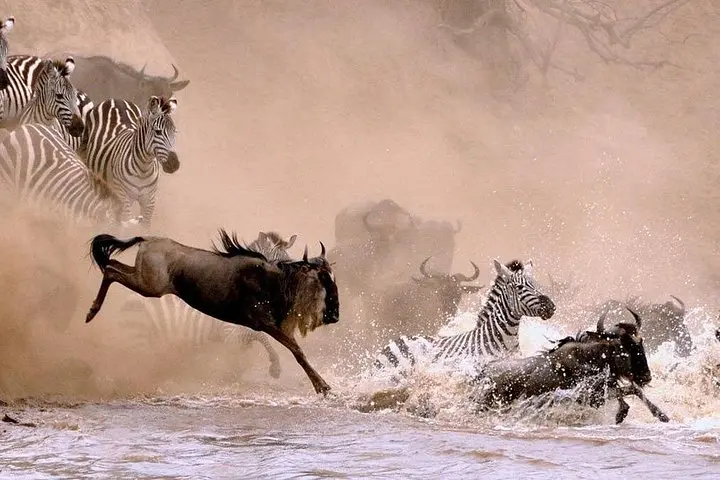
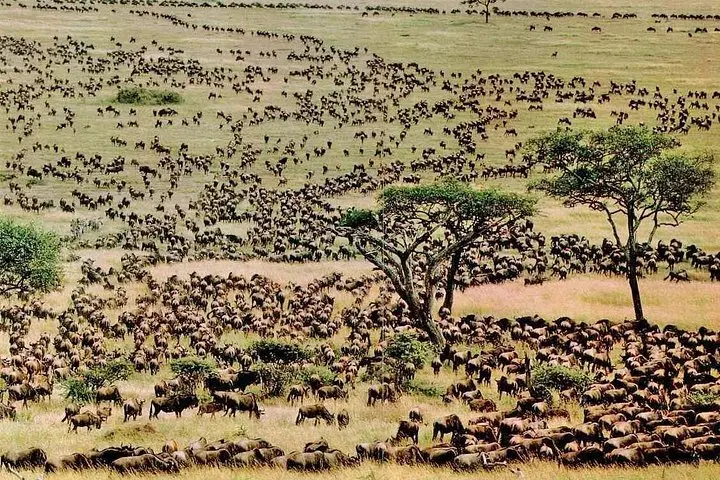
Dawn spills across endless grass, and the plain exhales: thousands of wildebeest are already on the move. Engines hum low as guides scan the horizon; the Mara River waits like a dark mouth where crocodiles lie in patient watch. This is the Serengeti — wide, weathered, and shaped by water, wind and the slow thrum of hooves.
Dawn spills across endless grass, and the plain exhales: thousands of wildebeest are already on the move. Engines hum low as guides scan the horizon; the Mara River waits like a dark mouth where crocodiles lie in patient watch. This is the Serengeti — wide, weathered, and shaped by water, wind and the slow thrum of hooves.
The Serengeti ecosystem is both ancient and active: geology of rift-valley escarpments and shallow volcanic soils supports acacia-studded plains where the migration has followed seasonal rains for millennia. Human history here is present in Maasai pastoral lands and in nearby Olduvai Gorge, where early hominid fossils rewrote our origins. Culture and wildlife intersect — Maasai gait and cattle paths remain part of the landscape the migration crosses.
Practical guidance: this 10-day itinerary bases in Arusha and moves through Tarangire, Lake Manyara, the Ngorongoro Crater and northern Serengeti near the Mara River, where crossings most often occur. Expect long game-drive days, early starts, and a mix of lodge and tented-camp nights. Vehicle game drives are the default; limited walking safaris are possible with guides. Bring layered clothing for cold mornings and hot afternoons, good binoculars, sun protection, and a reliable camera with extra batteries. Hydrate and carry motion-sickness remedies for bumpy transfers.
Timing matters: dry months concentrate animals around water and improve visibility; the migration’s river crossings are punctuated and never guaranteed, but when they happen the landscape demands your full attention.