THE ADVENTURE COLLECTIVE® · Independent discovery and booking for outdoor travel

Ride a traditional camel caravan across Mongolia’s South Gobi, from the dinosaur-rich Flaming Cliffs to the roar of Khongor’s Singing Dunes. This 11-day route blends long drives, multi-day camel treks, ger camps and hikes through dramatic deserts and granite outcrops.
Ride a traditional camel caravan across Mongolia’s South Gobi, from the dinosaur-rich Flaming Cliffs to the roar of Khongor’s Singing Dunes. This 11-day route blends long drives, multi-day camel treks, ger camps and hikes through dramatic deserts and granite outcrops.
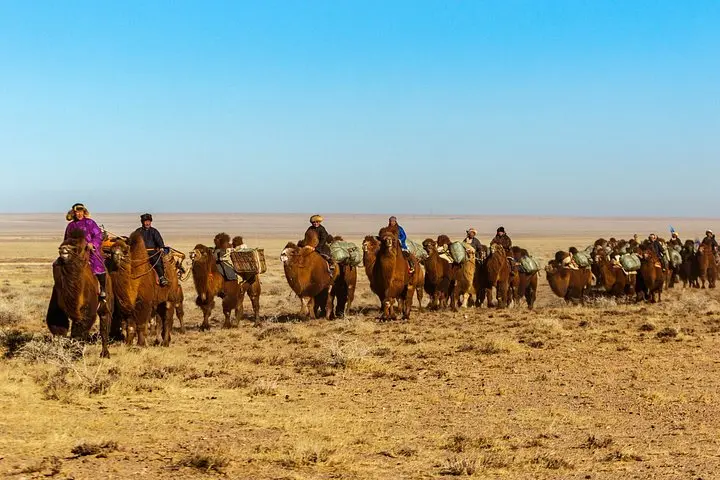
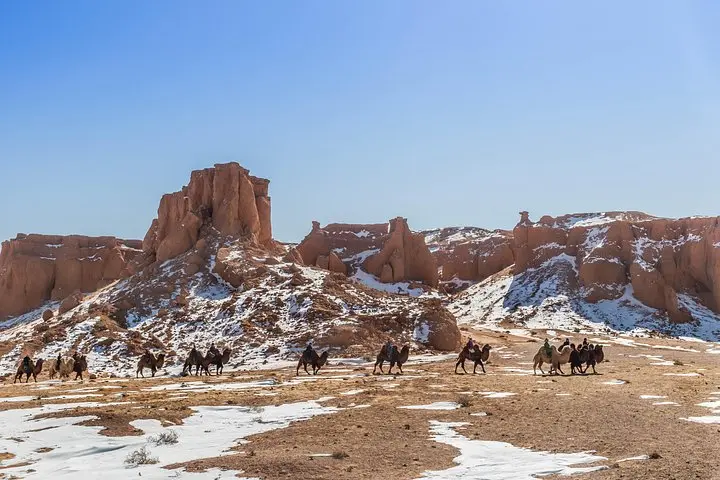
The caravan slides away from Ulaanbaatar before sunrise, wheels and hooves stirring ochre dust that rises like a curtain across the steppe. By midday the petrol smell fades and the rhythm of camel steps sets the pace — slow, steady, an old nomad clock. Sand, stone and sky rearrange themselves each day: red mud cliffs, saxaul groves, a narrow icy canyon and the wind-scoured white stupa.
Verified experiences and guided adventures in the surrounding area.
Operated by Mongolian Vision Tours · Dalanzadgad, Ömnögovi Province
The caravan slides away from Ulaanbaatar before sunrise, wheels and hooves stirring ochre dust that rises like a curtain across the steppe. By midday the petrol smell fades and the rhythm of camel steps sets the pace — slow, steady, an old nomad clock. Sand, stone and sky rearrange themselves each day: red mud cliffs, saxaul groves, a narrow icy canyon and the wind-scoured white stupa.
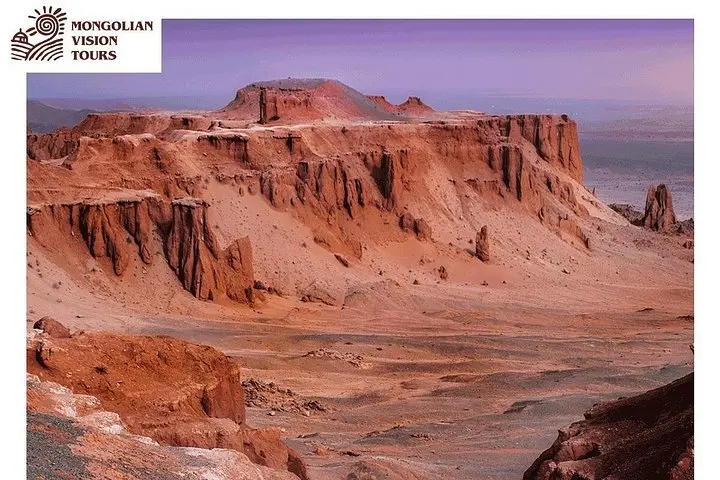
The route follows the South Gobi’s deep history: Roy Chapman Andrews’ 1920s excavations at Bayanzag (the Flaming Cliffs) put dinosaur eggs and skeletons on museum walls worldwide. Geology switches rapidly — mudstone and fossil beds give way to sweeping Khongor dunes (over 180 km long, dunes up to ~200 m) and granite tors at Ikh Gazriin Chuluu. Culture is equally present: nomadic ger camps, traditional horse and camel use, and local shamanic respect for sacred peaks.
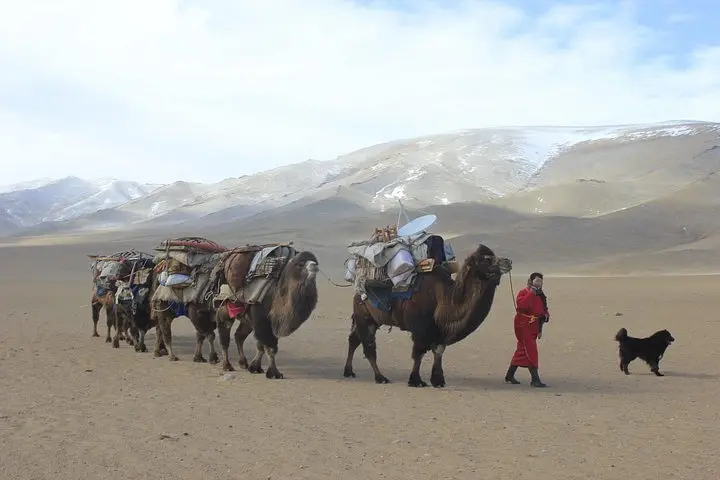
Expect a mix of travel: long drives between highlights, multi-day camel treks of ~20–25 km that recreate seasonal family moves, short hikes into canyons and up dunes, nights in tourist or family gers and occasional tents. Guides set up camps and handle logistics; meals are largely included. Practical prep matters: layered clothing for hot days and cold nights, reliable sun protection, broken-in boots for rocky sections, and a flexible attitude for remote conditions. Water is limited on the trail — plan to hydrate often and trust your guide on sources and waste management.
This is a trip about slow travel and close attention: to footprints in sand, to fossils half-revealed, to a landscape that keeps its stories guarded until someone sits quietly enough to hear them.
Camel rides are steady but sit for several hours some days; short hikes are moderate—good overall mobility and stamina are recommended.
Nights alternate between tourist ger camps, nomadic family gers and occasional tents; facilities are simple but meals are prepared and guides handle camp setup.
Many fossil sites like Bayanzag have open areas for viewing; follow guide instructions and avoid removing any fossils—many finds are protected and studied.
No special permits beyond park entrance fees (usually included); check routine travel vaccines and carry passport details as requested for bookings.
Mongolian Vision Tours operates guided outdoor trips and adventures with an emphasis on safety, stewardship, and memorable experiences.
The caravan slides away from Ulaanbaatar before sunrise, wheels and hooves stirring ochre dust that rises like a curtain across the steppe. By midday the petrol smell fades and the rhythm of camel steps sets the pace — slow, steady, an old nomad clock. Sand, stone and sky rearrange themselves each day: red mud cliffs, saxaul groves, a narrow icy canyon and the wind-scoured white stupa.
The caravan slides away from Ulaanbaatar before sunrise, wheels and hooves stirring ochre dust that rises like a curtain across the steppe. By midday the petrol smell fades and the rhythm of camel steps sets the pace — slow, steady, an old nomad clock. Sand, stone and sky rearrange themselves each day: red mud cliffs, saxaul groves, a narrow icy canyon and the wind-scoured white stupa.
The route follows the South Gobi’s deep history: Roy Chapman Andrews’ 1920s excavations at Bayanzag (the Flaming Cliffs) put dinosaur eggs and skeletons on museum walls worldwide. Geology switches rapidly — mudstone and fossil beds give way to sweeping Khongor dunes (over 180 km long, dunes up to ~200 m) and granite tors at Ikh Gazriin Chuluu. Culture is equally present: nomadic ger camps, traditional horse and camel use, and local shamanic respect for sacred peaks.
Expect a mix of travel: long drives between highlights, multi-day camel treks of ~20–25 km that recreate seasonal family moves, short hikes into canyons and up dunes, nights in tourist or family gers and occasional tents. Guides set up camps and handle logistics; meals are largely included. Practical prep matters: layered clothing for hot days and cold nights, reliable sun protection, broken-in boots for rocky sections, and a flexible attitude for remote conditions. Water is limited on the trail — plan to hydrate often and trust your guide on sources and waste management.
This is a trip about slow travel and close attention: to footprints in sand, to fossils half-revealed, to a landscape that keeps its stories guarded until someone sits quietly enough to hear them.