THE ADVENTURE COLLECTIVE® · Independent discovery and booking for outdoor travel

Traverse Morocco from Casablanca’s coast to the sand seas of Erg Chebbi on an 11‑day desert trekking tour. Expect two days of dune trekking, nomad hospitality, Roman ruins and Atlas mountain passes—ideal for travelers with moderate fitness and a taste for varied landscapes.
Traverse Morocco from Casablanca’s coast to the sand seas of Erg Chebbi on an 11‑day desert trekking tour. Expect two days of dune trekking, nomad hospitality, Roman ruins and Atlas mountain passes—ideal for travelers with moderate fitness and a taste for varied landscapes.
You crest the dune at dawn and the desert pushes back—cool air rushing like a held breath as the sun slashes the horizon orange. Camels pad behind you, their silhouettes steady, and the rippled sand takes on texture: soft ridges that rise to 100–150m at Erg Chebbi.
Verified experiences and guided adventures in the surrounding area.
Operated by Escorted Morocco Tours · Merzouga, Drâa‑Tafilalet
You crest the dune at dawn and the desert pushes back—cool air rushing like a held breath as the sun slashes the horizon orange. Camels pad behind you, their silhouettes steady, and the rippled sand takes on texture: soft ridges that rise to 100–150m at Erg Chebbi.
This 11‑day loop links Casablanca’s Atlantic façades with the Atlas ranges and the deep-sand seas of Merzouga. Along the route are Morocco’s layered histories: Roman columns at Volubilis, fortified ksars of Aït Benhaddou, and Marrakech’s medieval medina. Geologically, Erg Chebbi is wind‑worked Sahara—sand sourced from ancient river beds and oases, shaped by persistent northerlies into the dunes that shift daily.
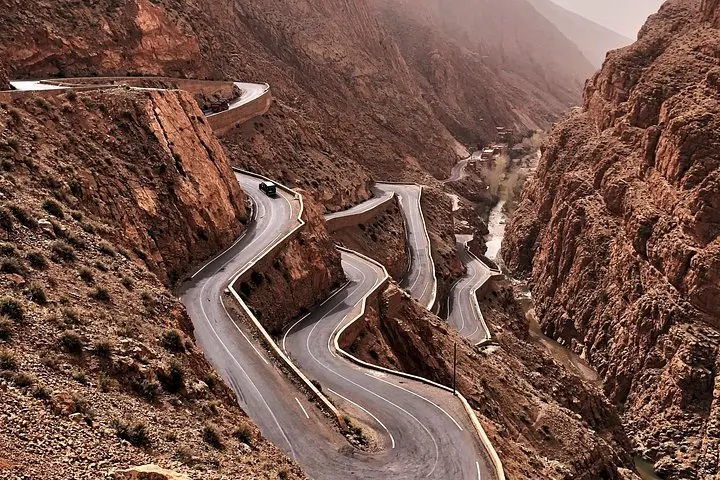
Culturally the trek threads Berber life into every night—tea ceremonies in nomad tents, a chance to watch traditional bread buried under embers, and evenings around a campfire with live gnawa rhythms. The Atlas passes add alpine contrast: cedar forests, Ziz Valley palm oases, and the rock walls of the Todgha and Dades gorges.
Practically: expect two full days of dune trekking with loaded camels and one night wild‑camping followed by a luxury desert camp. Temperatures swing widely—cold before sunrise, hot by midday—so layer, carry 3–4L water daily, and use sun protection. Footwear that sheds sand and a lightweight gaiter are wise. Guides handle navigation, permits and local hospitality, but be prepared for long vehicle transfers between sights and at least moderate fitness for sustained walking on sand.
Timing your trek for spring or fall gives gentler daytime heat and calmer winds for clearer skies and better stargazing.
Expect sustained walking on shifting sand for two full days; it's less about steepness and more about endurance—moderate fitness is required.
The itinerary includes one night wild‑camping in the dunes and one night at a private luxury desert camp with tents that may have shower facilities.
Not recommended for those with serious mobility limitations or poor cardiovascular health; parts of the trek and local transfers require walking and dismounting camels.
Use Moroccan dirhams for local purchases; tipping guides, drivers and camp staff is customary—small per‑day amounts for guides and larger for camp crews are common.
Escorted Morocco Tours operates guided outdoor trips and adventures with an emphasis on safety, stewardship, and memorable experiences.
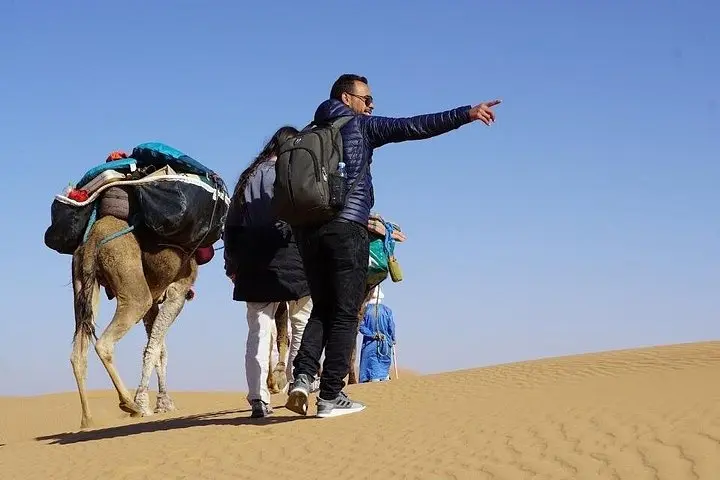
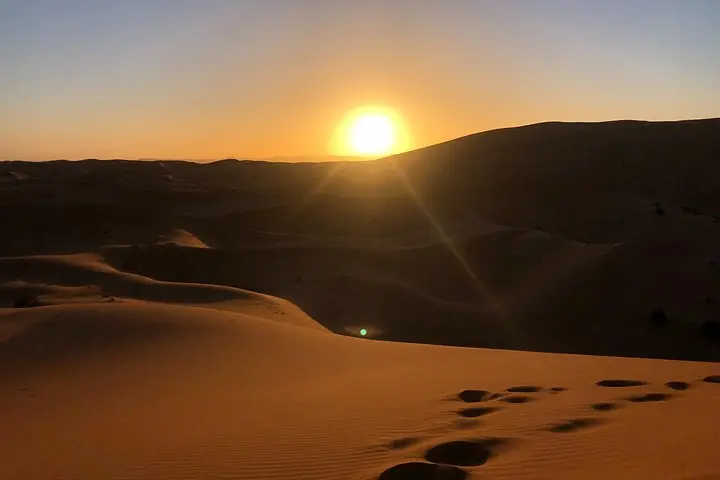
You crest the dune at dawn and the desert pushes back—cool air rushing like a held breath as the sun slashes the horizon orange. Camels pad behind you, their silhouettes steady, and the rippled sand takes on texture: soft ridges that rise to 100–150m at Erg Chebbi.
You crest the dune at dawn and the desert pushes back—cool air rushing like a held breath as the sun slashes the horizon orange. Camels pad behind you, their silhouettes steady, and the rippled sand takes on texture: soft ridges that rise to 100–150m at Erg Chebbi.
This 11‑day loop links Casablanca’s Atlantic façades with the Atlas ranges and the deep-sand seas of Merzouga. Along the route are Morocco’s layered histories: Roman columns at Volubilis, fortified ksars of Aït Benhaddou, and Marrakech’s medieval medina. Geologically, Erg Chebbi is wind‑worked Sahara—sand sourced from ancient river beds and oases, shaped by persistent northerlies into the dunes that shift daily.
Culturally the trek threads Berber life into every night—tea ceremonies in nomad tents, a chance to watch traditional bread buried under embers, and evenings around a campfire with live gnawa rhythms. The Atlas passes add alpine contrast: cedar forests, Ziz Valley palm oases, and the rock walls of the Todgha and Dades gorges.
Practically: expect two full days of dune trekking with loaded camels and one night wild‑camping followed by a luxury desert camp. Temperatures swing widely—cold before sunrise, hot by midday—so layer, carry 3–4L water daily, and use sun protection. Footwear that sheds sand and a lightweight gaiter are wise. Guides handle navigation, permits and local hospitality, but be prepared for long vehicle transfers between sights and at least moderate fitness for sustained walking on sand.
Timing your trek for spring or fall gives gentler daytime heat and calmer winds for clearer skies and better stargazing.