THE ADVENTURE COLLECTIVE® · Independent discovery and booking for outdoor travel
An 11-day private loop from Kilimanjaro/Arusha that visits Tarangire, Lake Manyara, Ngorongoro and the Serengeti to catch the Great Migration—game drives, cultural visits and a scenic flight finish. Practical, private, and wildlife-focused.
An 11-day private loop from Kilimanjaro/Arusha that visits Tarangire, Lake Manyara, Ngorongoro and the Serengeti to catch the Great Migration—game drives, cultural visits and a scenic flight finish. Practical, private, and wildlife-focused.
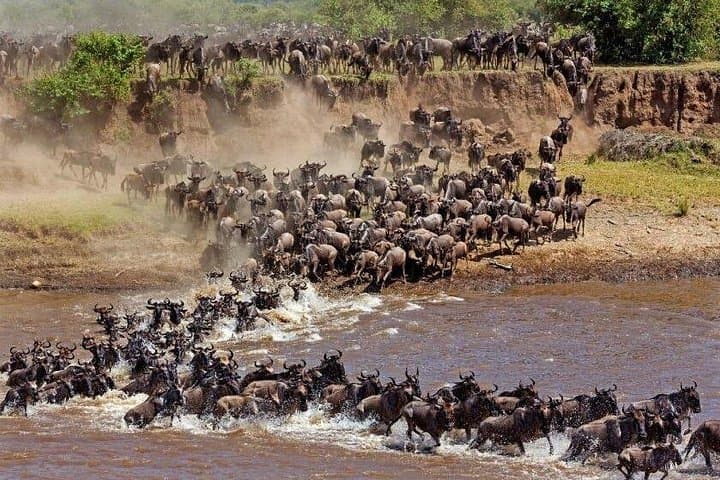
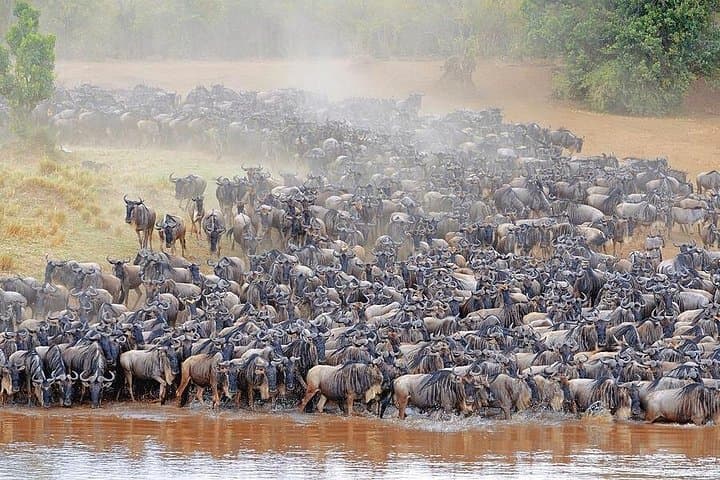
You step from the plane into highland air and the landscape immediately signals a shift: the forested slopes around Arusha fall away into wide, sun-scoured savanna. Over the next eleven days this private loop moves from the riverine baobabs of Tarangire to the shallow soda lakes of Manyara, down into Ngorongoro’s crater bowl and out across the sweeping 5,400-square-mile Serengeti where the Great Migration stages its mass movement.
Verified experiences and guided adventures in the surrounding area.
Operated by Peoples Choice Tours · Arusha, Arusha Region
You step from the plane into highland air and the landscape immediately signals a shift: the forested slopes around Arusha fall away into wide, sun-scoured savanna. Over the next eleven days this private loop moves from the riverine baobabs of Tarangire to the shallow soda lakes of Manyara, down into Ngorongoro’s crater bowl and out across the sweeping 5,400-square-mile Serengeti where the Great Migration stages its mass movement.
This route threads together geological and cultural landmarks—Olduvai Gorge, a key paleoanthropological site, and the volcanic rim of Ngorongoro, whose crater floor lies a few hundred feet below the rim—while Maasai communities still practice pastoral lifeways on the rangelands. The Serengeti’s ancient plains are a product of tectonic uplifts and seasonal rains, and the rivers dare herds to cross in rhythm with the rains.
Expect game drives at dawn and late afternoon when light flattens the grass and predators come forward. Tarangire’s riverbanks concentrate elephants and birds; Lake Manyara’s shallows hold flamingos and hippos; Ngorongoro’s crater is a compact wildlife sanctuary where black rhino sightings are possible. Drives are largely on graded dirt tracks—short walks possible at cultural stops—so physical strain is low but days are long in the vehicle.
Practical tips: travel light, pack layers for cool mornings and hot afternoons, bring binoculars and extra camera batteries, and follow guide instructions around wildlife. Vaccinations and travel insurance are recommended. A scenic flight back to Arusha offers surveyor’s views of the migration-carved landscape and a final aerial perspective of a seasonally moving wilderness.
June–September offers the highest chance to witness river crossings in the northern Serengeti; January–March highlights calving in the southern plains—timing depends on rain patterns.
Routine vaccines are recommended; yellow fever vaccination may be required depending on departure country—check a travel clinic for up-to-date advice.
The itinerary is low-impact with most wildlife viewing from a vehicle; travelers should be comfortable with multiple hours in a vehicle and short guided walks.
This is a private tour; many lodges and some vehicles offer wheelchair-accessible options but confirm specifics when booking to accommodate needs.
Peoples Choice Tours operates guided outdoor trips and adventures with an emphasis on safety, stewardship, and memorable experiences.
You step from the plane into highland air and the landscape immediately signals a shift: the forested slopes around Arusha fall away into wide, sun-scoured savanna. Over the next eleven days this private loop moves from the riverine baobabs of Tarangire to the shallow soda lakes of Manyara, down into Ngorongoro’s crater bowl and out across the sweeping 5,400-square-mile Serengeti where the Great Migration stages its mass movement.
You step from the plane into highland air and the landscape immediately signals a shift: the forested slopes around Arusha fall away into wide, sun-scoured savanna. Over the next eleven days this private loop moves from the riverine baobabs of Tarangire to the shallow soda lakes of Manyara, down into Ngorongoro’s crater bowl and out across the sweeping 5,400-square-mile Serengeti where the Great Migration stages its mass movement.
This route threads together geological and cultural landmarks—Olduvai Gorge, a key paleoanthropological site, and the volcanic rim of Ngorongoro, whose crater floor lies a few hundred feet below the rim—while Maasai communities still practice pastoral lifeways on the rangelands. The Serengeti’s ancient plains are a product of tectonic uplifts and seasonal rains, and the rivers dare herds to cross in rhythm with the rains.
Expect game drives at dawn and late afternoon when light flattens the grass and predators come forward. Tarangire’s riverbanks concentrate elephants and birds; Lake Manyara’s shallows hold flamingos and hippos; Ngorongoro’s crater is a compact wildlife sanctuary where black rhino sightings are possible. Drives are largely on graded dirt tracks—short walks possible at cultural stops—so physical strain is low but days are long in the vehicle.
Practical tips: travel light, pack layers for cool mornings and hot afternoons, bring binoculars and extra camera batteries, and follow guide instructions around wildlife. Vaccinations and travel insurance are recommended. A scenic flight back to Arusha offers surveyor’s views of the migration-carved landscape and a final aerial perspective of a seasonally moving wilderness.
