THE ADVENTURE COLLECTIVE® · Independent discovery and booking for outdoor travel

A classic 12-day route from Lukla to Everest Base Camp and Kala Patthar, this trek packages Sherpa culture, high-altitude geology, and glacier-side walking into a compact itinerary. Expect steep stone steps, tea-house nights, and sweeping summit views with careful acclimatization.
A classic 12-day route from Lukla to Everest Base Camp and Kala Patthar, this trek packages Sherpa culture, high-altitude geology, and glacier-side walking into a compact itinerary. Expect steep stone steps, tea-house nights, and sweeping summit views with careful acclimatization.
The plane drops out of the clouds and Lukla's tiny runway appears pinned to the hillside — a raw, immediate reminder that this is where the real journey begins. From that first step on worn stone and packed-earth trails, the route climbs through rhododendron forest, crosses swing bridges, and threads its way into the open, raw geometry of the high Himalaya. Each day the air thins and the views sharpen: terraced villages give way to prayer-flag-flecked ridgelines, and the Khumbu Glacier starts to loom like a slow, white river.
Verified experiences and guided adventures in the surrounding area.
Operated by NBM Travel Company Pvt. Ltd. · Kathmandu, Bagmati Province
The plane drops out of the clouds and Lukla's tiny runway appears pinned to the hillside — a raw, immediate reminder that this is where the real journey begins. From that first step on worn stone and packed-earth trails, the route climbs through rhododendron forest, crosses swing bridges, and threads its way into the open, raw geometry of the high Himalaya. Each day the air thins and the views sharpen: terraced villages give way to prayer-flag-flecked ridgelines, and the Khumbu Glacier starts to loom like a slow, white river.
This 12-day itinerary follows the classic Lukla–Namche Bazaar–Tengboche–Gorak Shep corridor to Everest Base Camp (EBC) and Kala Patthar. The region sits inside Sagarmatha National Park, a UNESCO World Heritage site since 1979, and has been a Sherpa cultural and trading heartland for centuries. Geologically the valley is a study in uplift and ice: granite peaks scoured by glaciers feed moraines and braided streams that demand careful footing. Culturally, monasteries such as Tengboche are mission-control for local Buddhist life — prayer wheels click constantly, and monasteries double as waypoints for both faith and weather forecasts.
Expect roughly 130 km round-trip of trekking from Lukla, with a total elevation gain of about 2,700–2,800 m from Lukla (~2,860 m) up to Kala Patthar (approx. 5,545 m) and EBC (approx. 5,364 m). Terrain alternates between stair-stepped stone trails, soft moraine underfoot near Gorak Shep, and steep, exposed sections where wind and sun become immediate players. Tea-house accommodation keeps logistics simple — small rooms, shared bathrooms, and hearty Nepali stews after long days — but comfort at altitude is basic.
Practical guidance matters: build acclimatization days into the plan (Namche Bazaar and a hike above Tengboche), monitor for acute mountain sickness, and accept that Lukla flights are weather-dependent. Local guides do more than lead; they translate, organize permits, and manage contingency plans when weather or health intervene. Bring cash for park permits, tips, and extra hot drinks.
For first-time high-altitude trekkers this route is achievable with steady training and respect for the mountain. The payoff is direct: mornings when Everest finally clears of cloud and fills the skyline with stark angles, and evenings in a teahouse where yak-butter tea spreads warmth through tired limbs. Those are the moments that turn a tough trek into a lasting trip — visceral, instructive, and undeniably Himalayan.
The trek reaches Everest Base Camp at about 5,364 m and Kala Patthar at roughly 5,545 m (the highest viewpoint for a close-up Everest panorama).
No previous high-altitude experience is required, but good fitness, stair-hiking training, and acclimatization discipline are essential.
You need Sagarmatha National Park entry and a TIMS permit; reputable operators typically arrange and include these fees in the itinerary.
Accommodation is in tea-houses on trek (basic twin rooms, shared toilets); Kathmandu nights are hotel B&B as noted in inclusions.
Weather in the Khumbu is volatile — cancellations or delays are common; allow buffer days and avoid tight outbound flight schedules.
Watch for headache, nausea, dizziness, and shortness of breath; inform your guide immediately — descent is the primary treatment and guides carry first-aid kits and oxygen for emergencies.
NBM Travel Company Pvt. Ltd. operates guided outdoor trips and adventures with an emphasis on safety, stewardship, and memorable experiences.
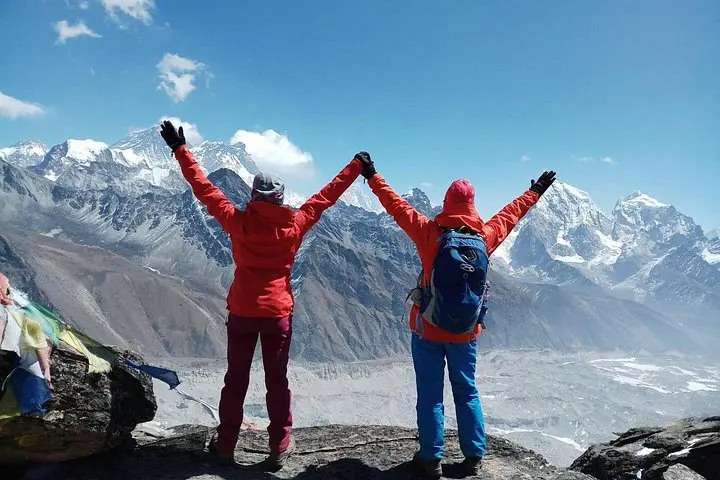
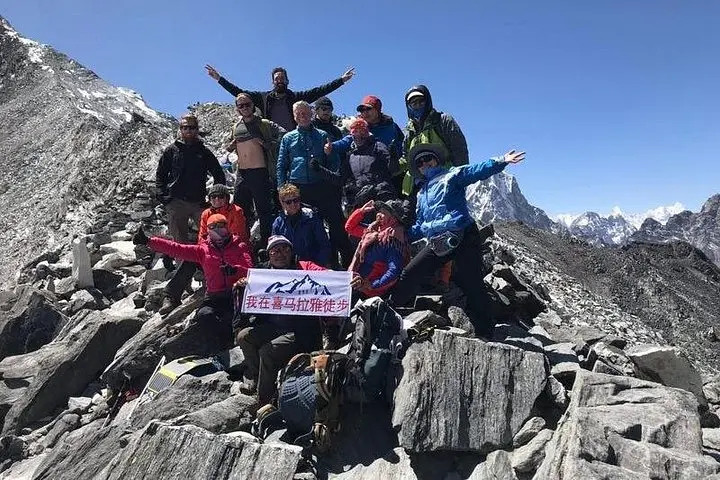
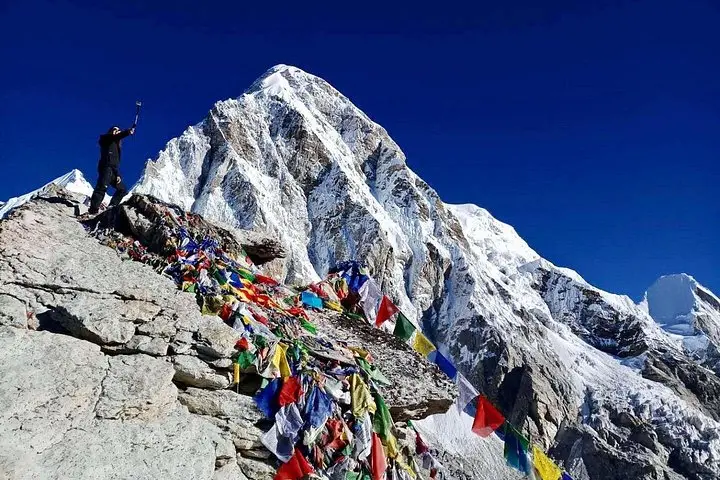
The plane drops out of the clouds and Lukla's tiny runway appears pinned to the hillside — a raw, immediate reminder that this is where the real journey begins. From that first step on worn stone and packed-earth trails, the route climbs through rhododendron forest, crosses swing bridges, and threads its way into the open, raw geometry of the high Himalaya. Each day the air thins and the views sharpen: terraced villages give way to prayer-flag-flecked ridgelines, and the Khumbu Glacier starts to loom like a slow, white river.
The plane drops out of the clouds and Lukla's tiny runway appears pinned to the hillside — a raw, immediate reminder that this is where the real journey begins. From that first step on worn stone and packed-earth trails, the route climbs through rhododendron forest, crosses swing bridges, and threads its way into the open, raw geometry of the high Himalaya. Each day the air thins and the views sharpen: terraced villages give way to prayer-flag-flecked ridgelines, and the Khumbu Glacier starts to loom like a slow, white river.
This 12-day itinerary follows the classic Lukla–Namche Bazaar–Tengboche–Gorak Shep corridor to Everest Base Camp (EBC) and Kala Patthar. The region sits inside Sagarmatha National Park, a UNESCO World Heritage site since 1979, and has been a Sherpa cultural and trading heartland for centuries. Geologically the valley is a study in uplift and ice: granite peaks scoured by glaciers feed moraines and braided streams that demand careful footing. Culturally, monasteries such as Tengboche are mission-control for local Buddhist life — prayer wheels click constantly, and monasteries double as waypoints for both faith and weather forecasts.
Expect roughly 130 km round-trip of trekking from Lukla, with a total elevation gain of about 2,700–2,800 m from Lukla (~2,860 m) up to Kala Patthar (approx. 5,545 m) and EBC (approx. 5,364 m). Terrain alternates between stair-stepped stone trails, soft moraine underfoot near Gorak Shep, and steep, exposed sections where wind and sun become immediate players. Tea-house accommodation keeps logistics simple — small rooms, shared bathrooms, and hearty Nepali stews after long days — but comfort at altitude is basic.
Practical guidance matters: build acclimatization days into the plan (Namche Bazaar and a hike above Tengboche), monitor for acute mountain sickness, and accept that Lukla flights are weather-dependent. Local guides do more than lead; they translate, organize permits, and manage contingency plans when weather or health intervene. Bring cash for park permits, tips, and extra hot drinks.
For first-time high-altitude trekkers this route is achievable with steady training and respect for the mountain. The payoff is direct: mornings when Everest finally clears of cloud and fills the skyline with stark angles, and evenings in a teahouse where yak-butter tea spreads warmth through tired limbs. Those are the moments that turn a tough trek into a lasting trip — visceral, instructive, and undeniably Himalayan.