THE ADVENTURE COLLECTIVE® · Independent discovery and booking for outdoor travel

A 12-day overland circuit from Islamabad into Hunza and Skardu that climbs to Khunjerab Pass, crosses Attabad and the Passu Cones, and explores Deosai Plains. Expect long drives, high passes and living mountain culture—with clear planning, spectacular alpine terrain awaits.
A 12-day overland circuit from Islamabad into Hunza and Skardu that climbs to Khunjerab Pass, crosses Attabad and the Passu Cones, and explores Deosai Plains. Expect long drives, high passes and living mountain culture—with clear planning, spectacular alpine terrain awaits.
You step out before dawn in Islamabad and the city’s hush gives way to a ribbon of blacktop that climbs into a sculpted world of stone and ice.
Verified experiences and guided adventures in the surrounding area.
Operated by Falcon Adventure Club · Karimabad (Hunza), Gilgit-Baltistan
You step out before dawn in Islamabad and the city’s hush gives way to a ribbon of blacktop that climbs into a sculpted world of stone and ice.
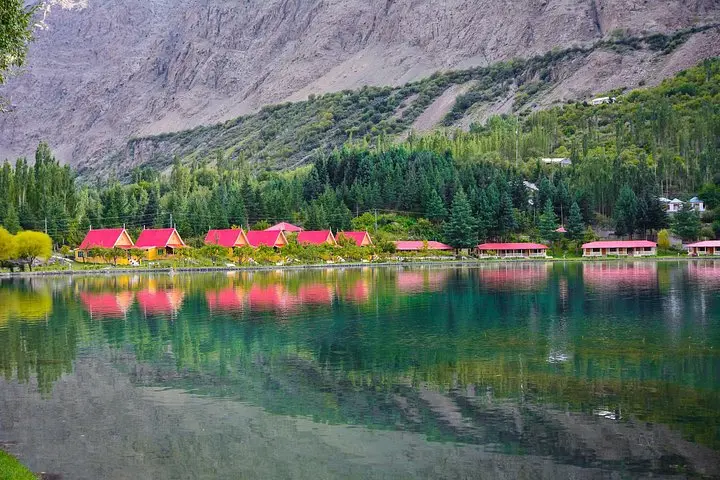
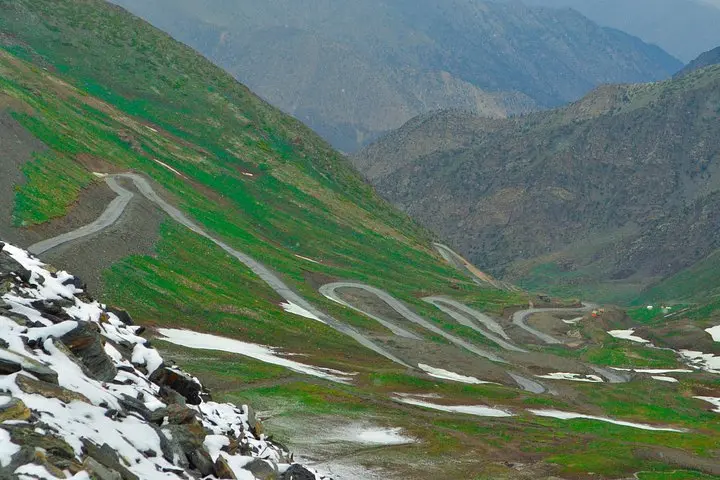
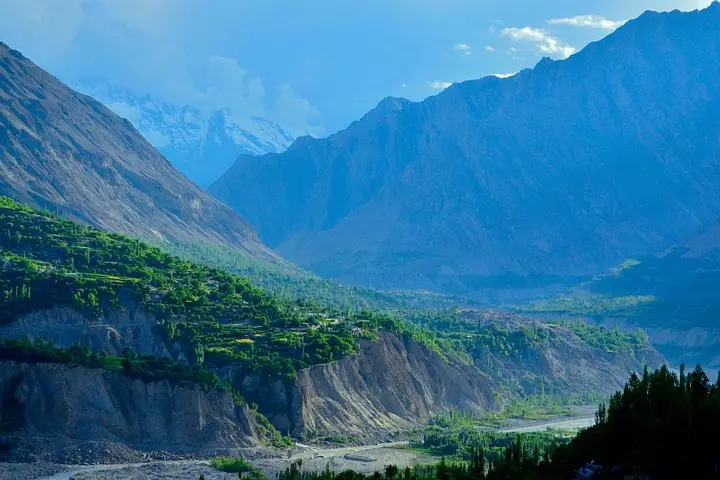
Over twelve days the route pushes through Babusar Pass and along the Karakoram Highway, skirting Lalusar Lake, pausing for Rakaposhi and the jagged Passu Cones, and rising to Khunjerab at roughly 4,693 m. Rivers dare you to look away — glacial braids cutting terraces where small villages perch — while Deosai’s high plateau opens like a wind-swept plain at 4,000 m.
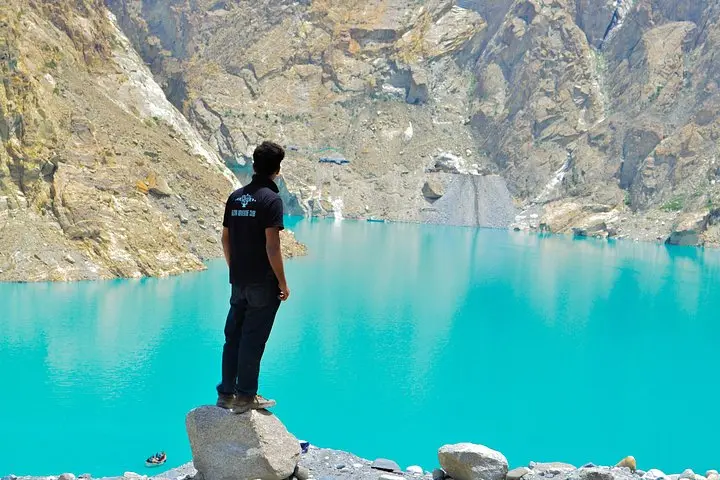
This journey traces the junction of three great ranges (Himalaya, Karakoram, Hindu Kush). Centuries of trade and Tibetan-Balti culture color the route: Baltit and Altit forts speak to Hunza’s strategic past; Khaplu’s wooden palace shows Balti craftsmanship influenced by Central Asian routes. Geology is raw and visible — uplifted granite, moraine-banded valleys, and lakes dammed by glacial collapse at Attabad.
Practically: expect long drives (6–10 hours on several days) with stretches of paved highway and rough mountain approaches; jeep transfer is typical for Deosai. Altitude is the main challenge — plan acclimatization days (Karimabad is a useful rest stop) and limit heavy exertion above 3,000 m until acclimatized.
Pack layered clothing, sun protection, cash for remote villages, and a basic first-aid kit. Travel in spring and autumn avoids extreme snow or peak tourist congestion; summer gives milder roads but stronger sun. With preparation the trip rewards with wide vistas, living mountain culture, and close encounters with high-altitude landscapes.
Most international visitors require a visa for Pakistan—check current entry rules and apply ahead; the operator can provide invitation letters to support the application.
Altitude is possible at Khunjerab and Deosai (above 4,000 m); include acclimatization days, stay hydrated, and inform guides of symptoms—descent is the primary treatment.
Expect multiple long drives ranging 6–10 hours on segments such as Naran–Hunza and Hunza–Skardu; days combine driving with viewpoint stops.
The itinerary includes long drives, high altitudes and some short walks—it's generally suitable for families with older children but not recommended for those with serious mobility or cardiovascular issues.
Falcon Adventure Club operates guided outdoor trips and adventures with an emphasis on safety, stewardship, and memorable experiences.
You step out before dawn in Islamabad and the city’s hush gives way to a ribbon of blacktop that climbs into a sculpted world of stone and ice.
You step out before dawn in Islamabad and the city’s hush gives way to a ribbon of blacktop that climbs into a sculpted world of stone and ice.
Over twelve days the route pushes through Babusar Pass and along the Karakoram Highway, skirting Lalusar Lake, pausing for Rakaposhi and the jagged Passu Cones, and rising to Khunjerab at roughly 4,693 m. Rivers dare you to look away — glacial braids cutting terraces where small villages perch — while Deosai’s high plateau opens like a wind-swept plain at 4,000 m.
This journey traces the junction of three great ranges (Himalaya, Karakoram, Hindu Kush). Centuries of trade and Tibetan-Balti culture color the route: Baltit and Altit forts speak to Hunza’s strategic past; Khaplu’s wooden palace shows Balti craftsmanship influenced by Central Asian routes. Geology is raw and visible — uplifted granite, moraine-banded valleys, and lakes dammed by glacial collapse at Attabad.
Practically: expect long drives (6–10 hours on several days) with stretches of paved highway and rough mountain approaches; jeep transfer is typical for Deosai. Altitude is the main challenge — plan acclimatization days (Karimabad is a useful rest stop) and limit heavy exertion above 3,000 m until acclimatized.
Pack layered clothing, sun protection, cash for remote villages, and a basic first-aid kit. Travel in spring and autumn avoids extreme snow or peak tourist congestion; summer gives milder roads but stronger sun. With preparation the trip rewards with wide vistas, living mountain culture, and close encounters with high-altitude landscapes.