THE ADVENTURE COLLECTIVE® · Independent discovery and booking for outdoor travel

A private 12-day circuit across Morocco linking imperial cities, mountain passes and the Sahara dunes. Expect medina tours, Roman ruins, cedar forests and an overnight Berber camp beneath the stars.
A private 12-day circuit across Morocco linking imperial cities, mountain passes and the Sahara dunes. Expect medina tours, Roman ruins, cedar forests and an overnight Berber camp beneath the stars.
You step off the plane in Casablanca and the Atlantic wind greets you along the corniche; the Hassan II Mosque watches the water. Over the next twelve days the road pulls you inland — Rabat’s ramparts, the blue streets of Chefchaouen climbing the Rif, and the ruined arches of Volubilis where Roman columns still point skyward.
Verified experiences and guided adventures in the surrounding area.
Operated by Morocco Tour Guide · Marrakech, Marrakech-Safi
You step off the plane in Casablanca and the Atlantic wind greets you along the corniche; the Hassan II Mosque watches the water. Over the next twelve days the road pulls you inland — Rabat’s ramparts, the blue streets of Chefchaouen climbing the Rif, and the ruined arches of Volubilis where Roman columns still point skyward.
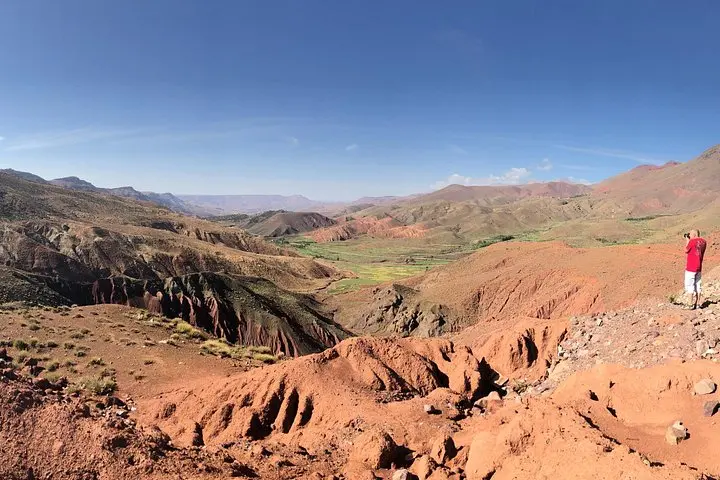
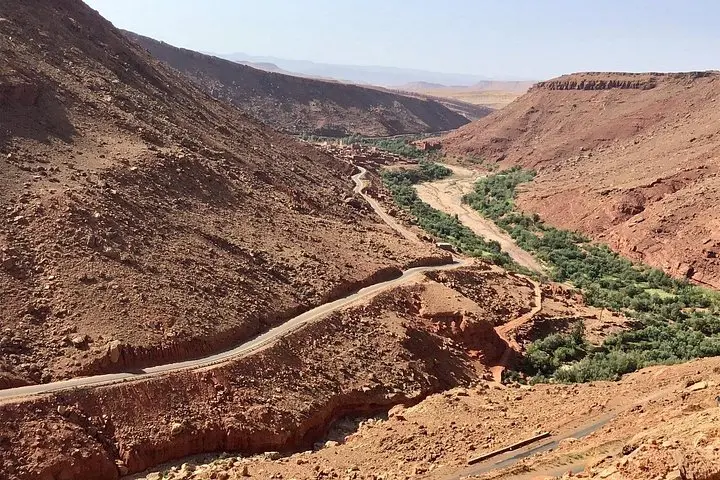
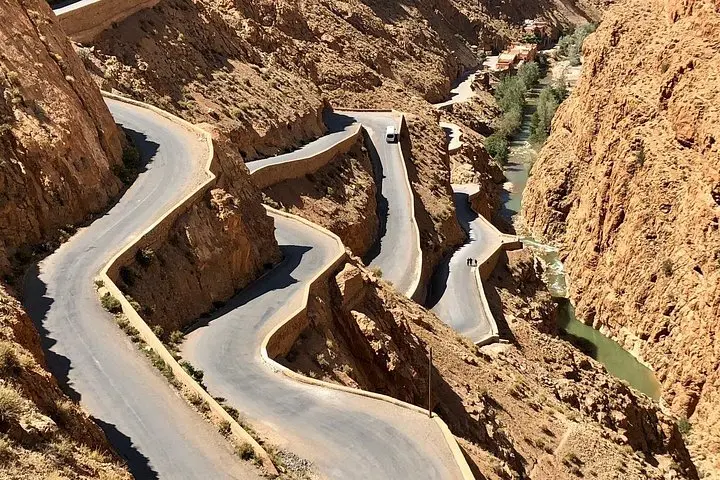
Geology and history are immediate companions: the Rif and Middle Atlas fold up in limestone and cedar, the Ziz Valley falls into palm groves carved by an ancient river, and Erg Chebbi’s dunes are wind-sculpted giants that dare you to climb them at sunrise. Cultural threads run through every stop — Almohad towers in Rabat, Merinid learning in Fez, Berber kasbah architecture at Aït Ben Haddou, and the film-set façades of Ouarzazate.
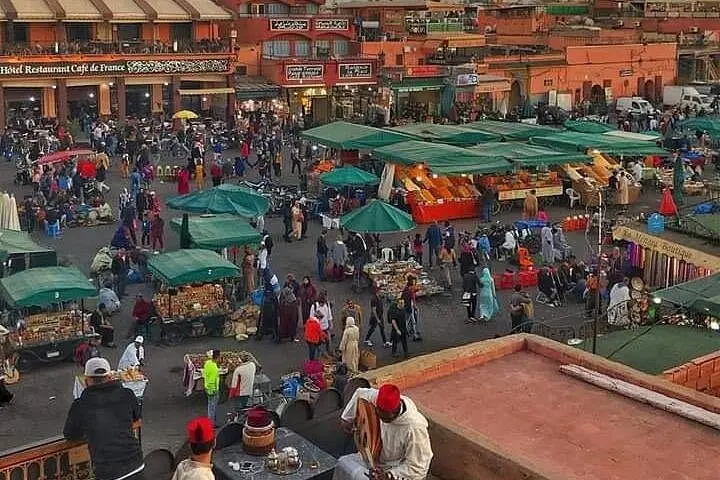
Local life is tactile: tannery courtyards fragrant with dye, Berber families offering mint tea, nomads guiding dromedaries at dusk. Expect long driving days between highlights; photo stops and short hikes break the transit rhythm.
Practical guidance: pack layered clothing for hot days and cold desert nights, sturdy walking shoes for medina alleys and rocky gorges, and a reusable water bottle — water is limited in remote areas. Plan for moderate physical fitness: several short walks, one overnight in a desert camp reached by camel, and optional hikes in the Ourika Valley.
For comfort, bring euros or dirhams for tips and small purchases, a copy of your passport, and closed-toe shoes for tanneries and rocky trails. This route balances history, landscapes, and hands-on cultural encounters — a compact cross-section of Morocco from coast to sand.
Yes — many camps offer family tents and basic amenities, but nights can be cold and the overnight includes a camel trek; consider children’s comfort with animals and outdoor sleeping.
Most entrance fees are not included; the itinerary notes when admissions are applicable, so budget extra for sites like Hassan II Mosque, Volubilis and kasbah visits.
A moderate level is recommended — there are short walks in medinas, optional hikes in Ourika, and an overnight in a camp accessible by camel and 4x4.
Visa and vaccination requirements depend on your nationality; check Moroccan entry rules and consult a travel clinic for recommended vaccinations well before departure.
Morocco Tour Guide operates guided outdoor trips and adventures with an emphasis on safety, stewardship, and memorable experiences.
You step off the plane in Casablanca and the Atlantic wind greets you along the corniche; the Hassan II Mosque watches the water. Over the next twelve days the road pulls you inland — Rabat’s ramparts, the blue streets of Chefchaouen climbing the Rif, and the ruined arches of Volubilis where Roman columns still point skyward.
You step off the plane in Casablanca and the Atlantic wind greets you along the corniche; the Hassan II Mosque watches the water. Over the next twelve days the road pulls you inland — Rabat’s ramparts, the blue streets of Chefchaouen climbing the Rif, and the ruined arches of Volubilis where Roman columns still point skyward.
Geology and history are immediate companions: the Rif and Middle Atlas fold up in limestone and cedar, the Ziz Valley falls into palm groves carved by an ancient river, and Erg Chebbi’s dunes are wind-sculpted giants that dare you to climb them at sunrise. Cultural threads run through every stop — Almohad towers in Rabat, Merinid learning in Fez, Berber kasbah architecture at Aït Ben Haddou, and the film-set façades of Ouarzazate.
Local life is tactile: tannery courtyards fragrant with dye, Berber families offering mint tea, nomads guiding dromedaries at dusk. Expect long driving days between highlights; photo stops and short hikes break the transit rhythm.
Practical guidance: pack layered clothing for hot days and cold desert nights, sturdy walking shoes for medina alleys and rocky gorges, and a reusable water bottle — water is limited in remote areas. Plan for moderate physical fitness: several short walks, one overnight in a desert camp reached by camel, and optional hikes in the Ourika Valley.
For comfort, bring euros or dirhams for tips and small purchases, a copy of your passport, and closed-toe shoes for tanneries and rocky trails. This route balances history, landscapes, and hands-on cultural encounters — a compact cross-section of Morocco from coast to sand.