THE ADVENTURE COLLECTIVE® · Independent discovery and booking for outdoor travel

Combine Kathmandu’s heritage, lakeside Pokhara and an eight-day trek to Annapurna Base Camp on this 12-day itinerary. Expect village trails, stone staircases, moderate altitude gain and basic guesthouse nights.
Combine Kathmandu’s heritage, lakeside Pokhara and an eight-day trek to Annapurna Base Camp on this 12-day itinerary. Expect village trails, stone staircases, moderate altitude gain and basic guesthouse nights.
Morning light slices the valley as a private transfer threads from Kathmandu’s chaotic streets toward the airport; by noon the Himalaya appear on the horizon and the real ascent begins. This 12-day loop stitches together Kathmandu’s temple courtyards, the lakeside calm of Pokhara and an eight-day approach into the Annapurna Sanctuary that ends at Annapurna Base Camp (4,130 m).
Verified experiences and guided adventures in the surrounding area.
Operated by Nepal Mountain Club Pvt Ltd · Pokhara, Gandaki Province
Morning light slices the valley as a private transfer threads from Kathmandu’s chaotic streets toward the airport; by noon the Himalaya appear on the horizon and the real ascent begins. This 12-day loop stitches together Kathmandu’s temple courtyards, the lakeside calm of Pokhara and an eight-day approach into the Annapurna Sanctuary that ends at Annapurna Base Camp (4,130 m).
The route follows traditional Gurung villages and stone staircases first used as trade paths between Pokhara and the high pastures. Geologically the Annapurna range is young, uplifted by the collision of the Indian and Eurasian plates; glaciers and steep moraine carve the amphitheater that frames ABC. Culturally the trek moves through Hindu and Buddhist sites—Pashupatinath and Boudhanath in Kathmandu, and chorten-dotted trailheads where local guides share stories of mountain deities.
Expect steady ascents and descents: typical days range from 4–7 hours on mixed dirt trails, stone steps and narrow ridgelines, with simple guesthouse lodging and hot meals on the trail. Altitude is the chief variable—rest days, paced climbs and acclimatization matter.
Practical guidance: schedule hikes for early morning to avoid afternoon cloud build-up, carry layered insulation for rapid temperature swings, and use a water purification method—drinking local bottled water in towns and treated water while trekking reduces risk. Permit paperwork (ACAP and TIMS) is routine but required; an English-speaking guide and porter simplify logistics. This trip balances cultural sightseeing with serious trekking—prepare your legs, respect altitude, and plan for muddy sections in the shoulder seasons.
Yes—ACAP and TIMS permits are required and typically arranged by your operator before the trek.
Basic teahouse lodges with shared facilities are standard on the trek; hotels in Kathmandu and Pokhara are higher quality per the itinerary.
A licensed guide is highly recommended for navigation and acclimatization support; porters are optional but useful for carrying heavy bags.
Autumn (Sept–Nov) and spring (Mar–May) offer the best combination of weather, visibility and trail conditions.
Nepal Mountain Club Pvt Ltd operates guided outdoor trips and adventures with an emphasis on safety, stewardship, and memorable experiences.

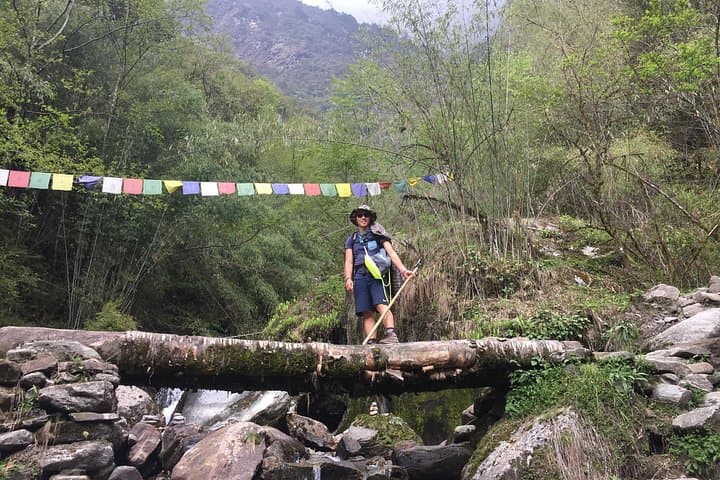
Morning light slices the valley as a private transfer threads from Kathmandu’s chaotic streets toward the airport; by noon the Himalaya appear on the horizon and the real ascent begins. This 12-day loop stitches together Kathmandu’s temple courtyards, the lakeside calm of Pokhara and an eight-day approach into the Annapurna Sanctuary that ends at Annapurna Base Camp (4,130 m).
Morning light slices the valley as a private transfer threads from Kathmandu’s chaotic streets toward the airport; by noon the Himalaya appear on the horizon and the real ascent begins. This 12-day loop stitches together Kathmandu’s temple courtyards, the lakeside calm of Pokhara and an eight-day approach into the Annapurna Sanctuary that ends at Annapurna Base Camp (4,130 m).
The route follows traditional Gurung villages and stone staircases first used as trade paths between Pokhara and the high pastures. Geologically the Annapurna range is young, uplifted by the collision of the Indian and Eurasian plates; glaciers and steep moraine carve the amphitheater that frames ABC. Culturally the trek moves through Hindu and Buddhist sites—Pashupatinath and Boudhanath in Kathmandu, and chorten-dotted trailheads where local guides share stories of mountain deities.
Expect steady ascents and descents: typical days range from 4–7 hours on mixed dirt trails, stone steps and narrow ridgelines, with simple guesthouse lodging and hot meals on the trail. Altitude is the chief variable—rest days, paced climbs and acclimatization matter.
Practical guidance: schedule hikes for early morning to avoid afternoon cloud build-up, carry layered insulation for rapid temperature swings, and use a water purification method—drinking local bottled water in towns and treated water while trekking reduces risk. Permit paperwork (ACAP and TIMS) is routine but required; an English-speaking guide and porter simplify logistics. This trip balances cultural sightseeing with serious trekking—prepare your legs, respect altitude, and plan for muddy sections in the shoulder seasons.