THE ADVENTURE COLLECTIVE® · Independent discovery and booking for outdoor travel

Fly to Lukla, trek into the Khumbu, and spend 12 days moving from pine forests to glacial moraine on this private Everest Base Camp route. Acclimatization days, teahouse stays and guided support make a high-altitude objective achievable for prepared trekkers.
Fly to Lukla, trek into the Khumbu, and spend 12 days moving from pine forests to glacial moraine on this private Everest Base Camp route. Acclimatization days, teahouse stays and guided support make a high-altitude objective achievable for prepared trekkers.
You step off the tiny plane in Lukla and the air immediately feels different—thin, cold, and sharp—with the ridgeline of the Khumbu Alps pointing like a line of challenges ahead.
Verified experiences and guided adventures in the surrounding area.
Operated by Himalayan Gateway Trek · Lukla, Koshi Province
You step off the tiny plane in Lukla and the air immediately feels different—thin, cold, and sharp—with the ridgeline of the Khumbu Alps pointing like a line of challenges ahead.
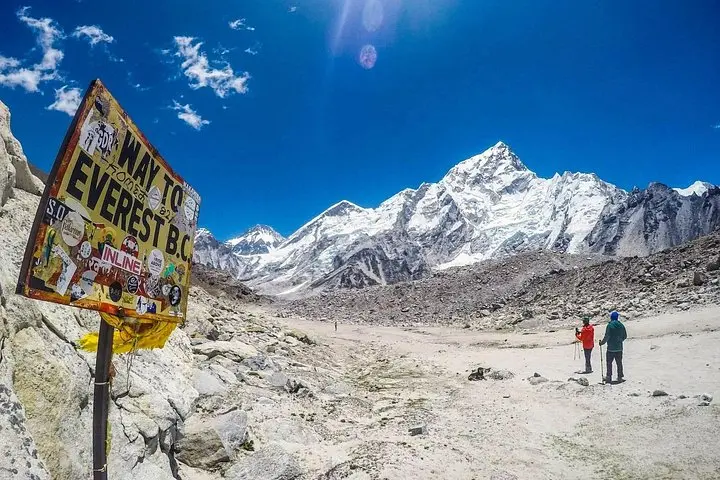
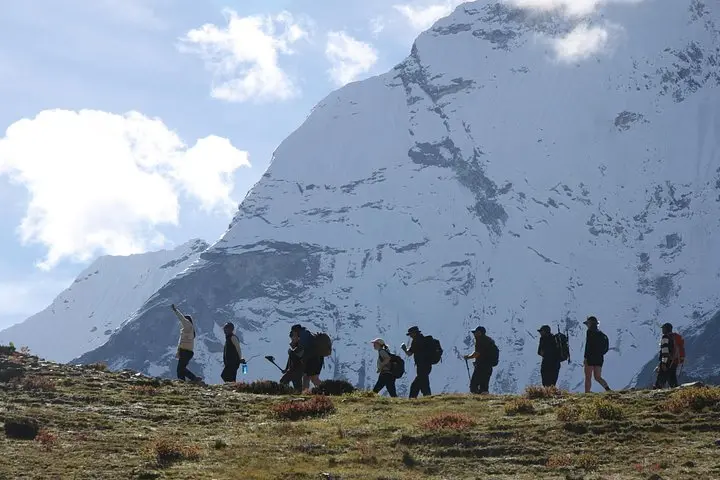
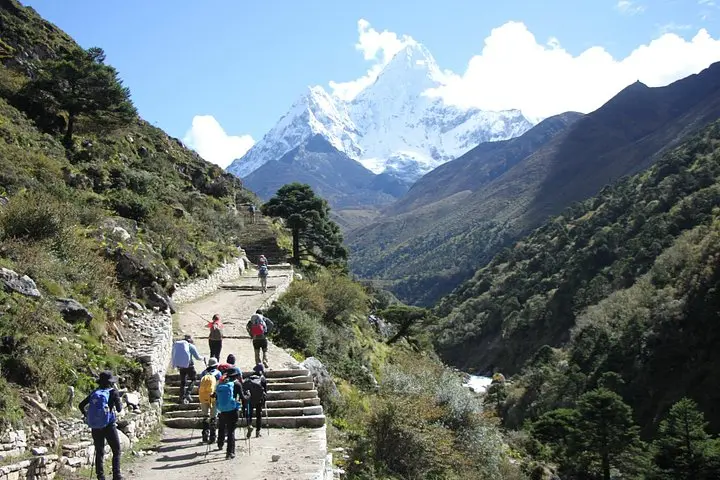
Over the next 12 days you move through villages that cling to steep slopes, cross suspension bridges that sway above the Dudh Koshi, and follow stone-paved trails that rise steadily toward Gorak Shep and the pale moraine of Everest Base Camp. The route threads through Sagarmatha National Park, where rhododendron and blue pine give way to alpine meadows and glacial moraine; Kala Patthar (≈5,550 m) rewards early-risers with the clearest frontal view of Everest.
This is Sherpa country—the monasteries, mani walls and Saturday markets in Namche Bazaar reflect a long mountain culture shaped by trade, pilgrimage and mountaineering. Geologically the trek tracks uplifted sedimentary and metamorphic rock cut by glacial action; moraine fields and the Khumbu Glacier are visible reminders of ongoing change.
Practical guidance: flights to Lukla are weather-dependent—build buffer days. Acclimatization is non-negotiable: scheduled rest days in Namche and Dingboche reduce altitude-sickness risk. Expect 3–8 hours of walking on varied terrain each day, basic teahouse lodging, and large daily temperature swings. Pack layered clothing, a warm sleeping system, and a small medical kit; keep water, snacks, and your trekking permits handy. Move deliberately, listen to guides, and treat the mountain environment with respect—the reward is not just the summit view but the daily, unfolding relationship with the high Himalaya.
The trek is challenging due to altitude and daily elevation gain; expect long days (3–8 hours) on uneven terrain and plan on a moderate-to-high fitness level.
Yes—Sagarmatha National Park entry and TIMS permits are required; your operator usually arranges these before departure.
Pre-monsoon spring (March–May) and post-monsoon autumn (late Sept–Nov) offer the most stable weather and clear mountain views.
Flights are rescheduled; operators recommend buffer days in Kathmandu and will rebook domestic flights when possible, but expect delays and sometimes additional costs.
Himalayan Gateway Trek operates guided outdoor trips and adventures with an emphasis on safety, stewardship, and memorable experiences.
You step off the tiny plane in Lukla and the air immediately feels different—thin, cold, and sharp—with the ridgeline of the Khumbu Alps pointing like a line of challenges ahead.
You step off the tiny plane in Lukla and the air immediately feels different—thin, cold, and sharp—with the ridgeline of the Khumbu Alps pointing like a line of challenges ahead.
Over the next 12 days you move through villages that cling to steep slopes, cross suspension bridges that sway above the Dudh Koshi, and follow stone-paved trails that rise steadily toward Gorak Shep and the pale moraine of Everest Base Camp. The route threads through Sagarmatha National Park, where rhododendron and blue pine give way to alpine meadows and glacial moraine; Kala Patthar (≈5,550 m) rewards early-risers with the clearest frontal view of Everest.
This is Sherpa country—the monasteries, mani walls and Saturday markets in Namche Bazaar reflect a long mountain culture shaped by trade, pilgrimage and mountaineering. Geologically the trek tracks uplifted sedimentary and metamorphic rock cut by glacial action; moraine fields and the Khumbu Glacier are visible reminders of ongoing change.
Practical guidance: flights to Lukla are weather-dependent—build buffer days. Acclimatization is non-negotiable: scheduled rest days in Namche and Dingboche reduce altitude-sickness risk. Expect 3–8 hours of walking on varied terrain each day, basic teahouse lodging, and large daily temperature swings. Pack layered clothing, a warm sleeping system, and a small medical kit; keep water, snacks, and your trekking permits handy. Move deliberately, listen to guides, and treat the mountain environment with respect—the reward is not just the summit view but the daily, unfolding relationship with the high Himalaya.