THE ADVENTURE COLLECTIVE® · Independent discovery and booking for outdoor travel

Fly into Lukla and begin a 12‑day private trek through Sagarmatha National Park, rising from river valleys to glacial moraine and Everest Base Camp. This guided itinerary balances acclimatization days, Sherpa cultural stops and summit views from Kala Patthar.
Fly into Lukla and begin a 12‑day private trek through Sagarmatha National Park, rising from river valleys to glacial moraine and Everest Base Camp. This guided itinerary balances acclimatization days, Sherpa cultural stops and summit views from Kala Patthar.
The trail opens with a thrum of rotor wash over steep ridgelines as you fly from Kathmandu into Lukla, then narrows into a braided path that climbs with the Khumbu’s moods — river, forest, moraine, then ice.
Verified experiences and guided adventures in the surrounding area.
Operated by Nepal Alternative Treks & Expeditions Pvt. Ltd. · Kathmandu, Bagmati Province
The trail opens with a thrum of rotor wash over steep ridgelines as you fly from Kathmandu into Lukla, then narrows into a braided path that climbs with the Khumbu’s moods — river, forest, moraine, then ice.
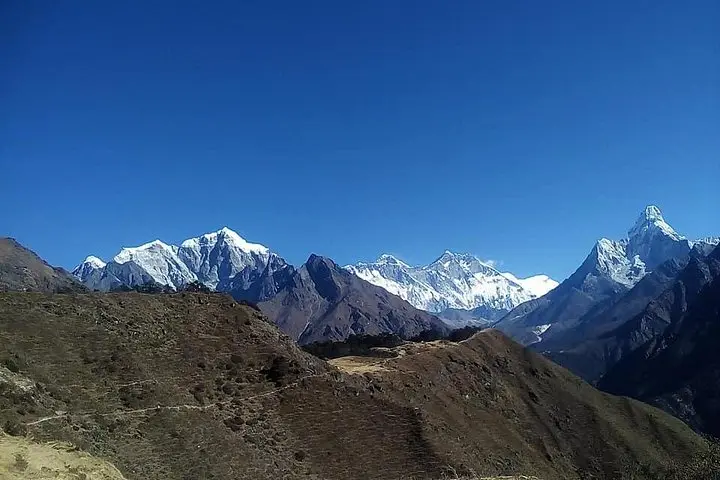
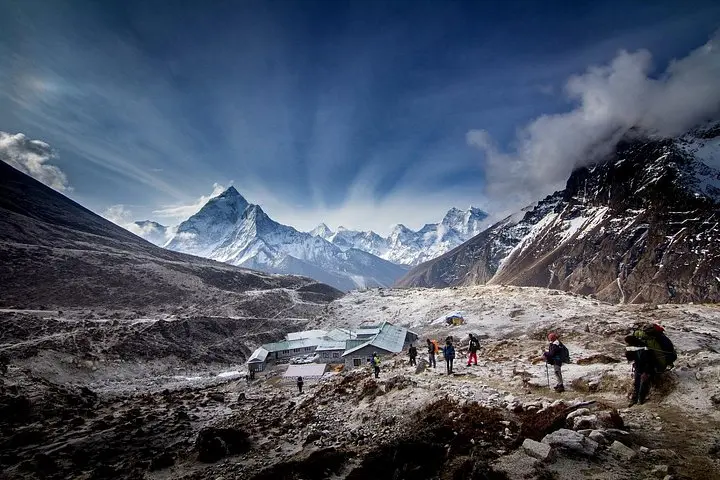
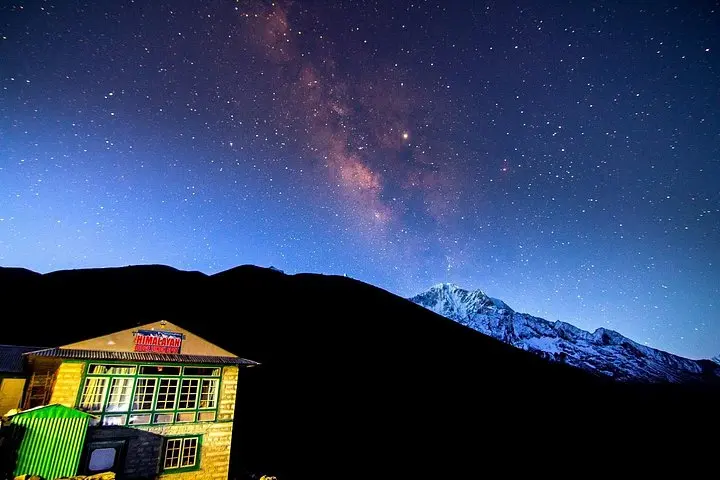
Sagarmatha National Park is carved from uplifted rock and ancient glaciers; the path traces the Dudh Koshi and Imja Khola drainages while offering ever-closer breaths of Ama Dablam, Lhotse and Everest itself. Sherpa villages—Namche, Tengboche, Dingboche—are working highland settlements where prayer flags punctuate stone walls and teahouses offer warming soup and community news.
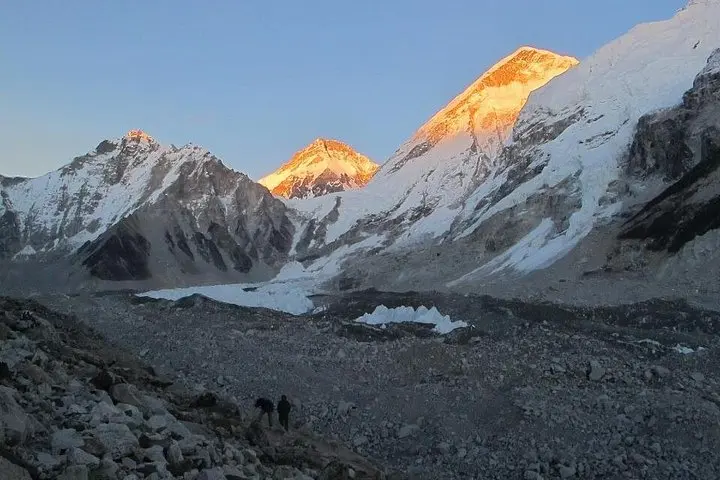
Geology shows through in talus slopes, glacial moraines and the blue-white teeth of the Khumbu Icefall near base camp. Cultural touchstones—Tengboche Monastery, Khumjung school started with Hillary’s support—anchor the walk in local history. Wildlife is subtle: Himalayan tahr on steep ledges, snowcock calling from scree.
Practical guide: the itinerary spaces acclimatization days (Namche, Dingboche) to reduce altitude risk; expect 4–7 hours of walking on typical days, rocky and sometimes icy sections above 4,000 m. Lodges provide basic heating, plug access and meals; carry water treatment and high-calorie snacks. Sunrise on Kala Patthar delivers the summit view; the final reward is earned in lungs and steady feet.
Plan for variable weather—clear mornings can flip to wind-driven snow; layer, hydrate, and move deliberately. A private itinerary means guide-led pacing and porter support, but altitude respect and contingency plans (oxygen, evacuation) remain essential.
Prior experience on multi-day hikes is strongly recommended; acclimatization days are built in, but consistent fitness and previous trekking at altitude lower than 4,000 m help.
Teahouses provide dorm or private rooms, shared bathrooms, hot meals and basic heating; expect simple comforts rather than full-service hotels.
Pre-monsoon spring (March–May) and autumn (September–November) offer the most stable weather and clear mountain views.
The itinerary lists assistance for emergency rescue evacuation and oxygen saturation monitoring; verify specifics with the operator and consider travel insurance that covers helicopter evacuation.
Nepal Alternative Treks & Expeditions Pvt. Ltd. operates guided outdoor trips and adventures with an emphasis on safety, stewardship, and memorable experiences.
The trail opens with a thrum of rotor wash over steep ridgelines as you fly from Kathmandu into Lukla, then narrows into a braided path that climbs with the Khumbu’s moods — river, forest, moraine, then ice.
The trail opens with a thrum of rotor wash over steep ridgelines as you fly from Kathmandu into Lukla, then narrows into a braided path that climbs with the Khumbu’s moods — river, forest, moraine, then ice.
Sagarmatha National Park is carved from uplifted rock and ancient glaciers; the path traces the Dudh Koshi and Imja Khola drainages while offering ever-closer breaths of Ama Dablam, Lhotse and Everest itself. Sherpa villages—Namche, Tengboche, Dingboche—are working highland settlements where prayer flags punctuate stone walls and teahouses offer warming soup and community news.
Geology shows through in talus slopes, glacial moraines and the blue-white teeth of the Khumbu Icefall near base camp. Cultural touchstones—Tengboche Monastery, Khumjung school started with Hillary’s support—anchor the walk in local history. Wildlife is subtle: Himalayan tahr on steep ledges, snowcock calling from scree.
Practical guide: the itinerary spaces acclimatization days (Namche, Dingboche) to reduce altitude risk; expect 4–7 hours of walking on typical days, rocky and sometimes icy sections above 4,000 m. Lodges provide basic heating, plug access and meals; carry water treatment and high-calorie snacks. Sunrise on Kala Patthar delivers the summit view; the final reward is earned in lungs and steady feet.
Plan for variable weather—clear mornings can flip to wind-driven snow; layer, hydrate, and move deliberately. A private itinerary means guide-led pacing and porter support, but altitude respect and contingency plans (oxygen, evacuation) remain essential.