THE ADVENTURE COLLECTIVE® · Independent discovery and booking for outdoor travel

A 14‑day route from Lukla to Everest Base Camp and Kala Patthar that pairs Sherpa culture with high‑altitude terrain. Expect tea‑house nights, glacier approaches, and mandatory acclimatization days.
A 14‑day route from Lukla to Everest Base Camp and Kala Patthar that pairs Sherpa culture with high‑altitude terrain. Expect tea‑house nights, glacier approaches, and mandatory acclimatization days.
You step off the 35‑minute flight to Lukla and the mountains take over: a jumble of stone villages, prayer flags snapping, and a trail that rises toward a skyline of serrated peaks.
Verified experiences and guided adventures in the surrounding area.
Operated by Himalayan Recreation Treks & Expedition Pvt.Ltd · Gorak Shep, Solukhumbu District
You step off the 35‑minute flight to Lukla and the mountains take over: a jumble of stone villages, prayer flags snapping, and a trail that rises toward a skyline of serrated peaks.
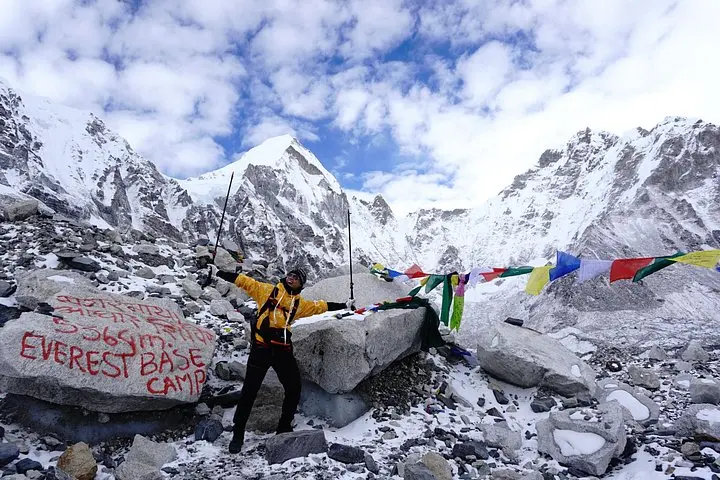
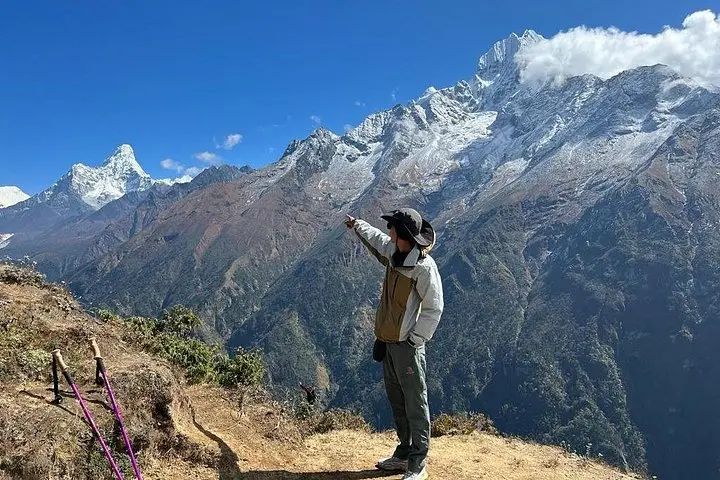
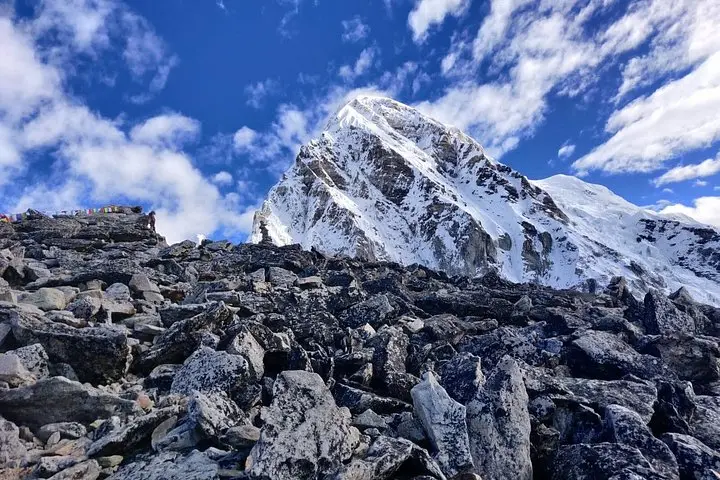
Over 14 days the route moves through rhododendron slopes and Sherpa villages—Namche Bazaar’s market hums with traders, Tengboche’s gompa overlooks a broad valley, and the Khumbu Glacier grinds below the final approach to Gorak Shep and Everest Base Camp (5,364 m). Kala Patthar (≈5,545 m) provides the clearest sunrise perspective on Everest and the surrounding giants.
This landscape is the product of the India‑Asia collision: uplifted metamorphic rock shaped by glacial ice and active crevassing. The region is also Sherpa country; Tibetan Buddhism and mani walls punctuate the trail, and hospitality centers on tea houses and shared dinners. Sagarmatha National Park protects the area and requires permits (TIMS and park entry) for trekkers.
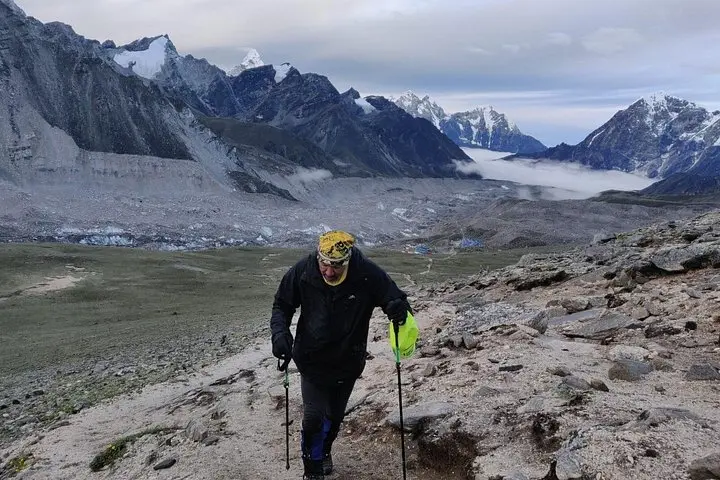
Practically, expect long days of walking on stone and moraine, tea‑house accommodations, and wide temperature swings. Acclimatization days are built into the itinerary—use them. Lukla flights are weather dependent; add buffer days to your schedule. Carry cash (remote villages rarely take cards), arrange travel insurance that covers high‑altitude evacuation, and keep your overnight pack under ~10 kg for comfort. Basic first aid and altitude awareness are essential: recognize early signs of AMS and inform your guide. With preparation, the route delivers raw high‑altitude scenery, close cultural encounters, and the rare reward of standing within sight of the world’s highest summit.
Trekkers need a Sagarmatha National Park entry permit and a TIMS (Trekkers’ Information Management System) card; your operator typically arranges these before or at the start of the trek.
Daily stages vary from 3–9 hours depending on altitude gain—expect longer days approaching Lobuche and Gorak Shep, and shorter acclimatization hikes.
Physically fit beginners can succeed with proper acclimatization, guided support, and time to adapt; prior high‑altitude experience is helpful but not required.
Book Kathmandu–Lukla flights well in advance for peak seasons (spring/fall); tea‑house rooms are allocated on arrival, but busy times can fill, so travel with a reputable operator.
Himalayan Recreation Treks & Expedition Pvt.Ltd operates guided outdoor trips and adventures with an emphasis on safety, stewardship, and memorable experiences.
You step off the 35‑minute flight to Lukla and the mountains take over: a jumble of stone villages, prayer flags snapping, and a trail that rises toward a skyline of serrated peaks.
You step off the 35‑minute flight to Lukla and the mountains take over: a jumble of stone villages, prayer flags snapping, and a trail that rises toward a skyline of serrated peaks.
Over 14 days the route moves through rhododendron slopes and Sherpa villages—Namche Bazaar’s market hums with traders, Tengboche’s gompa overlooks a broad valley, and the Khumbu Glacier grinds below the final approach to Gorak Shep and Everest Base Camp (5,364 m). Kala Patthar (≈5,545 m) provides the clearest sunrise perspective on Everest and the surrounding giants.
This landscape is the product of the India‑Asia collision: uplifted metamorphic rock shaped by glacial ice and active crevassing. The region is also Sherpa country; Tibetan Buddhism and mani walls punctuate the trail, and hospitality centers on tea houses and shared dinners. Sagarmatha National Park protects the area and requires permits (TIMS and park entry) for trekkers.
Practically, expect long days of walking on stone and moraine, tea‑house accommodations, and wide temperature swings. Acclimatization days are built into the itinerary—use them. Lukla flights are weather dependent; add buffer days to your schedule. Carry cash (remote villages rarely take cards), arrange travel insurance that covers high‑altitude evacuation, and keep your overnight pack under ~10 kg for comfort. Basic first aid and altitude awareness are essential: recognize early signs of AMS and inform your guide. With preparation, the route delivers raw high‑altitude scenery, close cultural encounters, and the rare reward of standing within sight of the world’s highest summit.