THE ADVENTURE COLLECTIVE® · Independent discovery and booking for outdoor travel

Fly into Lukla, walk through Sherpa villages and glacier-sculpted valleys, then stand at Kala Patthar for sunrise over Everest. This 14-day itinerary balances acclimatization and mileage to get you to Everest Base Camp safely and memorably.
Fly into Lukla, walk through Sherpa villages and glacier-sculpted valleys, then stand at Kala Patthar for sunrise over Everest. This 14-day itinerary balances acclimatization and mileage to get you to Everest Base Camp safely and memorably.
A thin Himalayan dawn spreads across the valley as your small plane drops toward Lukla’s short runway — prayer flags snap like bright punctuation above a village that starts the ascent. From Lukla the trail threads river gorges, suspension bridges and rhododendron forests, climbing through Namche Bazaar’s busy trading hub up to the wind-scoured tea houses of Gorakshep and the stony moraine that holds Everest Base Camp.
Verified experiences and guided adventures in the surrounding area.
Operated by Overland Trek Nepal · Gorakshep, Solukhumbu District
A thin Himalayan dawn spreads across the valley as your small plane drops toward Lukla’s short runway — prayer flags snap like bright punctuation above a village that starts the ascent. From Lukla the trail threads river gorges, suspension bridges and rhododendron forests, climbing through Namche Bazaar’s busy trading hub up to the wind-scoured tea houses of Gorakshep and the stony moraine that holds Everest Base Camp.
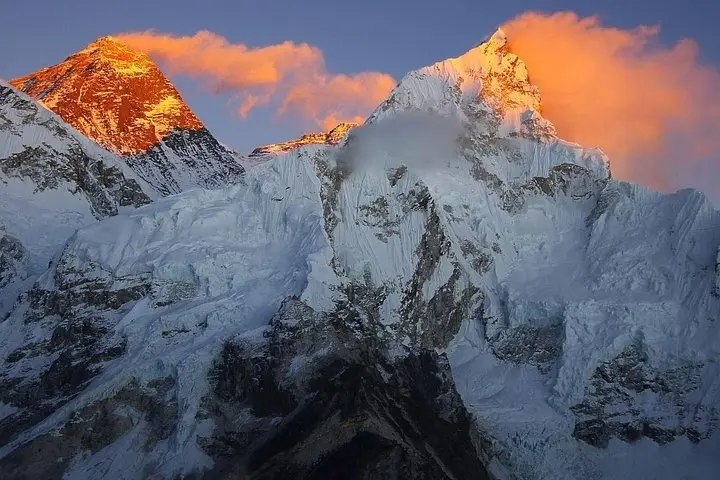
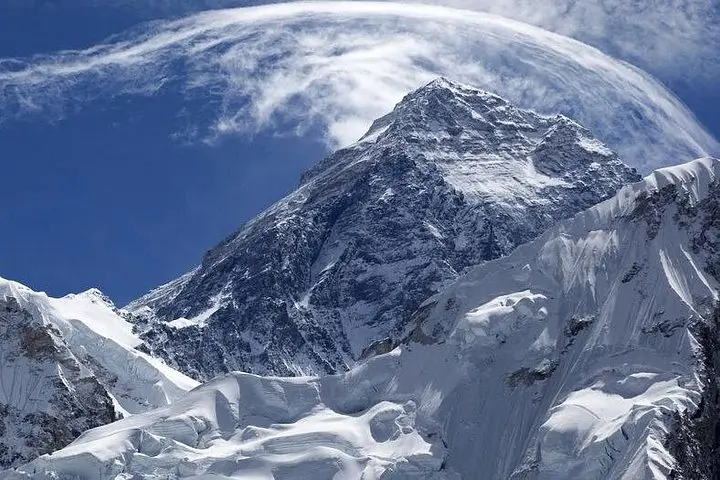
The route follows routes first popularized during the 1950s expeditions; you’ll pass Tengboche monastery, watch glacial tongues carve the Khumbu, and stand on Kala Patthar for a sunrise that places Everest, Lhotse and Pumori within the same panoramic sweep. Geologically you’re crossing uplifted sedimentary bands and active glacial moraine; culturally the Khumbu is Sherpa country — tea-house hospitality, prayer wheels and mani walls punctuate long days.
Expect 60–75 km of trail one-way from Lukla to EBC with total altitude gain of roughly 2,500–3,200 m (trail ups and downs make cumulative gain higher). Typical trek days are 4–7 hours on rocky, sometimes icy terrain; two key acclimatization stops are Namche and Dingboche. Flights to/from Lukla are weather-dependent; plan buffer days. Hydrate, carry layers for sub-zero nights, and budget extra time for altitude adjustment and flight delays. With experienced guides, basic trekking experience and steady fitness, this itinerary delivers one of the world’s most iconic high-altitude treks.
Yes — TIMS card and Sagarmatha National Park permit are required and usually arranged by your operator.
You should have prior multi-day trekking experience and be able to hike several hours daily carrying a daypack; aerobic conditioning helps with altitude.
Flights are frequent but highly weather-dependent; cancellations and delays are common in winter and monsoon seasons, so plan buffers.
Altitude sickness is real above 3,000 m; follow gradual ascents, hydrate, monitor symptoms, and descend if severe — guides carry basic medical kits.
Overland Trek Nepal operates guided outdoor trips and adventures with an emphasis on safety, stewardship, and memorable experiences.
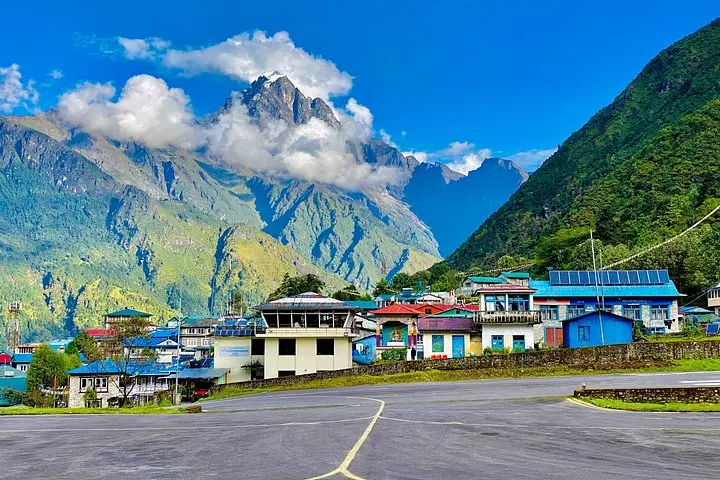
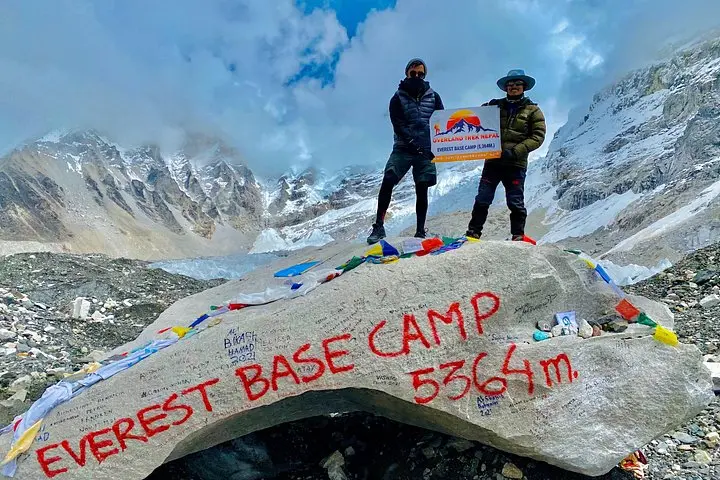
A thin Himalayan dawn spreads across the valley as your small plane drops toward Lukla’s short runway — prayer flags snap like bright punctuation above a village that starts the ascent. From Lukla the trail threads river gorges, suspension bridges and rhododendron forests, climbing through Namche Bazaar’s busy trading hub up to the wind-scoured tea houses of Gorakshep and the stony moraine that holds Everest Base Camp.
A thin Himalayan dawn spreads across the valley as your small plane drops toward Lukla’s short runway — prayer flags snap like bright punctuation above a village that starts the ascent. From Lukla the trail threads river gorges, suspension bridges and rhododendron forests, climbing through Namche Bazaar’s busy trading hub up to the wind-scoured tea houses of Gorakshep and the stony moraine that holds Everest Base Camp.
The route follows routes first popularized during the 1950s expeditions; you’ll pass Tengboche monastery, watch glacial tongues carve the Khumbu, and stand on Kala Patthar for a sunrise that places Everest, Lhotse and Pumori within the same panoramic sweep. Geologically you’re crossing uplifted sedimentary bands and active glacial moraine; culturally the Khumbu is Sherpa country — tea-house hospitality, prayer wheels and mani walls punctuate long days.
Expect 60–75 km of trail one-way from Lukla to EBC with total altitude gain of roughly 2,500–3,200 m (trail ups and downs make cumulative gain higher). Typical trek days are 4–7 hours on rocky, sometimes icy terrain; two key acclimatization stops are Namche and Dingboche. Flights to/from Lukla are weather-dependent; plan buffer days. Hydrate, carry layers for sub-zero nights, and budget extra time for altitude adjustment and flight delays. With experienced guides, basic trekking experience and steady fitness, this itinerary delivers one of the world’s most iconic high-altitude treks.