THE ADVENTURE COLLECTIVE® · Independent discovery and booking for outdoor travel

Travel from Maun across the Central Kalahari to the water-slick corridors of the Okavango and the Chobe Riverfront on a 14-day mobile tented safari. Expect game drives, boat cruises, and nights under canvas with practical tips for timing, gear, and wildlife etiquette.
Travel from Maun across the Central Kalahari to the water-slick corridors of the Okavango and the Chobe Riverfront on a 14-day mobile tented safari. Expect game drives, boat cruises, and nights under canvas with practical tips for timing, gear, and wildlife etiquette.
A dawn hush hangs over the Okavango channels as a moth-eaten canvas awning is folded and the team tucks away mugs of coffee. The vehicle rolls out from a ring of tents; palms and reeds part to reveal a ribbon of water where hippos grumble and kingfishers flash.
Verified experiences and guided adventures in the surrounding area.
Operated by Wild Africa Safaris · Maun, North-West District
A dawn hush hangs over the Okavango channels as a moth-eaten canvas awning is folded and the team tucks away mugs of coffee. The vehicle rolls out from a ring of tents; palms and reeds part to reveal a ribbon of water where hippos grumble and kingfishers flash.
This 14-day mobile tented safari threads two contrasting worlds: the dry, wind-sculpted pans of the Central Kalahari and the water-laced corridors of the Okavango and Chobe. Geology here alternates between ancient sands and the seasonal floodplain of a once-mighty inland delta; fossilized riverbeds in Deception Valley and the marsh-fed channels of Moremi mark different eras of water and drought. Culturally, the region has long been home to the San people and more recent river-based communities whose canoeing traditions survive in Khwai.
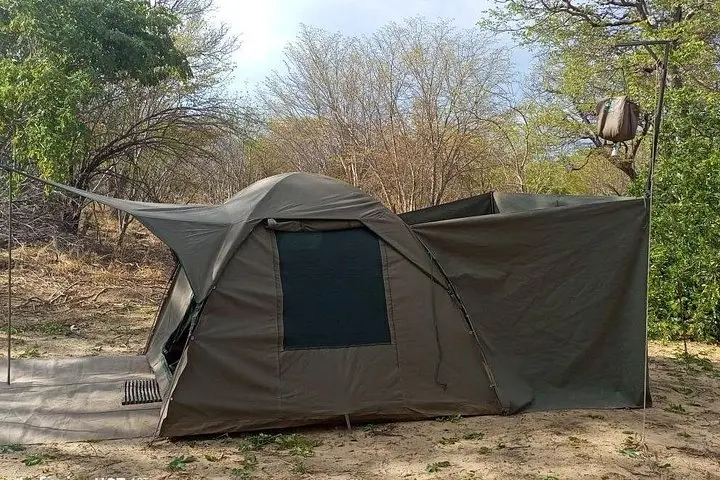
Expect full-day drives, early-morning and late-afternoon game drives, boat cruises on the Delta and Chobe, and short mokoro (dugout canoe) trips. Camps are mobile, offering stretcher beds, drop toilets and bucket or en-suite showers depending on location; nights can be unexpectedly cold, days hot and insect-rich. Wildlife viewing is best in the dry season when animals concentrate around water, while the green season brings abundant birds and dramatic floods.
Practical notes: pack layers and reliable mosquito repellent, carry binoculars and a headlamp, and plan for long transfers between regions. Respect park rules, keep distances from wildlife, and carry hard copies of travel documents—connectivity is limited across large swaths of the route.
The minimum age is 9 years; children must be accompanied by an adult and child rates apply only when sharing with two paying adults.
The itinerary is suitable for all fitness levels but involves long drives, entering/exiting vehicles and sleeping in tents—basic mobility is required.
Meals listed (breakfast, lunch, dinner) are included for most days; confirm whether park entry fees or optional activities are covered at booking.
Bring a valid passport (with expiry as requested), any required visas, and consult your doctor about recommended vaccinations and malaria prophylaxis for Botswana.
Wild Africa Safaris operates guided outdoor trips and adventures with an emphasis on safety, stewardship, and memorable experiences.
A dawn hush hangs over the Okavango channels as a moth-eaten canvas awning is folded and the team tucks away mugs of coffee. The vehicle rolls out from a ring of tents; palms and reeds part to reveal a ribbon of water where hippos grumble and kingfishers flash.
A dawn hush hangs over the Okavango channels as a moth-eaten canvas awning is folded and the team tucks away mugs of coffee. The vehicle rolls out from a ring of tents; palms and reeds part to reveal a ribbon of water where hippos grumble and kingfishers flash.
This 14-day mobile tented safari threads two contrasting worlds: the dry, wind-sculpted pans of the Central Kalahari and the water-laced corridors of the Okavango and Chobe. Geology here alternates between ancient sands and the seasonal floodplain of a once-mighty inland delta; fossilized riverbeds in Deception Valley and the marsh-fed channels of Moremi mark different eras of water and drought. Culturally, the region has long been home to the San people and more recent river-based communities whose canoeing traditions survive in Khwai.
Expect full-day drives, early-morning and late-afternoon game drives, boat cruises on the Delta and Chobe, and short mokoro (dugout canoe) trips. Camps are mobile, offering stretcher beds, drop toilets and bucket or en-suite showers depending on location; nights can be unexpectedly cold, days hot and insect-rich. Wildlife viewing is best in the dry season when animals concentrate around water, while the green season brings abundant birds and dramatic floods.
Practical notes: pack layers and reliable mosquito repellent, carry binoculars and a headlamp, and plan for long transfers between regions. Respect park rules, keep distances from wildlife, and carry hard copies of travel documents—connectivity is limited across large swaths of the route.