THE ADVENTURE COLLECTIVE® · Independent discovery and booking for outdoor travel

Cross Oman from Muscat to the Empty Quarter and back on a 15‑day overland expedition that pairs Hajar Mountain treks with long desert crossings. Expect high plateaus, remote dune seas and authentic campsites beneath wide Arabian skies.
Cross Oman from Muscat to the Empty Quarter and back on a 15‑day overland expedition that pairs Hajar Mountain treks with long desert crossings. Expect high plateaus, remote dune seas and authentic campsites beneath wide Arabian skies.
You step from Muscat’s humid airport into a world that shifts with every hour: white‑washed city streets give way to the craggy, weathered spine of the Hajar Mountains, then to sea of dunes that seem to move on their own timetable.
Verified experiences and guided adventures in the surrounding area.
Operated by Tribe Oman · Muscat, Muscat
You step from Muscat’s humid airport into a world that shifts with every hour: white‑washed city streets give way to the craggy, weathered spine of the Hajar Mountains, then to sea of dunes that seem to move on their own timetable.
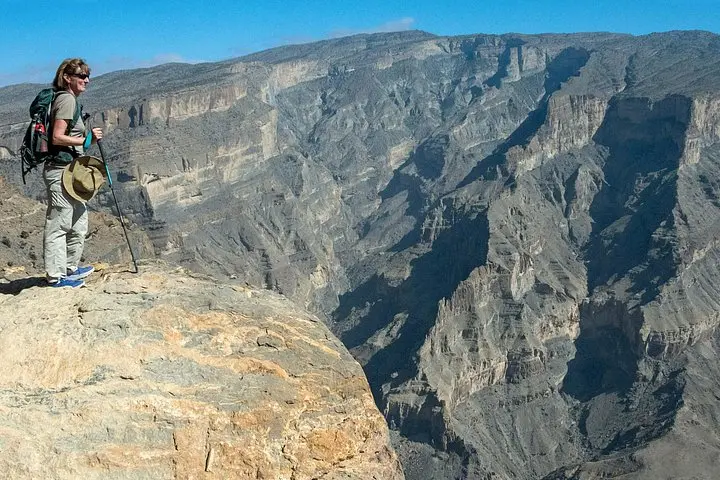
This 15‑day overland route follows old trails and modern fuel stops — from the Sultan Qaboos Grand Mosque and Mutrah Souq to Jabal Shams, Arabia’s highest plateau (≈3,009 m), where the Balcony Walk peers down into a deep, sun‑scoured canyon. Geology here reads like a field guide: uplifted limestone and folded strata in the Hajar, then wind‑carved sand and gypsum flats across the Empty Quarter (Rub' al Khali) where Thesiger once mapped a forbidding landscape.
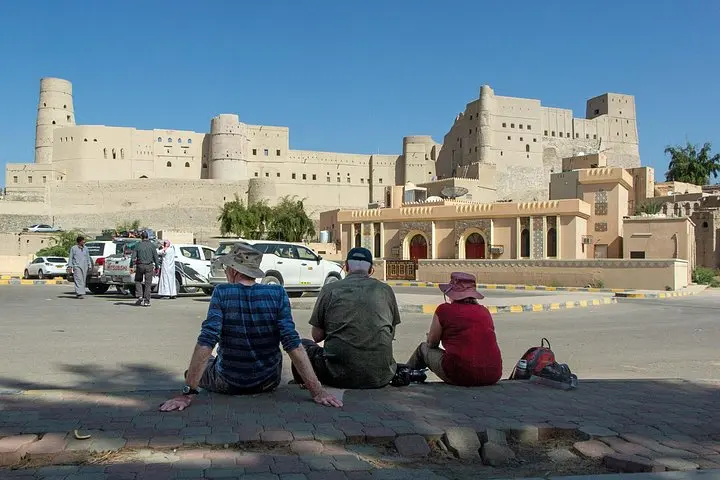
Culturally the trip threads Bedouin camps, the UNESCO‑listed Bahla Fort, and Nizwa’s Friday market — places where crafts, dates and frank talk about water shape daily life. Wildlife appears in small, telling ways: oryx silhouette at dawn, desert fox tracks in the sand.
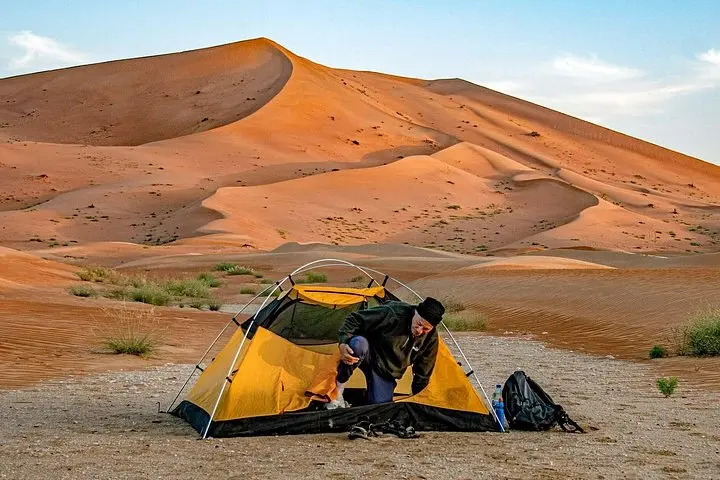
Practical note: expect long off‑road legs (including a ~600 km remote crossing), nightly camps under stars, and multiple short walks among dunes, wadis and rock ruins. Bring sun protection, a reliable 4x4 support team handles navigation and fuel, and pack layers for alpine chill at Jabal Shams. Hydrate early, protect electronics from fine sand, and time desert drives for morning and late afternoon to avoid peak heat. If you want a deep, vehicle‑based desert traverse with easy day hikes and authentic camping, this route balances cultural stops with serious sand and mountain scenery.
Sections through the Empty Quarter are very remote with long stretches between fuel and settlements; the operator provides experienced 4x4 crews and planned fuel stops.
No; the tour includes camp setup and meals, but you should be comfortable sleeping in a tent and following basic camp routines.
Jabal Shams reaches around 3,009 m—most visitors acclimatize with gradual ascent; brief hikes are moderate but bring warm layers.
Lightweight, breathable boots with good ankle support and closed gaiters work best to keep sand out while allowing traction on soft and rocky terrain.
Tribe Oman operates guided outdoor trips and adventures with an emphasis on safety, stewardship, and memorable experiences.
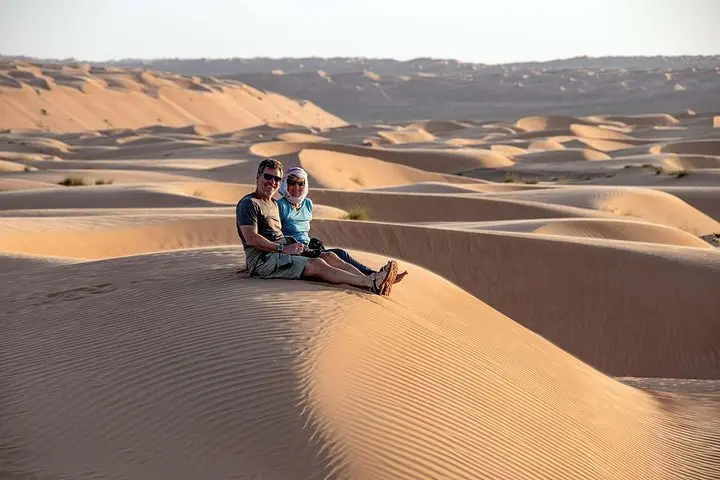
You step from Muscat’s humid airport into a world that shifts with every hour: white‑washed city streets give way to the craggy, weathered spine of the Hajar Mountains, then to sea of dunes that seem to move on their own timetable.
You step from Muscat’s humid airport into a world that shifts with every hour: white‑washed city streets give way to the craggy, weathered spine of the Hajar Mountains, then to sea of dunes that seem to move on their own timetable.
This 15‑day overland route follows old trails and modern fuel stops — from the Sultan Qaboos Grand Mosque and Mutrah Souq to Jabal Shams, Arabia’s highest plateau (≈3,009 m), where the Balcony Walk peers down into a deep, sun‑scoured canyon. Geology here reads like a field guide: uplifted limestone and folded strata in the Hajar, then wind‑carved sand and gypsum flats across the Empty Quarter (Rub' al Khali) where Thesiger once mapped a forbidding landscape.
Culturally the trip threads Bedouin camps, the UNESCO‑listed Bahla Fort, and Nizwa’s Friday market — places where crafts, dates and frank talk about water shape daily life. Wildlife appears in small, telling ways: oryx silhouette at dawn, desert fox tracks in the sand.
Practical note: expect long off‑road legs (including a ~600 km remote crossing), nightly camps under stars, and multiple short walks among dunes, wadis and rock ruins. Bring sun protection, a reliable 4x4 support team handles navigation and fuel, and pack layers for alpine chill at Jabal Shams. Hydrate early, protect electronics from fine sand, and time desert drives for morning and late afternoon to avoid peak heat. If you want a deep, vehicle‑based desert traverse with easy day hikes and authentic camping, this route balances cultural stops with serious sand and mountain scenery.