THE ADVENTURE COLLECTIVE® · Independent discovery and booking for outdoor travel

See Yellowstone from above in a fast, scenic 15-minute flight that delivers sweeping views of lakes, fault scarps, and forested valleys. Perfect as an orientation flight for first-time visitors or a quick, memorable photo run.
See Yellowstone from above in a fast, scenic 15-minute flight that delivers sweeping views of lakes, fault scarps, and forested valleys. Perfect as an orientation flight for first-time visitors or a quick, memorable photo run.
You lift off from a small mountain airfield and the town of West Yellowstone shrinks into a pattern of roofs and pines. The plane banks gently and the valley opens beneath you — ridgelines cut by rivers, a cobalt lake flashing in a sun that seems unusually close. In fifteen minutes the landscape rearranges itself into an aerial story: fault scarps, uplifted shorelines, and river arteries that have carved the country for millennia.
Verified experiences and guided adventures in the surrounding area.
Operated by Fly Yellowstone · West Yellowstone, Montana
You lift off from a small mountain airfield and the town of West Yellowstone shrinks into a pattern of roofs and pines. The plane banks gently and the valley opens beneath you — ridgelines cut by rivers, a cobalt lake flashing in a sun that seems unusually close. In fifteen minutes the landscape rearranges itself into an aerial story: fault scarps, uplifted shorelines, and river arteries that have carved the country for millennia.
The flight skirts the edges of Yellowstone National Park and the 1959 Hebgen Lake earthquake uplift is easy to spot from above — a raw, geological scar that speaks to the region’s violent tectonic history. The area sits on the Greater Yellowstone Ecosystem, one of the largest nearly intact temperate ecosystems on Earth, and from the window you can see why wildlife moves in broad, seasonal arcs across this terrain.
Locally, West Yellowstone grew as a gateway town tied to park tourism and aviation; the small airport has long been a launch point for quick orientation flights. Culturally the town still leans on services for visitors — gear, guides, interpretive centers — making access and context simple for newcomers.
Practical guidance: bring a warm outer layer (altitude chills even in summer) and a camera with a wide-angle lens; guaranteed window seats are included but weight limits apply, so check booking rules. Expect a brief safety briefing, noise-reducing headsets, and an FAA-certified pilot. The whole experience is short and accessible — ideal as a first-day orientation or a final panorama — but respect wildlife and park airspace: flights stay outside restricted zones to minimize disturbance.
The tour is a fixed 15-minute flight from the West Yellowstone airfield, including a brief ground briefing before takeoff.
Yes—this operator guarantees a window seat for every guest to maximize the aerial viewing experience.
No—the tour stays outside restricted park airspace; you’ll see the park’s edges, river valleys, and high country from a legal vantage point.
Combined passenger weight limits apply; travelers with serious back problems or who are pregnant are not recommended to fly. Check booking questions for required weight and height info.
Fly Yellowstone operates guided outdoor trips and adventures with an emphasis on safety, stewardship, and memorable experiences.
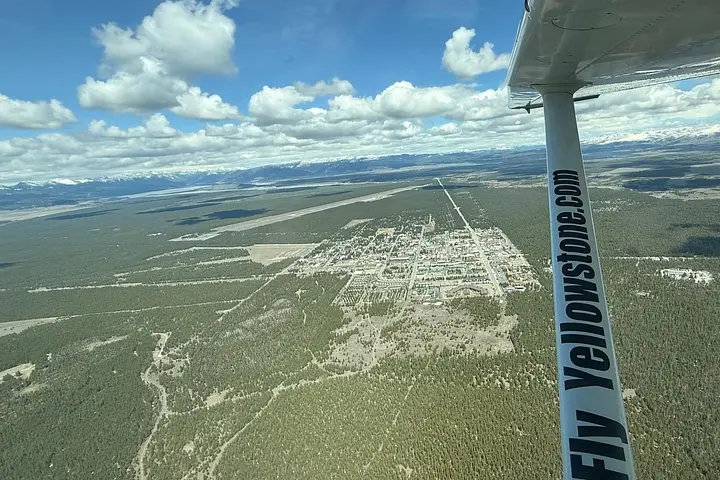
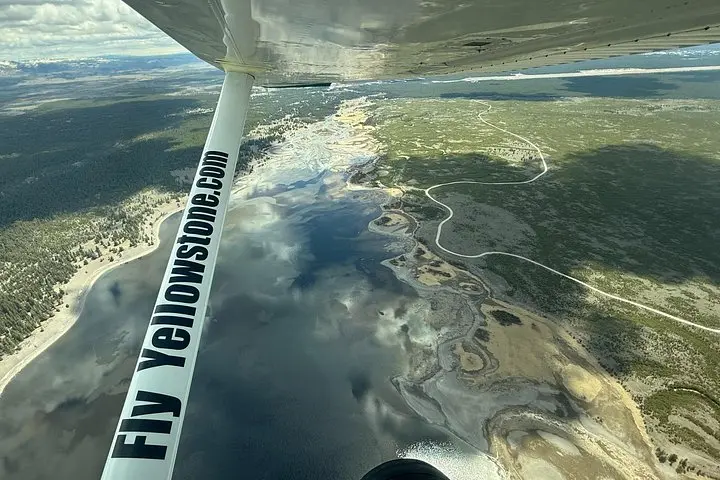
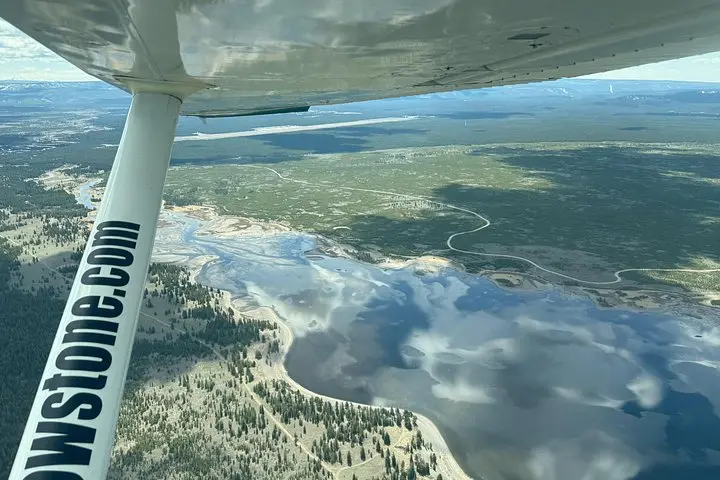
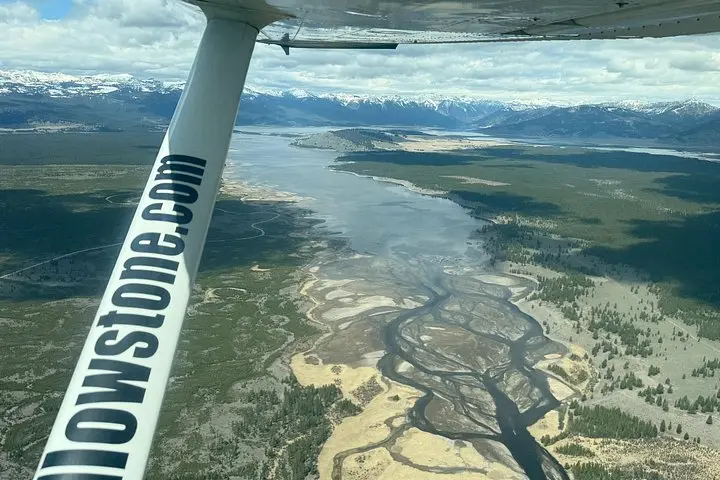
You lift off from a small mountain airfield and the town of West Yellowstone shrinks into a pattern of roofs and pines. The plane banks gently and the valley opens beneath you — ridgelines cut by rivers, a cobalt lake flashing in a sun that seems unusually close. In fifteen minutes the landscape rearranges itself into an aerial story: fault scarps, uplifted shorelines, and river arteries that have carved the country for millennia.
You lift off from a small mountain airfield and the town of West Yellowstone shrinks into a pattern of roofs and pines. The plane banks gently and the valley opens beneath you — ridgelines cut by rivers, a cobalt lake flashing in a sun that seems unusually close. In fifteen minutes the landscape rearranges itself into an aerial story: fault scarps, uplifted shorelines, and river arteries that have carved the country for millennia.
The flight skirts the edges of Yellowstone National Park and the 1959 Hebgen Lake earthquake uplift is easy to spot from above — a raw, geological scar that speaks to the region’s violent tectonic history. The area sits on the Greater Yellowstone Ecosystem, one of the largest nearly intact temperate ecosystems on Earth, and from the window you can see why wildlife moves in broad, seasonal arcs across this terrain.
Locally, West Yellowstone grew as a gateway town tied to park tourism and aviation; the small airport has long been a launch point for quick orientation flights. Culturally the town still leans on services for visitors — gear, guides, interpretive centers — making access and context simple for newcomers.
Practical guidance: bring a warm outer layer (altitude chills even in summer) and a camera with a wide-angle lens; guaranteed window seats are included but weight limits apply, so check booking rules. Expect a brief safety briefing, noise-reducing headsets, and an FAA-certified pilot. The whole experience is short and accessible — ideal as a first-day orientation or a final panorama — but respect wildlife and park airspace: flights stay outside restricted zones to minimize disturbance.