THE ADVENTURE COLLECTIVE® · Independent discovery and booking for outdoor travel

A 16-day private tour connecting Japan’s refined shrines and China’s imperial wonders. Expect curated logistics, daily guided walks, regional flights and a steady rhythm of cultural immersion and scenic highlights.
A 16-day private tour connecting Japan’s refined shrines and China’s imperial wonders. Expect curated logistics, daily guided walks, regional flights and a steady rhythm of cultural immersion and scenic highlights.
Touch down in Tokyo and feel the organized hum of the airport assistant guiding you through a swift transfer — the first of many carefully choreographed moves on this 16-day private discovery. From Tokyo’s neon arteries to Kyoto’s calm temple ramps, from Lake Kawaguchi’s mirror of Mt. Fuji to the karst towers of Guilin and the ancient clay armies of Xi’an, the itinerary threads urban rigor with continental antiquity.
Verified experiences and guided adventures in the surrounding area.
Operated by Travel China Guide · Tokyo, Tokyo
Touch down in Tokyo and feel the organized hum of the airport assistant guiding you through a swift transfer — the first of many carefully choreographed moves on this 16-day private discovery. From Tokyo’s neon arteries to Kyoto’s calm temple ramps, from Lake Kawaguchi’s mirror of Mt. Fuji to the karst towers of Guilin and the ancient clay armies of Xi’an, the itinerary threads urban rigor with continental antiquity.
Japan’s chapters focus on imperial courts and Shinto practice: Meiji Jingu’s cedar aisles and Fushimi Inari’s endless torii recall Edo and Heian-era civic religion and courtly life. Geology comes into view at Lake Kawaguchi — volcanic plumbing and glacial sculpting give Mount Fuji its cone — then again in Guilin where 180-million-year-old limestone was dissolved into the dramatic karst ridges that flank the Li River.
Crossing into China, the program pivots to dynastic scale: the Terracotta Army’s funerary engineering, Beijing’s Forbidden City and the Ming-built Mutianyu section of the Great Wall speak to statecraft and labor over centuries. Interwoven are living cultures — Kyoto’s geisha districts, Nara’s resident deer, Yangshuo’s farming households — offering context beyond monuments.
Practical guidance: confirm visas early, carry local currency plus a travel card for trains, and plan walking time — most days include several hours of on-foot exploration. Comfortable, broken-in shoes and a modest daypack make long temple steps and market alleys manageable. Expect moderate physical demand from repeated urban walking rather than technical challenges; the private-guide structure minimizes logistical friction while maximizing historical and local insight.
Yes—most travelers require visas or electronic travel authorizations for China; Japan’s entry rules vary by nationality. Obtain visas well before travel and verify passport validity requirements.
The tour is moderate: expect extended walking, some stairs, and short hikes like at observation points; no technical climbing or mountaineering is required.
Domestics listed in the itinerary (e.g., Osaka–Shanghai airfare, Tokyo–Kyoto train, Guilin–Xi’an flight) are included per the itinerary notes.
Major cards work in cities, but carry cash in local currency for markets, small vendors and rural areas; mobile payment apps are common in China.
Travel China Guide operates guided outdoor trips and adventures with an emphasis on safety, stewardship, and memorable experiences.
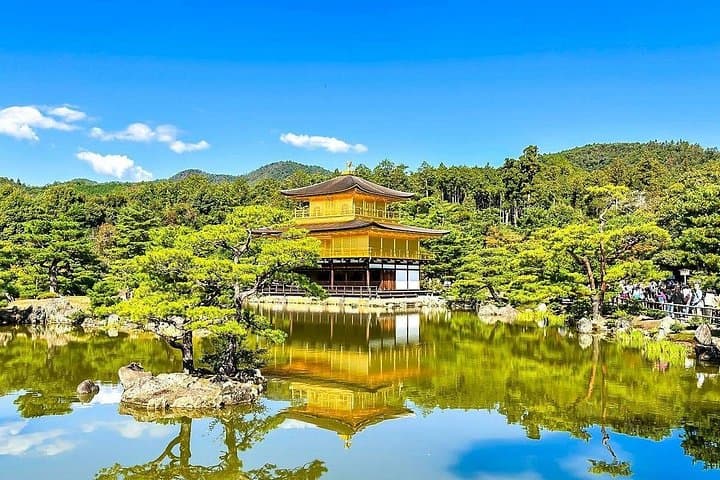


Touch down in Tokyo and feel the organized hum of the airport assistant guiding you through a swift transfer — the first of many carefully choreographed moves on this 16-day private discovery. From Tokyo’s neon arteries to Kyoto’s calm temple ramps, from Lake Kawaguchi’s mirror of Mt. Fuji to the karst towers of Guilin and the ancient clay armies of Xi’an, the itinerary threads urban rigor with continental antiquity.
Touch down in Tokyo and feel the organized hum of the airport assistant guiding you through a swift transfer — the first of many carefully choreographed moves on this 16-day private discovery. From Tokyo’s neon arteries to Kyoto’s calm temple ramps, from Lake Kawaguchi’s mirror of Mt. Fuji to the karst towers of Guilin and the ancient clay armies of Xi’an, the itinerary threads urban rigor with continental antiquity.
Japan’s chapters focus on imperial courts and Shinto practice: Meiji Jingu’s cedar aisles and Fushimi Inari’s endless torii recall Edo and Heian-era civic religion and courtly life. Geology comes into view at Lake Kawaguchi — volcanic plumbing and glacial sculpting give Mount Fuji its cone — then again in Guilin where 180-million-year-old limestone was dissolved into the dramatic karst ridges that flank the Li River.
Crossing into China, the program pivots to dynastic scale: the Terracotta Army’s funerary engineering, Beijing’s Forbidden City and the Ming-built Mutianyu section of the Great Wall speak to statecraft and labor over centuries. Interwoven are living cultures — Kyoto’s geisha districts, Nara’s resident deer, Yangshuo’s farming households — offering context beyond monuments.
Practical guidance: confirm visas early, carry local currency plus a travel card for trains, and plan walking time — most days include several hours of on-foot exploration. Comfortable, broken-in shoes and a modest daypack make long temple steps and market alleys manageable. Expect moderate physical demand from repeated urban walking rather than technical challenges; the private-guide structure minimizes logistical friction while maximizing historical and local insight.