THE ADVENTURE COLLECTIVE® · Independent discovery and booking for outdoor travel

A multi-day trek that moves from highland granite peaks to Isalo’s sculpted canyons and ends on Ifaty’s turquoise lagoon. Expect steep climbs, traditional villages, sleeping under the stars, and rich cultural exchanges.
A multi-day trek that moves from highland granite peaks to Isalo’s sculpted canyons and ends on Ifaty’s turquoise lagoon. Expect steep climbs, traditional villages, sleeping under the stars, and rich cultural exchanges.
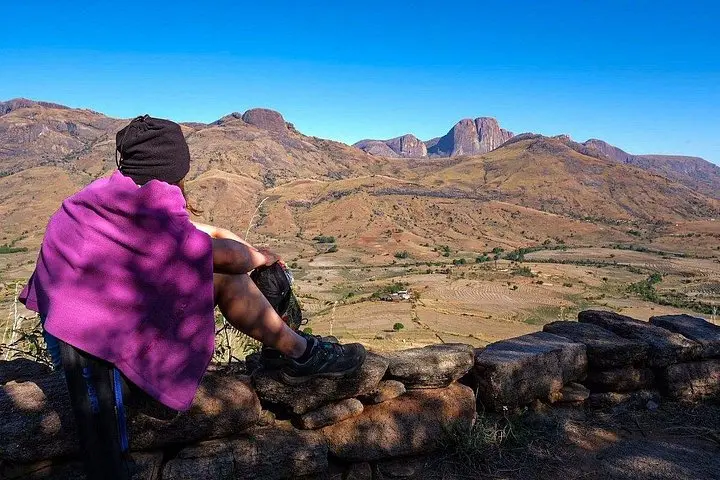
Dawn breaks over granite spines and eucalyptus-scented ridges as your group tightens packs and steps off the track into Zafimaniry country. The air is cool, the path alternates between rice terraces and red laterite, and the cliffs of Andringitra loom like an old, patient force daring you upward.
Verified experiences and guided adventures in the surrounding area.
Operated by Mada Diary Tour · Ambalavao, Haute Matsiatra
Dawn breaks over granite spines and eucalyptus-scented ridges as your group tightens packs and steps off the track into Zafimaniry country. The air is cool, the path alternates between rice terraces and red laterite, and the cliffs of Andringitra loom like an old, patient force daring you upward.
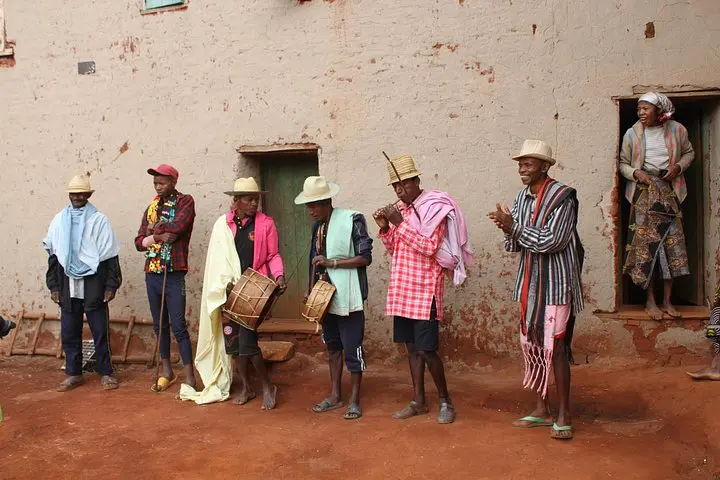
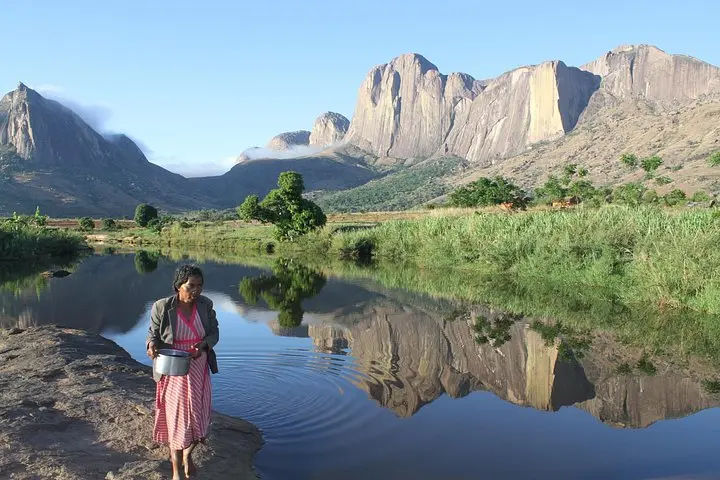
This route threads cultural and geological chapters: the Zafimaniry woodworkers of Antoetra, Betsileo valley rice engineering, the volcanic-sculpted ravines of Isalo and the coral lagoons at Ifaty. Andringitra’s Pic Boby rises to 2,658 m, a highland of granite domes carved by wind and water; Tsaranoro’s 800 m cliff is a climber’s face and a hiker’s horizon. Local communities still keep ancestral rites and craft economies—marquetry and Anteimoro paper—so the trip is as much social landscape as physical.
Expect daily hikes of 2–8 hours, steep portions with 100–600 m elevation change, and mixed terrain: forest tracks, granite slabs, valley rice beds and sandy coastal trails. Nights alternate between simple hotels, homestays and tent bivouacs; porters carry gear on remote passages. Hydration, layered clothing for cold nights at altitude, sun protection and sturdy boots are essential.
Plan for slow mornings after long climbs, carry cash for village purchases, and allow time to listen—villagers, streams and wind tell the real itinerary. Travel with a certified local guide, honor local customs at sacred forests, and give space to wildlife: quiet observation yields the best encounters.
April–June and September–November offer the most stable trekking conditions—cool nights, clearer skies and firmer trails.
Yes—local guide supervision and porters for group equipment are provided; expect to carry a daypack with personal items.
The ascent involves rocky trails and a 600–800 m gain on parts of the route; it’s strenuous but non-technical for trekkers in good condition.
Standard travel vaccinations are recommended; talk to a travel clinic about malaria prophylaxis for southern Madagascar and ensure you have a basic medical kit.
Mada Diary Tour operates guided outdoor trips and adventures with an emphasis on safety, stewardship, and memorable experiences.
Dawn breaks over granite spines and eucalyptus-scented ridges as your group tightens packs and steps off the track into Zafimaniry country. The air is cool, the path alternates between rice terraces and red laterite, and the cliffs of Andringitra loom like an old, patient force daring you upward.
Dawn breaks over granite spines and eucalyptus-scented ridges as your group tightens packs and steps off the track into Zafimaniry country. The air is cool, the path alternates between rice terraces and red laterite, and the cliffs of Andringitra loom like an old, patient force daring you upward.
This route threads cultural and geological chapters: the Zafimaniry woodworkers of Antoetra, Betsileo valley rice engineering, the volcanic-sculpted ravines of Isalo and the coral lagoons at Ifaty. Andringitra’s Pic Boby rises to 2,658 m, a highland of granite domes carved by wind and water; Tsaranoro’s 800 m cliff is a climber’s face and a hiker’s horizon. Local communities still keep ancestral rites and craft economies—marquetry and Anteimoro paper—so the trip is as much social landscape as physical.
Expect daily hikes of 2–8 hours, steep portions with 100–600 m elevation change, and mixed terrain: forest tracks, granite slabs, valley rice beds and sandy coastal trails. Nights alternate between simple hotels, homestays and tent bivouacs; porters carry gear on remote passages. Hydration, layered clothing for cold nights at altitude, sun protection and sturdy boots are essential.
Plan for slow mornings after long climbs, carry cash for village purchases, and allow time to listen—villagers, streams and wind tell the real itinerary. Travel with a certified local guide, honor local customs at sacred forests, and give space to wildlife: quiet observation yields the best encounters.