THE ADVENTURE COLLECTIVE® · Independent discovery and booking for outdoor travel

Take the longer, quieter Jiri approach to Everest Base Camp over 18 days—more villages, more acclimatization and a deeper look at Sherpa life. This route trades the short flight into Lukla for longer overland and trail approaches that prepare you physically and culturally for the high Khumbu.
Take the longer, quieter Jiri approach to Everest Base Camp over 18 days—more villages, more acclimatization and a deeper look at Sherpa life. This route trades the short flight into Lukla for longer overland and trail approaches that prepare you physically and culturally for the high Khumbu.
Morning light on the stone steps of a Sherpa village makes the hills glow as you shoulder your pack in Jiri and begin walking east toward the high country. The first days move through terraced fields, river crossings and rhododendron groves; by Namche the air thins and the Khumbu opens up, glaciers and jagged summits making a hard, clear horizon.
Verified experiences and guided adventures in the surrounding area.
Operated by AM Travels and Tours · Kathmandu, Bagmati Province
Morning light on the stone steps of a Sherpa village makes the hills glow as you shoulder your pack in Jiri and begin walking east toward the high country. The first days move through terraced fields, river crossings and rhododendron groves; by Namche the air thins and the Khumbu opens up, glaciers and jagged summits making a hard, clear horizon.
This route follows the older, overland gateway to Everest—Jiri was the traditional trailhead before the Lukla airstrip existed—and it threads through diverse geology: river-carved valleys, metamorphic ridges, and the moraine-sculpted approaches to the Khumbu Glacier. Sherpa culture and Tibetan Buddhism are visible at monasteries in Junbesi and Tengboche, their prayer flags moving like bright punctuation across the ridgelines.
Expect roughly 120–150 km (75–95 miles) of trekking with a net elevation gain from about 1,900 m (Jiri) to 5,364 m (Everest Base Camp); Kala Patthar adds higher vantage points around 5,500 m. Terrain varies from packed village trails and forested singletrack to rocky moraines and windswept high plateaus. Acclimatization days in Junbesi, Namche and Dingboche are built into the itinerary—use them.
Practical edge: bring layered insulation for sub-zero nights, a reliable water system and trekking boots with good ankle support. Permits (TIMS and Sagarmatha National Park) are required; tea houses provide simple rooms and food, and Lukla flights are weather-dependent—allow flexibility for delays. Hydrate, pace your gains, and respect high-altitude signs to make this long, cultural route to Everest both safe and unforgettable.
Jiri is longer on foot and adds several days of lower-altitude trekking through villages, giving more gradual acclimatization and cultural exposure versus the short flight into Lukla.
You need a TIMS card and Sagarmatha National Park permit to trek this route; these are typically arranged by your operator before departure.
Yes—basic guesthouse (tea house) accommodation is standard on the route, with simple beds and shared facilities; hot showers and Wi‑Fi are available at some stops for a fee.
Flights are frequently delayed for weather; operators normally schedule buffer days and can rebook flights or arrange ground alternatives—carry flexible return plans.
AM Travels and Tours operates guided outdoor trips and adventures with an emphasis on safety, stewardship, and memorable experiences.
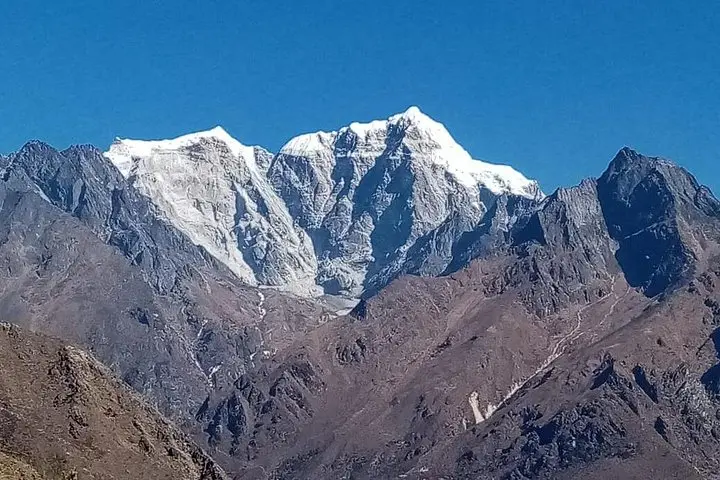
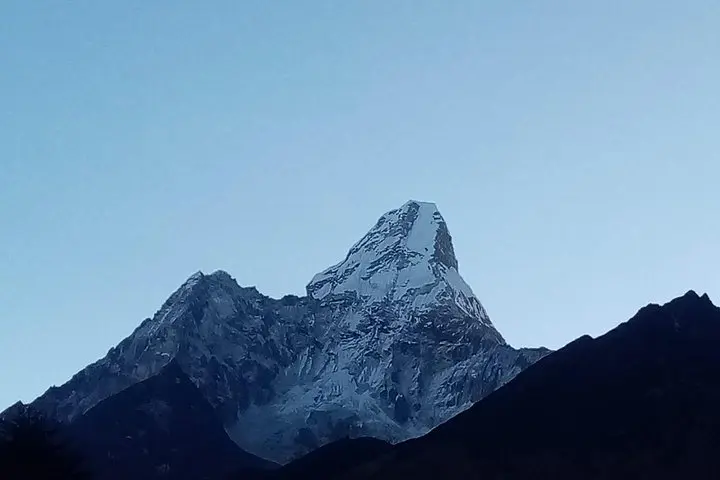
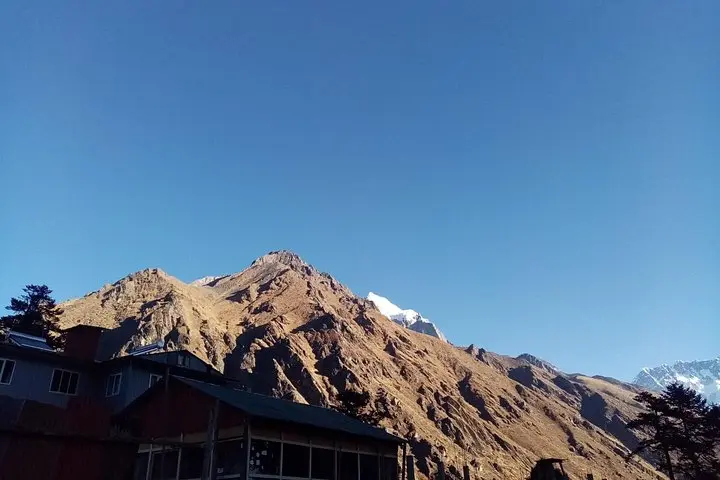
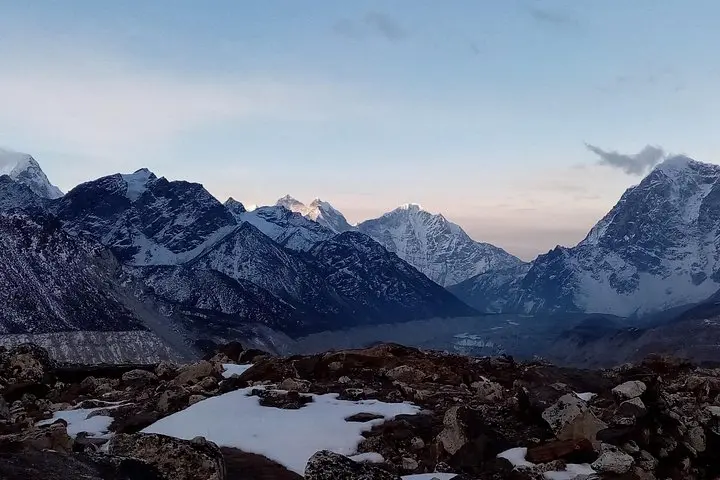
Morning light on the stone steps of a Sherpa village makes the hills glow as you shoulder your pack in Jiri and begin walking east toward the high country. The first days move through terraced fields, river crossings and rhododendron groves; by Namche the air thins and the Khumbu opens up, glaciers and jagged summits making a hard, clear horizon.
Morning light on the stone steps of a Sherpa village makes the hills glow as you shoulder your pack in Jiri and begin walking east toward the high country. The first days move through terraced fields, river crossings and rhododendron groves; by Namche the air thins and the Khumbu opens up, glaciers and jagged summits making a hard, clear horizon.
This route follows the older, overland gateway to Everest—Jiri was the traditional trailhead before the Lukla airstrip existed—and it threads through diverse geology: river-carved valleys, metamorphic ridges, and the moraine-sculpted approaches to the Khumbu Glacier. Sherpa culture and Tibetan Buddhism are visible at monasteries in Junbesi and Tengboche, their prayer flags moving like bright punctuation across the ridgelines.
Expect roughly 120–150 km (75–95 miles) of trekking with a net elevation gain from about 1,900 m (Jiri) to 5,364 m (Everest Base Camp); Kala Patthar adds higher vantage points around 5,500 m. Terrain varies from packed village trails and forested singletrack to rocky moraines and windswept high plateaus. Acclimatization days in Junbesi, Namche and Dingboche are built into the itinerary—use them.
Practical edge: bring layered insulation for sub-zero nights, a reliable water system and trekking boots with good ankle support. Permits (TIMS and Sagarmatha National Park) are required; tea houses provide simple rooms and food, and Lukla flights are weather-dependent—allow flexibility for delays. Hydrate, pace your gains, and respect high-altitude signs to make this long, cultural route to Everest both safe and unforgettable.