THE ADVENTURE COLLECTIVE® · Independent discovery and booking for outdoor travel

A short, focused safari that pairs prime elephant viewing with dramatic vistas of Mount Kilimanjaro. Ideal for a long weekend in Kenya — expect early starts, private transport, and full-board lodge stays.
A short, focused safari that pairs prime elephant viewing with dramatic vistas of Mount Kilimanjaro. Ideal for a long weekend in Kenya — expect early starts, private transport, and full-board lodge stays.
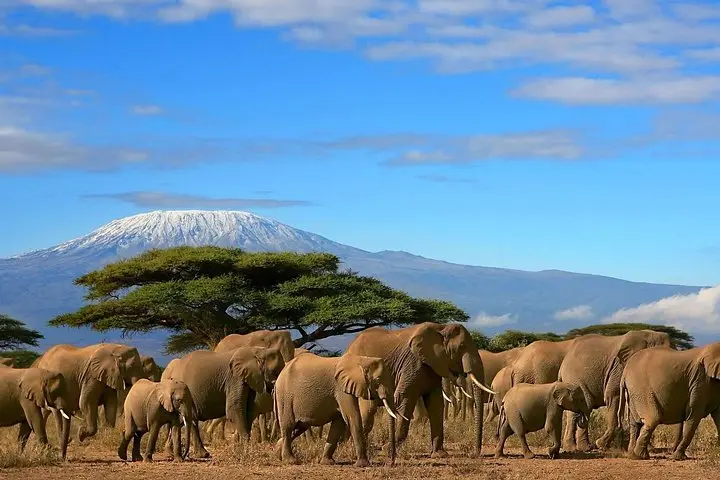
The sun rises like a slow verdict over the plains of Amboseli — low, pale light sliding across parched grass and the dark domes of elephant backs. On the first morning the lodge releases you into the park, a private 4x4 slipping over dust that wants to stick to everything. Mount Kilimanjaro sits beyond the horizon, a stubborn crown of snow and rock that dares the wide flatlands to compete for attention.
Verified experiences and guided adventures in the surrounding area.
Operated by Johnbow Tours And Travel · Amboseli, Kajiado County
The sun rises like a slow verdict over the plains of Amboseli — low, pale light sliding across parched grass and the dark domes of elephant backs. On the first morning the lodge releases you into the park, a private 4x4 slipping over dust that wants to stick to everything. Mount Kilimanjaro sits beyond the horizon, a stubborn crown of snow and rock that dares the wide flatlands to compete for attention.
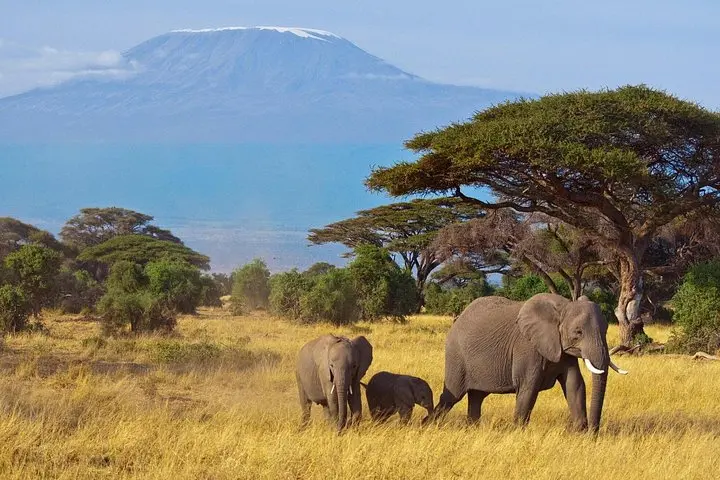
Amboseli is compact but elemental: broad savanna, alkaline swamps and a scattering of acacia. Geologically it occupies the rain shadow of Kilimanjaro, whose glaciers are the remnant of ice on a volcano that once pierced the clouds at 5,895 m. The park’s seasonal swamps feed hippos and birds, while the open plains attract Amboseli’s signature residents — family groups of African elephants often moving with the rhythm of Maasai grazing lands nearby.
The Maasai have shaped this place for generations. You’ll pass small homesteads and hear stories of cattle, rites of passage and community conservancies that now sit alongside formal park protections introduced in the 1970s. Amboseli National Park was designated to protect the area’s unique wildlife and to secure the sightlines to Kilimanjaro that draw photographers and researchers alike.
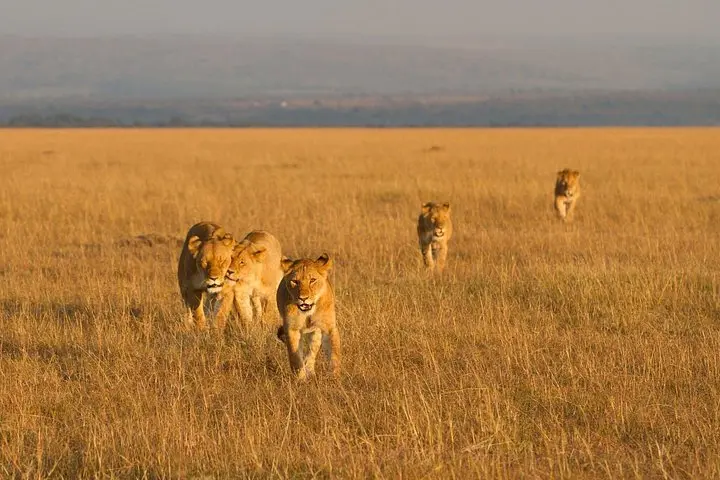
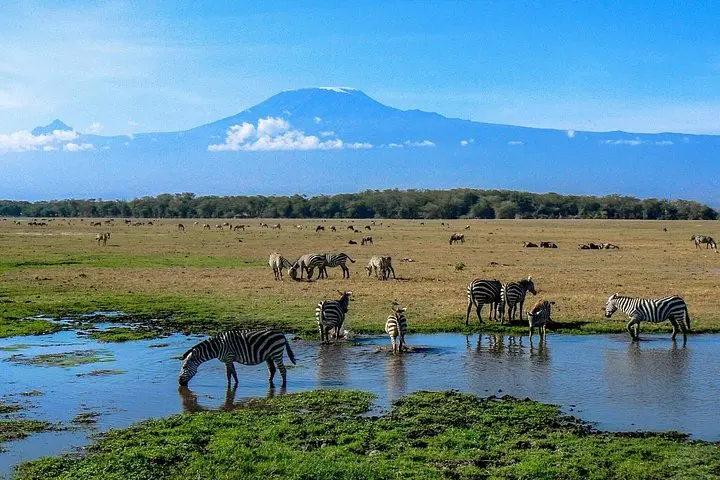
On a two-day itinerary from Nairobi the math is simple: roughly 240 km and a 4–5 hour drive each way depending on traffic, then afternoon and pre-dawn game drives to concentrate sightings. Expect long, patient observation near watering holes where bulls chip apart the day. Animals here behave with a blunt, observable honesty — elephants rearrange the landscape with each feed, and predators move like punctuation through the grasses.
Practical details matter. Early mornings are when Kilimanjaro shows itself and when predators are active; plan for a 5:00 a.m. departure on the second day. Lodging on this package typically includes full board, with bottled water and private transport included. Bring binoculars, a telephoto lens and layered clothing for temperatures that swing from cool pre-dawn to hot midday. Roads inside the park are rutted; a good driver-guide doubles as your interpreter of animal movement and local culture.
Sustainability is visible: community fees and conservancies help offset human-wildlife conflict, but pressure from development and climate-driven changes to Kilimanjaro’s ice cap are real. When you go, follow local guidance on waste and respect Maasai lands; small choices in the field—like reusable water bottles and modest tips to guides—support the fragile balance that keeps Amboseli alive.
In two days you won’t master the ecosystem, but you will stand close to herds, watch Kilimanjaro stare back across the plain, and return with clear instructions for how to see more next time: earlier, quieter, and with a camera ready.
The drive is roughly 240 km and typically takes 4–5 hours each way, depending on traffic and road conditions.
Kilimanjaro visibility depends on weather; early mornings in the dry season offer the best chance for clear views.
This package includes private transport, full-board accommodation and some meals—check the operator’s inclusions for exact details.
Yes; the itinerary notes suitability for all fitness levels but discuss any mobility needs during booking to arrange appropriate pickup and vehicle access.
Common sightings include large elephant herds, buffalo, lions, cheetahs, zebras and hippos in the park’s swamps, plus a variety of birdlife.
Tipping is customary; plan to tip guides and lodge staff according to service—small daily amounts per person are standard.
Johnbow Tours And Travel operates guided outdoor trips and adventures with an emphasis on safety, stewardship, and memorable experiences.
The sun rises like a slow verdict over the plains of Amboseli — low, pale light sliding across parched grass and the dark domes of elephant backs. On the first morning the lodge releases you into the park, a private 4x4 slipping over dust that wants to stick to everything. Mount Kilimanjaro sits beyond the horizon, a stubborn crown of snow and rock that dares the wide flatlands to compete for attention.
The sun rises like a slow verdict over the plains of Amboseli — low, pale light sliding across parched grass and the dark domes of elephant backs. On the first morning the lodge releases you into the park, a private 4x4 slipping over dust that wants to stick to everything. Mount Kilimanjaro sits beyond the horizon, a stubborn crown of snow and rock that dares the wide flatlands to compete for attention.
Amboseli is compact but elemental: broad savanna, alkaline swamps and a scattering of acacia. Geologically it occupies the rain shadow of Kilimanjaro, whose glaciers are the remnant of ice on a volcano that once pierced the clouds at 5,895 m. The park’s seasonal swamps feed hippos and birds, while the open plains attract Amboseli’s signature residents — family groups of African elephants often moving with the rhythm of Maasai grazing lands nearby.
The Maasai have shaped this place for generations. You’ll pass small homesteads and hear stories of cattle, rites of passage and community conservancies that now sit alongside formal park protections introduced in the 1970s. Amboseli National Park was designated to protect the area’s unique wildlife and to secure the sightlines to Kilimanjaro that draw photographers and researchers alike.
On a two-day itinerary from Nairobi the math is simple: roughly 240 km and a 4–5 hour drive each way depending on traffic, then afternoon and pre-dawn game drives to concentrate sightings. Expect long, patient observation near watering holes where bulls chip apart the day. Animals here behave with a blunt, observable honesty — elephants rearrange the landscape with each feed, and predators move like punctuation through the grasses.
Practical details matter. Early mornings are when Kilimanjaro shows itself and when predators are active; plan for a 5:00 a.m. departure on the second day. Lodging on this package typically includes full board, with bottled water and private transport included. Bring binoculars, a telephoto lens and layered clothing for temperatures that swing from cool pre-dawn to hot midday. Roads inside the park are rutted; a good driver-guide doubles as your interpreter of animal movement and local culture.
Sustainability is visible: community fees and conservancies help offset human-wildlife conflict, but pressure from development and climate-driven changes to Kilimanjaro’s ice cap are real. When you go, follow local guidance on waste and respect Maasai lands; small choices in the field—like reusable water bottles and modest tips to guides—support the fragile balance that keeps Amboseli alive.
In two days you won’t master the ecosystem, but you will stand close to herds, watch Kilimanjaro stare back across the plain, and return with clear instructions for how to see more next time: earlier, quieter, and with a camera ready.