THE ADVENTURE COLLECTIVE® · Independent discovery and booking for outdoor travel

Experience Amboseli’s salty dust plains and Kilimanjaro-backed game viewing on a focused two-day safari. This practical guide covers what to see, how to prepare, and what to expect on the park’s seasonal pans.
Experience Amboseli’s salty dust plains and Kilimanjaro-backed game viewing on a focused two-day safari. This practical guide covers what to see, how to prepare, and what to expect on the park’s seasonal pans.
The first light in Amboseli slices across a dry, dusty plain and trains the eye to Mount Kilimanjaro's white cap—an unexpected alpine crown above an African savanna. Elephants move with deliberate ease, dust rising from their footfalls like a slow exhale, while acacia shadows march across salt-streaked pans.
Verified experiences and guided adventures in the surrounding area.
Operated by Kenya Wildlife Tours & Safaris · Amboseli, Kajiado County
The first light in Amboseli slices across a dry, dusty plain and trains the eye to Mount Kilimanjaro's white cap—an unexpected alpine crown above an African savanna. Elephants move with deliberate ease, dust rising from their footfalls like a slow exhale, while acacia shadows march across salt-streaked pans.
Amboseli — a Maa word meaning “salty dust” — sits at the southern edge of Kenya’s rift landscape. The park is a floodplain and seasonal wetland set beneath Kilimanjaro; its low, alkaline lakebeds and volcanic soils explain the stark contrast between parched grasslands and sudden green during rains. Maasai communities have grazed these plains for generations, and their culture remains visible in village life and guarded grazing routes around the park.
A two-day safari here is concentrated: morning and late-afternoon game drives when animals are most active, lodge-based meals, and long ground transfers that fold the landscape into narrative. Expect classic plains species—elephants, giraffes, Cape buffalo—and excellent views for photography with Kilimanjaro as backdrop. Drivers read subtle signs: windborne dust, spoor, and distant trumpet calls.
Practical edge: arrive with layered clothing for chilly mornings, sunscreen for midday glare, and binoculars for long-range sightings. Roads inside the park are corrugated and slow; a good suspension and patient driver make the difference. Many operators include park fees, meals, and transfers from Nairobi; confirm what’s covered. Time your visit outside peak rains for easier game viewing and firmer roads. Amboseli rewards patience—its landscape moves at wildlife speed, and the silence between sightings is part of the experience.
Amboseli is roughly 240–270 km by road from Nairobi; drive times are 4–6 hours depending on route and traffic.
Many operators include park fees, meals, and transfers—confirm inclusions before booking to avoid surprises.
Yes—Amboseli is in a malaria zone; consult a travel health clinic for prophylaxis and use insect repellent and nets where provided.
Yes—on clear days the northern rim of Kilimanjaro is a prominent backdrop to Amboseli, especially in the early morning and late afternoon.
Kenya Wildlife Tours & Safaris operates guided outdoor trips and adventures with an emphasis on safety, stewardship, and memorable experiences.
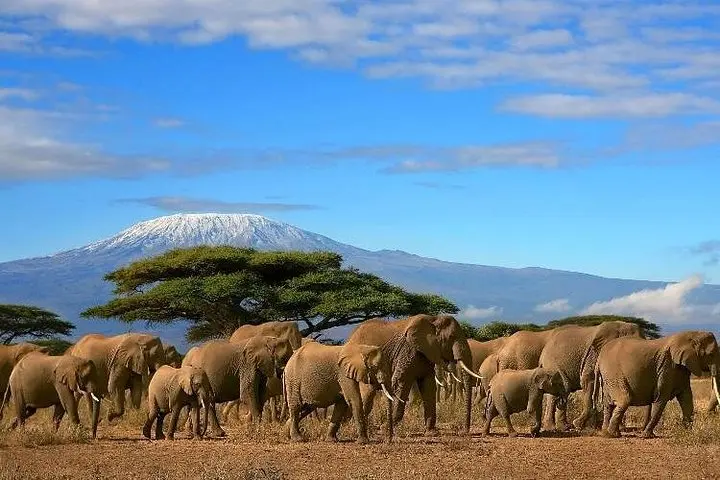
The first light in Amboseli slices across a dry, dusty plain and trains the eye to Mount Kilimanjaro's white cap—an unexpected alpine crown above an African savanna. Elephants move with deliberate ease, dust rising from their footfalls like a slow exhale, while acacia shadows march across salt-streaked pans.
The first light in Amboseli slices across a dry, dusty plain and trains the eye to Mount Kilimanjaro's white cap—an unexpected alpine crown above an African savanna. Elephants move with deliberate ease, dust rising from their footfalls like a slow exhale, while acacia shadows march across salt-streaked pans.
Amboseli — a Maa word meaning “salty dust” — sits at the southern edge of Kenya’s rift landscape. The park is a floodplain and seasonal wetland set beneath Kilimanjaro; its low, alkaline lakebeds and volcanic soils explain the stark contrast between parched grasslands and sudden green during rains. Maasai communities have grazed these plains for generations, and their culture remains visible in village life and guarded grazing routes around the park.
A two-day safari here is concentrated: morning and late-afternoon game drives when animals are most active, lodge-based meals, and long ground transfers that fold the landscape into narrative. Expect classic plains species—elephants, giraffes, Cape buffalo—and excellent views for photography with Kilimanjaro as backdrop. Drivers read subtle signs: windborne dust, spoor, and distant trumpet calls.
Practical edge: arrive with layered clothing for chilly mornings, sunscreen for midday glare, and binoculars for long-range sightings. Roads inside the park are corrugated and slow; a good suspension and patient driver make the difference. Many operators include park fees, meals, and transfers from Nairobi; confirm what’s covered. Time your visit outside peak rains for easier game viewing and firmer roads. Amboseli rewards patience—its landscape moves at wildlife speed, and the silence between sightings is part of the experience.