THE ADVENTURE COLLECTIVE® · Independent discovery and booking for outdoor travel

Watch Angkor Wat light up at sunrise and spend two compact days moving from Banteay Srei’s carved sandstone to Ta Prohm’s root-choked ruins. This small-group itinerary pairs big vistas with quiet corners for an efficient, historically rich visit.
Watch Angkor Wat light up at sunrise and spend two compact days moving from Banteay Srei’s carved sandstone to Ta Prohm’s root-choked ruins. This small-group itinerary pairs big vistas with quiet corners for an efficient, historically rich visit.
Pre-dawn air in Siem Reap feels like a held breath. You leave the hotel in the dark, tyres whispering along red-dust roads, and approach Angkor’s moat where palms edge the mirror-smooth water. The temple’s silhouette cleaves the horizon; by torchlight you slip through eastern corridors to watch sunrise wash the towers golden.
Verified experiences and guided adventures in the surrounding area.
Operated by Tourme ANGKOR · Siem Reap, Siem Reap Province
Pre-dawn air in Siem Reap feels like a held breath. You leave the hotel in the dark, tyres whispering along red-dust roads, and approach Angkor’s moat where palms edge the mirror-smooth water. The temple’s silhouette cleaves the horizon; by torchlight you slip through eastern corridors to watch sunrise wash the towers golden.
The two-day loop balances grand scale and intimate detail. Day one follows the Grand Circuit: Pre Rup’s pyramid of brick and laterite, then Banteay Srei — a small sandstone jewel whose finely cut reliefs survived centuries of neglect — before the moss and root drama of Preah Khan and the concentric pools of Neak Pean. Day two opens with sunrise at Angkor Wat, then Ta Prohm’s tree-throttled galleries and a pass by the Bayon’s carved faces and the Terrace of the Elephants.
Geology and history are visible in the stone: laterite cores, sandstone veneers, and Khmer masonry shaped by Jayavarman and later restorers. The jungle exerts itself — strangler figs and banyans pry at lintels, rerouting light and path. Local guides add context: Angkor’s hydraulic networks, the 12th-century capital’s ceremonial axis, and the modern conservation efforts that keep walkways stable.
Practical edge: temples are walked on uneven stone and steps; modest dress is required inside sanctified structures. Sunrise means early starts and cool, humid mornings that warm quickly; bring water, a headlamp, and sun protection for open courtyards. Expect a mix of paved roads and dusty tracks, intermittent shade, and packed tourist nodes, but also quiet corners where the stone seems to breathe.
No — the mandatory Angkor Archaeological Park pass (2- or 3-day options) is payable on the day; check current prices and bring cash or card.
Expect a pre-dawn pickup from your hotel; guides typically leave around 4:00–5:00 a.m. depending on sunrise time and location.
Children must be accompanied by an adult; very young children may be restricted on some entrance areas — confirm with the operator.
Shoulders and knees must be covered inside temples; lightweight layers or a sarong are recommended to meet dress codes.
Tourme ANGKOR operates guided outdoor trips and adventures with an emphasis on safety, stewardship, and memorable experiences.
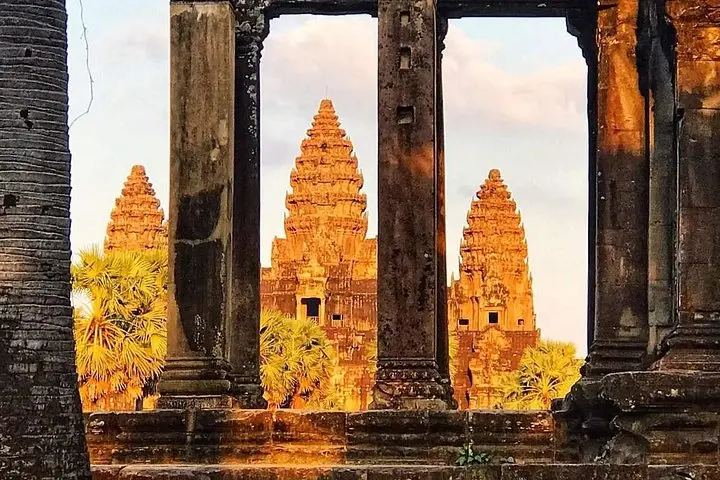
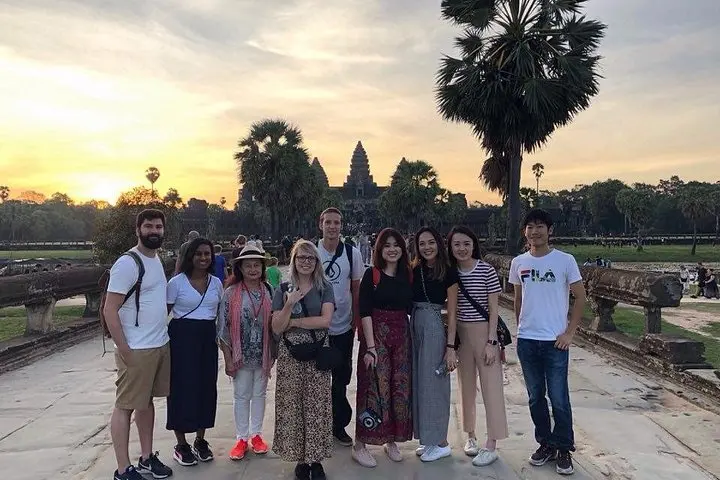
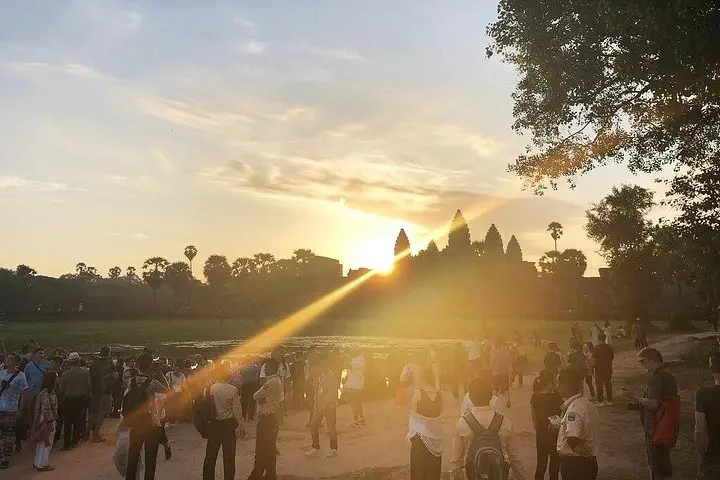
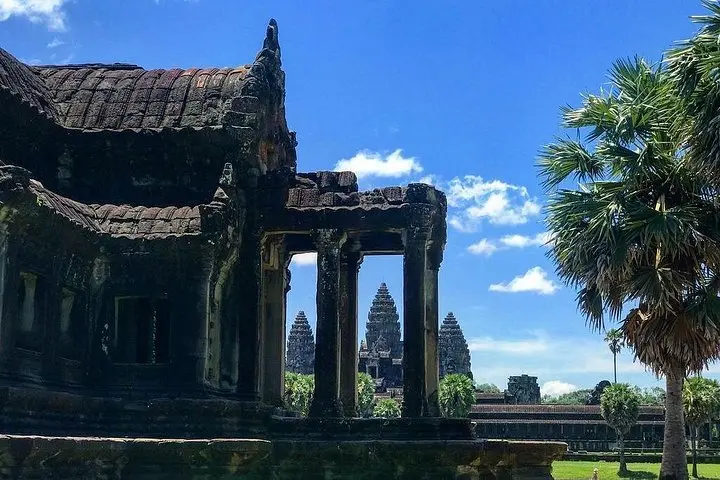
Pre-dawn air in Siem Reap feels like a held breath. You leave the hotel in the dark, tyres whispering along red-dust roads, and approach Angkor’s moat where palms edge the mirror-smooth water. The temple’s silhouette cleaves the horizon; by torchlight you slip through eastern corridors to watch sunrise wash the towers golden.
Pre-dawn air in Siem Reap feels like a held breath. You leave the hotel in the dark, tyres whispering along red-dust roads, and approach Angkor’s moat where palms edge the mirror-smooth water. The temple’s silhouette cleaves the horizon; by torchlight you slip through eastern corridors to watch sunrise wash the towers golden.
The two-day loop balances grand scale and intimate detail. Day one follows the Grand Circuit: Pre Rup’s pyramid of brick and laterite, then Banteay Srei — a small sandstone jewel whose finely cut reliefs survived centuries of neglect — before the moss and root drama of Preah Khan and the concentric pools of Neak Pean. Day two opens with sunrise at Angkor Wat, then Ta Prohm’s tree-throttled galleries and a pass by the Bayon’s carved faces and the Terrace of the Elephants.
Geology and history are visible in the stone: laterite cores, sandstone veneers, and Khmer masonry shaped by Jayavarman and later restorers. The jungle exerts itself — strangler figs and banyans pry at lintels, rerouting light and path. Local guides add context: Angkor’s hydraulic networks, the 12th-century capital’s ceremonial axis, and the modern conservation efforts that keep walkways stable.
Practical edge: temples are walked on uneven stone and steps; modest dress is required inside sanctified structures. Sunrise means early starts and cool, humid mornings that warm quickly; bring water, a headlamp, and sun protection for open courtyards. Expect a mix of paved roads and dusty tracks, intermittent shade, and packed tourist nodes, but also quiet corners where the stone seems to breathe.