THE ADVENTURE COLLECTIVE® · Independent discovery and booking for outdoor travel

Two days that combine Angkor's headline temples with off-the-beaten-path ruins and a floating village on Tonle Sap. Expect sunrise at Angkor Wat, tree-embraced Ta Prohm, jungle-ruins at Beng Mealea, and a close look at life on the lake.
Two days that combine Angkor's headline temples with off-the-beaten-path ruins and a floating village on Tonle Sap. Expect sunrise at Angkor Wat, tree-embraced Ta Prohm, jungle-ruins at Beng Mealea, and a close look at life on the lake.
Dawn breaks over the Angkor moat and the five towers of Angkor Wat silhouette against a pale sky — stone and water holding their breath as you cross the causeway. Day one moves from the monumental geometry of Angkor Wat and the watchful faces of Bayon to Ta Prohm, where fig roots wrestle with masonry and the jungle keeps time with falling leaves.
Verified experiences and guided adventures in the surrounding area.
Operated by Inspire the Journeys · Siem Reap, Siem Reap Province
Dawn breaks over the Angkor moat and the five towers of Angkor Wat silhouette against a pale sky — stone and water holding their breath as you cross the causeway. Day one moves from the monumental geometry of Angkor Wat and the watchful faces of Bayon to Ta Prohm, where fig roots wrestle with masonry and the jungle keeps time with falling leaves.
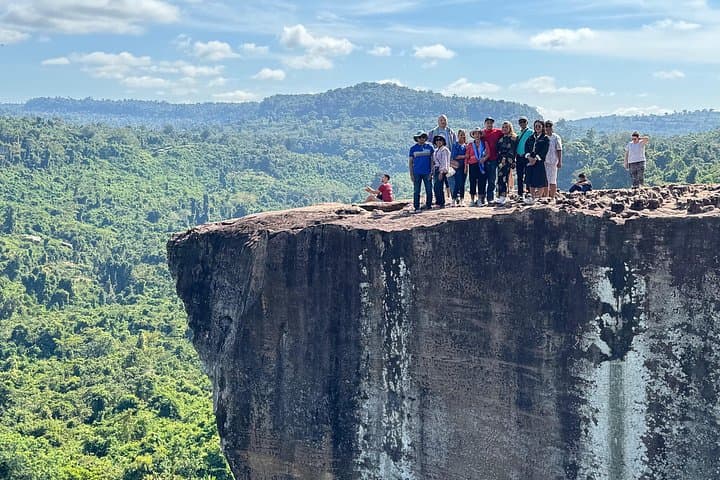
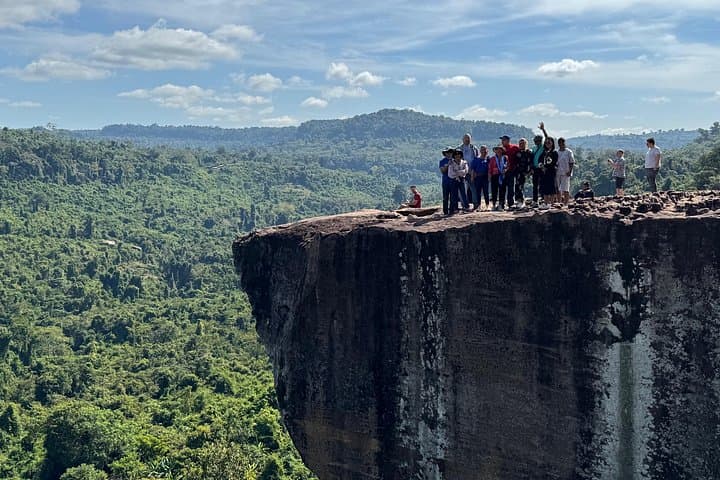
On day two the tour shifts northeast: Banteay Srei's pink sandstone carving reveals intimate mythic panels, while Phnom Kulen's waterfalls and the River of a Thousand Lingas remind visitors that the Khmer Empire grew from both ceremony and landscape. Beng Mealea sits off the main circuit, its collapsed galleries and vine-wrapped towers giving a clearer taste of ruins reclaimed by the forest. The final act is Kampong Phluk on Tonle Sap, a stilted fishing village that adapts each season to the lake's breath.
This route threads history, geology and local life: sandstone quarries and laterite cores, 10th–13th century Khmer architecture, and contemporary communities still shaped by monsoon rhythms. Guides explain bas-reliefs, hydraulic systems and local livelihoods while offering straightforward logistics — air-conditioned transport, hotel pickup, drinking water.
Practical guidance: aim for early starts to avoid heat and crowds, wear sturdy shoes for uneven stone and slippery boardwalks, carry sun protection and insect repellent, and bring small local currency for temple donations and village purchases. Respect temple dress codes (shoulders and knees covered) and keep boat tours quiet to protect wildlife at Tonle Sap. With basic planning this two-day loop delivers both iconic sights and quieter, textured moments off the main trail.
Yes — entry to Angkor Archaeological Park requires a paid pass (1-, 3- or 7-day options) obtained at the official ticket center before entering.
Many temples have uneven steps and narrow passageways; Angkor Wat has ramps but several sites require navigating rough stone — check with your operator for tailored transport and shorter routes.
Yes; Kampong Phluk is a working fishing village — take a guided boat tour, follow local advice around water levels, and avoid entering private homes without permission.
Cambodian riel and US dollars are widely accepted in Siem Reap and at tourist sites; bring small bills for boat fares, tips and market purchases.
Inspire the Journeys operates guided outdoor trips and adventures with an emphasis on safety, stewardship, and memorable experiences.
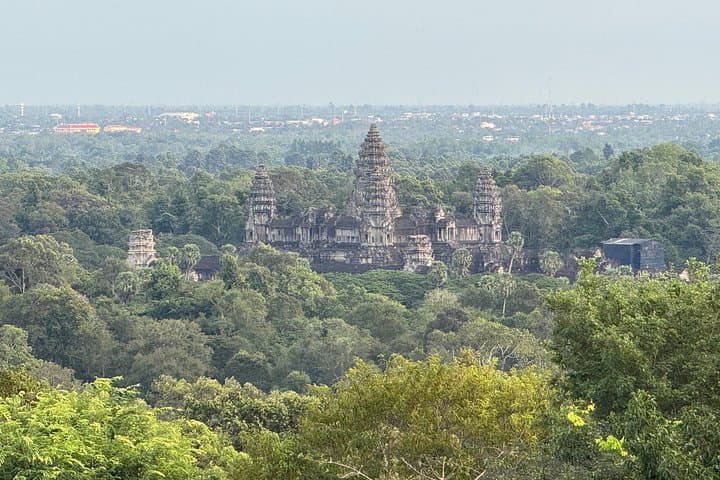
Dawn breaks over the Angkor moat and the five towers of Angkor Wat silhouette against a pale sky — stone and water holding their breath as you cross the causeway. Day one moves from the monumental geometry of Angkor Wat and the watchful faces of Bayon to Ta Prohm, where fig roots wrestle with masonry and the jungle keeps time with falling leaves.
Dawn breaks over the Angkor moat and the five towers of Angkor Wat silhouette against a pale sky — stone and water holding their breath as you cross the causeway. Day one moves from the monumental geometry of Angkor Wat and the watchful faces of Bayon to Ta Prohm, where fig roots wrestle with masonry and the jungle keeps time with falling leaves.
On day two the tour shifts northeast: Banteay Srei's pink sandstone carving reveals intimate mythic panels, while Phnom Kulen's waterfalls and the River of a Thousand Lingas remind visitors that the Khmer Empire grew from both ceremony and landscape. Beng Mealea sits off the main circuit, its collapsed galleries and vine-wrapped towers giving a clearer taste of ruins reclaimed by the forest. The final act is Kampong Phluk on Tonle Sap, a stilted fishing village that adapts each season to the lake's breath.
This route threads history, geology and local life: sandstone quarries and laterite cores, 10th–13th century Khmer architecture, and contemporary communities still shaped by monsoon rhythms. Guides explain bas-reliefs, hydraulic systems and local livelihoods while offering straightforward logistics — air-conditioned transport, hotel pickup, drinking water.
Practical guidance: aim for early starts to avoid heat and crowds, wear sturdy shoes for uneven stone and slippery boardwalks, carry sun protection and insect repellent, and bring small local currency for temple donations and village purchases. Respect temple dress codes (shoulders and knees covered) and keep boat tours quiet to protect wildlife at Tonle Sap. With basic planning this two-day loop delivers both iconic sights and quieter, textured moments off the main trail.