THE ADVENTURE COLLECTIVE® · Independent discovery and booking for outdoor travel

Experience Angkor’s sunrise, jungle-clad ruins and Tonle Sap village life over two days. This immersive tour blends temple time with local markets, an ox-cart ride and a private floating-village boat trip.
Experience Angkor’s sunrise, jungle-clad ruins and Tonle Sap village life over two days. This immersive tour blends temple time with local markets, an ox-cart ride and a private floating-village boat trip.
The tour begins before dawn, when the first light pries open the silhouette of Angkor Wat and the moat breathes mist against its stone face. Walking among the temple galleries, visitors move from shadow into warm gold as bats lift from crevices and the day’s rhythm asserts itself.
Verified experiences and guided adventures in the surrounding area.
Operated by The Fin Travel & Tours · Siem Reap, Siem Reap Province
The tour begins before dawn, when the first light pries open the silhouette of Angkor Wat and the moat breathes mist against its stone face. Walking among the temple galleries, visitors move from shadow into warm gold as bats lift from crevices and the day’s rhythm asserts itself.
Angkor Wat and the surrounding Angkor Archaeological Park are relics of the Khmer Empire (9th–15th centuries), carved from sandstone and shaped by monsoon-fed rivers and laterite foundations. Ta Prohm’s roots and ruins narrate the reclamation of architecture by banyan and silk-cotton trees; Tonle Sap’s floating villages reveal a culture adapted to seasonal pulse and fish-centric livelihoods. Local markets around Siem Reap, like Psar Leu, give practical context to those ruins—rice, noodles, and street snacks that built modern Cambodian life.
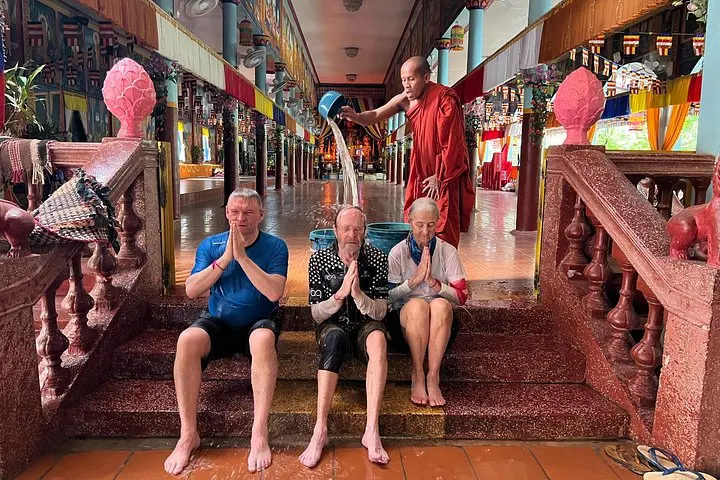
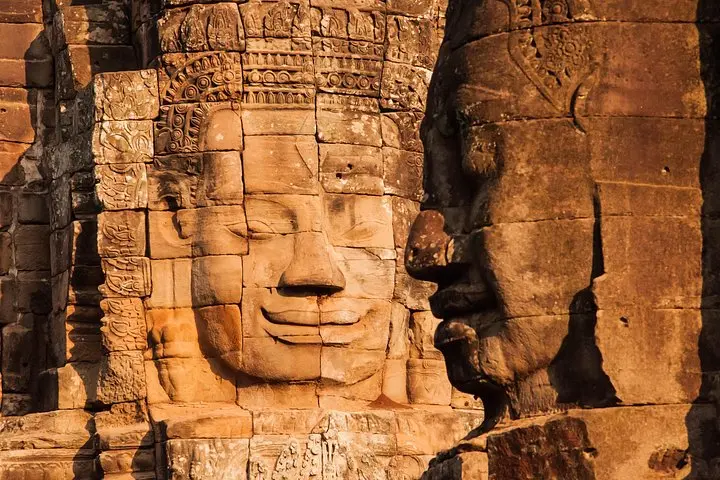
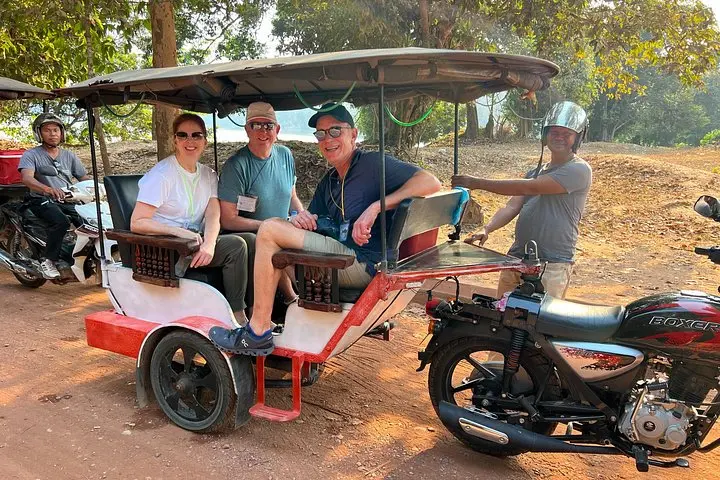
Over two days the itinerary pairs iconic sunrise views and Bayon’s smiling faces with hands-on cultural moments: monk water-blessings, an ox-cart ride through Preah Dak village, and a private boat trip to Tonle Sap’s stilted homes. Terrain is flat but involves long periods on foot and short tuk-tuk or car transfers; expect dusty tracks, temple steps, and humid conditions.
Practical guidance: start early to avoid heat, carry sun protection and a reusable water bottle, wear toe-protecting walking shoes for temple staircases, and bring modest clothing for religious sites. Allow time between stops for slow photo processing and to let local life reveal itself—this program rewards patient observation as much as sightseeing.
Entrance fees are not included; visitors should purchase Angkor Archaeological Park passes separately—options include 1‑, 3‑, and 7‑day tickets.
Yes; the itinerary notes it’s suitable for all fitness levels. Infants should sit on laps and infant seats are available on request.
Expect multiple short walks at each temple site (30–90 minutes cumulatively) with tuk‑tuk or car transfers between locations.
Cambodian riel and US dollars are commonly accepted in Siem Reap; cards work in larger venues but carry cash for markets and small vendors.
The Fin Travel & Tours operates guided outdoor trips and adventures with an emphasis on safety, stewardship, and memorable experiences.
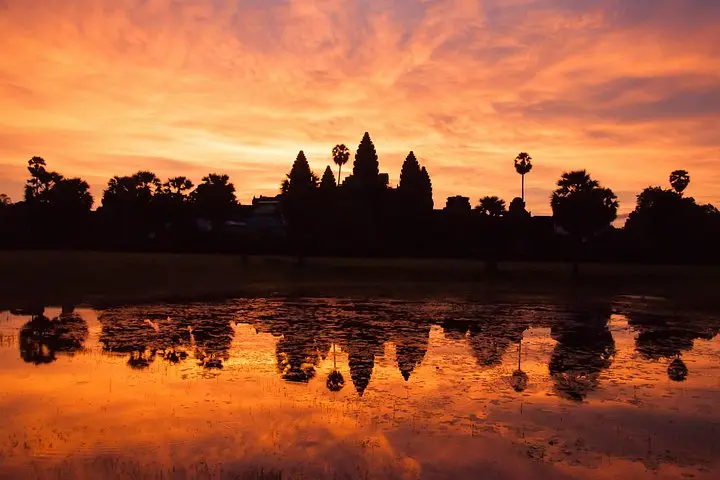
The tour begins before dawn, when the first light pries open the silhouette of Angkor Wat and the moat breathes mist against its stone face. Walking among the temple galleries, visitors move from shadow into warm gold as bats lift from crevices and the day’s rhythm asserts itself.
The tour begins before dawn, when the first light pries open the silhouette of Angkor Wat and the moat breathes mist against its stone face. Walking among the temple galleries, visitors move from shadow into warm gold as bats lift from crevices and the day’s rhythm asserts itself.
Angkor Wat and the surrounding Angkor Archaeological Park are relics of the Khmer Empire (9th–15th centuries), carved from sandstone and shaped by monsoon-fed rivers and laterite foundations. Ta Prohm’s roots and ruins narrate the reclamation of architecture by banyan and silk-cotton trees; Tonle Sap’s floating villages reveal a culture adapted to seasonal pulse and fish-centric livelihoods. Local markets around Siem Reap, like Psar Leu, give practical context to those ruins—rice, noodles, and street snacks that built modern Cambodian life.
Over two days the itinerary pairs iconic sunrise views and Bayon’s smiling faces with hands-on cultural moments: monk water-blessings, an ox-cart ride through Preah Dak village, and a private boat trip to Tonle Sap’s stilted homes. Terrain is flat but involves long periods on foot and short tuk-tuk or car transfers; expect dusty tracks, temple steps, and humid conditions.
Practical guidance: start early to avoid heat, carry sun protection and a reusable water bottle, wear toe-protecting walking shoes for temple staircases, and bring modest clothing for religious sites. Allow time between stops for slow photo processing and to let local life reveal itself—this program rewards patient observation as much as sightseeing.