THE ADVENTURE COLLECTIVE® · Independent discovery and booking for outdoor travel

Two full days to move beyond postcard shots and into the rhythm of Angkor: sunrise at Angkor Wat, tree-choked Ta Prohm, the faces of Bayon and the pink-carved Banteay Srei. This private itinerary balances iconic highlights with quieter corners and practical logistics.
Two full days to move beyond postcard shots and into the rhythm of Angkor: sunrise at Angkor Wat, tree-choked Ta Prohm, the faces of Bayon and the pink-carved Banteay Srei. This private itinerary balances iconic highlights with quieter corners and practical logistics.
Before dawn the reflection pools hold the first light like a quiet promise. You arrive in cool air from the van, the silhouette of Angkor Wat outlined against a pink sky while guides and local vendors arrange the early rhythm. Over two full days the circuit unfolds: sandstone galleries, tree roots that have claimed whole walls, and a series of temples that shift from intimate ruins to monumental city-planning.
Verified experiences and guided adventures in the surrounding area.
Operated by Cambodia Transport Service · Siem Reap, Siem Reap Province
Before dawn the reflection pools hold the first light like a quiet promise. You arrive in cool air from the van, the silhouette of Angkor Wat outlined against a pink sky while guides and local vendors arrange the early rhythm. Over two full days the circuit unfolds: sandstone galleries, tree roots that have claimed whole walls, and a series of temples that shift from intimate ruins to monumental city-planning.
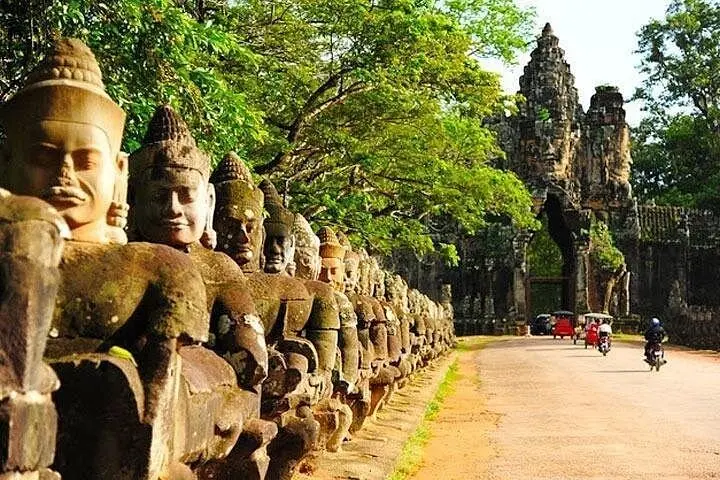
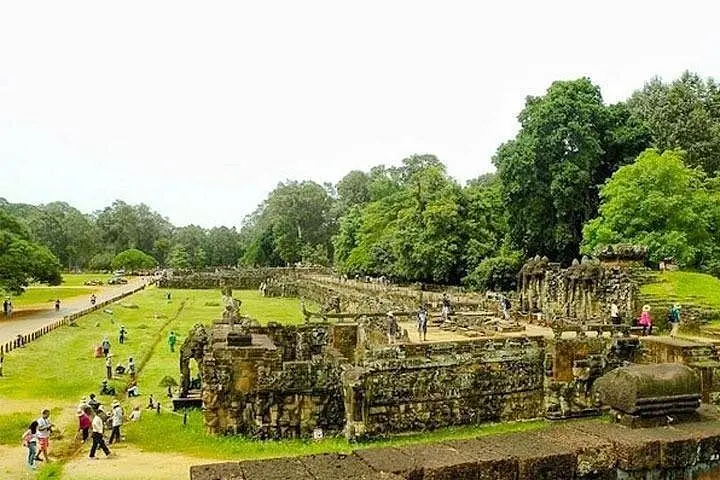
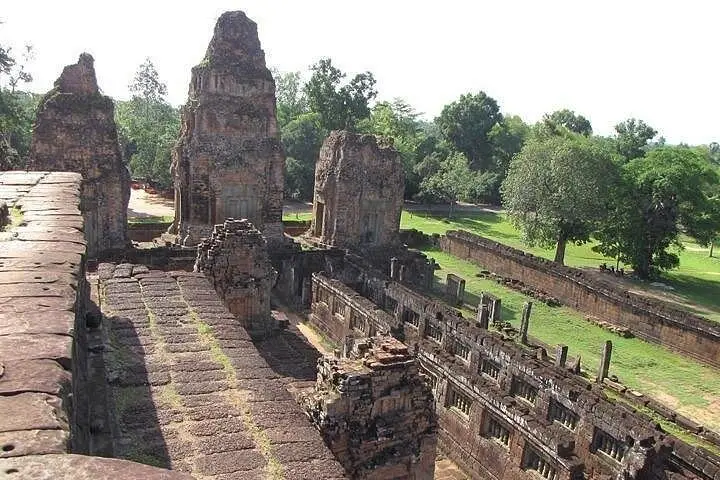
The Angkor complex grew under the Khmer Empire between the 9th and 15th centuries; builders used laterite foundations and soft sandstone for carving long bas-reliefs. Ta Prohm still wears its arboreal armor; Bayon’s many-faced towers anchor the central Angkor Thom plan; Banteay Srei, built of pink sandstone, shows carving finesse from the 10th century. The park’s great barays and causeways reflect an engineered landscape as much as a spiritual one.
Practically: expect lots of short walks across mostly flat ground, occasional steep temple steps, and long sun exposure. Bring modest clothing (shoulders and knees covered) for temple entry, comfortable walking shoes, and a refillable water bottle—heat and humidity are constant companions. Sunrise at Angkor Wat is early; Phnom Bakheng offers sunset but can be crowded. Buy or carry your Angkor Pass (the tour stops for this), arrive early to beat crowds, and give yourself time at quieter sites like Ta Nei or Neak Pean for photography and breathing room. Local guides add context—listen for stories of kings, restoration, and conservation efforts that keep these stones standing.
No; the tour will stop at the ticket office so you can purchase a 1‑ or 3‑day Angkor Pass before entering the park.
Pickup for sunrise generally occurs around 4:30–5:00am depending on the season and hotel location—confirm the exact time with your guide.
Many temples have steep, uneven steps and narrow stairways; use caution and wear supportive footwear—some areas are restricted for safety.
Yes; the itinerary is designed for all fitness levels with vehicle transfers between sites, though early starts and long days may be tiring for very young children or those with mobility issues.
Cambodia Transport Service operates guided outdoor trips and adventures with an emphasis on safety, stewardship, and memorable experiences.
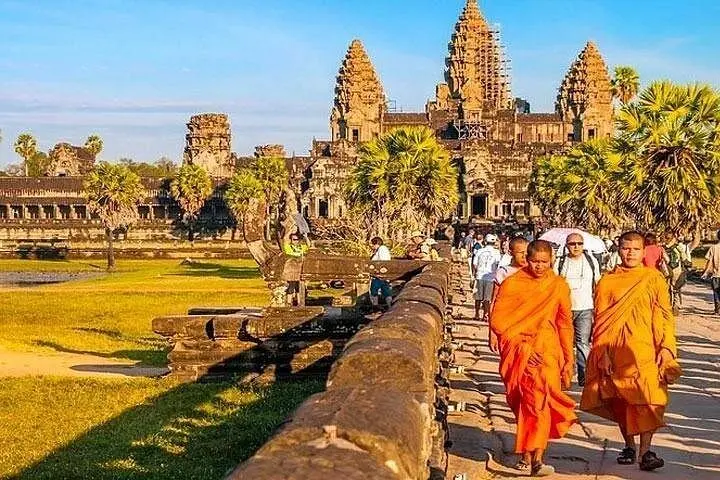
Before dawn the reflection pools hold the first light like a quiet promise. You arrive in cool air from the van, the silhouette of Angkor Wat outlined against a pink sky while guides and local vendors arrange the early rhythm. Over two full days the circuit unfolds: sandstone galleries, tree roots that have claimed whole walls, and a series of temples that shift from intimate ruins to monumental city-planning.
Before dawn the reflection pools hold the first light like a quiet promise. You arrive in cool air from the van, the silhouette of Angkor Wat outlined against a pink sky while guides and local vendors arrange the early rhythm. Over two full days the circuit unfolds: sandstone galleries, tree roots that have claimed whole walls, and a series of temples that shift from intimate ruins to monumental city-planning.
The Angkor complex grew under the Khmer Empire between the 9th and 15th centuries; builders used laterite foundations and soft sandstone for carving long bas-reliefs. Ta Prohm still wears its arboreal armor; Bayon’s many-faced towers anchor the central Angkor Thom plan; Banteay Srei, built of pink sandstone, shows carving finesse from the 10th century. The park’s great barays and causeways reflect an engineered landscape as much as a spiritual one.
Practically: expect lots of short walks across mostly flat ground, occasional steep temple steps, and long sun exposure. Bring modest clothing (shoulders and knees covered) for temple entry, comfortable walking shoes, and a refillable water bottle—heat and humidity are constant companions. Sunrise at Angkor Wat is early; Phnom Bakheng offers sunset but can be crowded. Buy or carry your Angkor Pass (the tour stops for this), arrive early to beat crowds, and give yourself time at quieter sites like Ta Nei or Neak Pean for photography and breathing room. Local guides add context—listen for stories of kings, restoration, and conservation efforts that keep these stones standing.