THE ADVENTURE COLLECTIVE® · Independent discovery and booking for outdoor travel

Watch sunrise over Angkor Wat, tour Angkor Thom and Ta Prohm, then head into Phnom Kulen to see the 1000 lingas carving and a cooling waterfall. This two-day private excursion pairs monumental Khmer architecture with a verdant riverscape — best for travelers who want history, photography, and a touch of jungle.
Watch sunrise over Angkor Wat, tour Angkor Thom and Ta Prohm, then head into Phnom Kulen to see the 1000 lingas carving and a cooling waterfall. This two-day private excursion pairs monumental Khmer architecture with a verdant riverscape — best for travelers who want history, photography, and a touch of jungle.
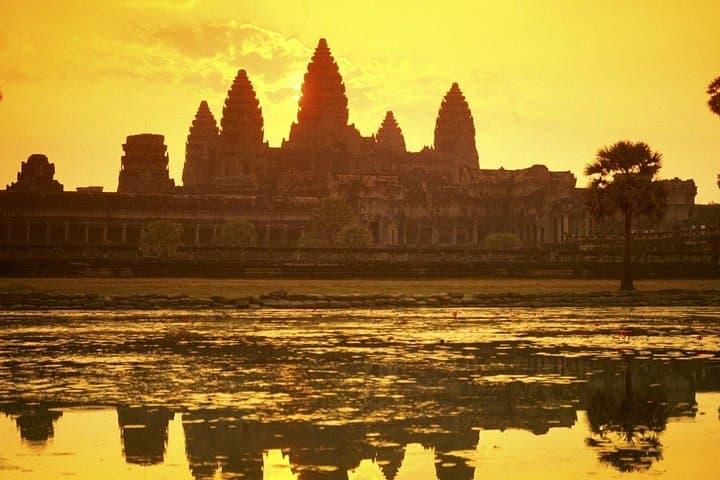
The day begins before dawn: a humid Siem Reap sky softens as you step from an air-conditioned minivan onto the causeway framing Angkor Wat. Torches and camera tripods punctuate the reflection pool while the temple’s silhouette sharpens against a pale horizon. Your guide steers you through the quieter corridors, pointing out bas-reliefs and architectural rhythms that are easier to appreciate before the mid-day crowds arrive.
Verified experiences and guided adventures in the surrounding area.
Operated by Angkor Wat Travel Tour · Siem Reap, Siem Reap Province
The day begins before dawn: a humid Siem Reap sky softens as you step from an air-conditioned minivan onto the causeway framing Angkor Wat. Torches and camera tripods punctuate the reflection pool while the temple’s silhouette sharpens against a pale horizon. Your guide steers you through the quieter corridors, pointing out bas-reliefs and architectural rhythms that are easier to appreciate before the mid-day crowds arrive.
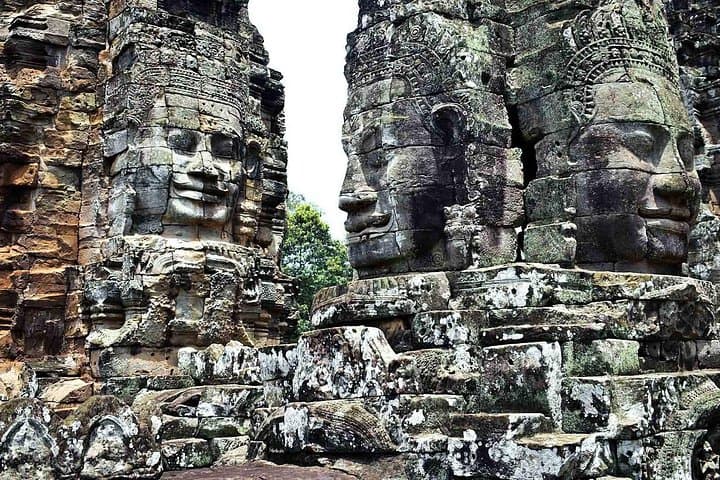
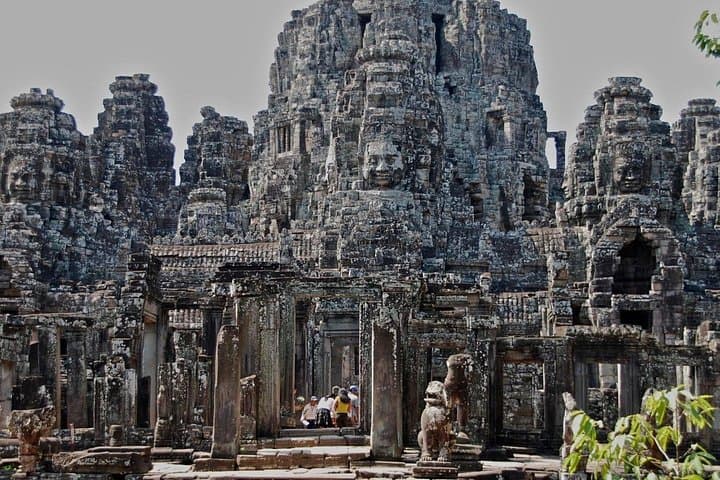
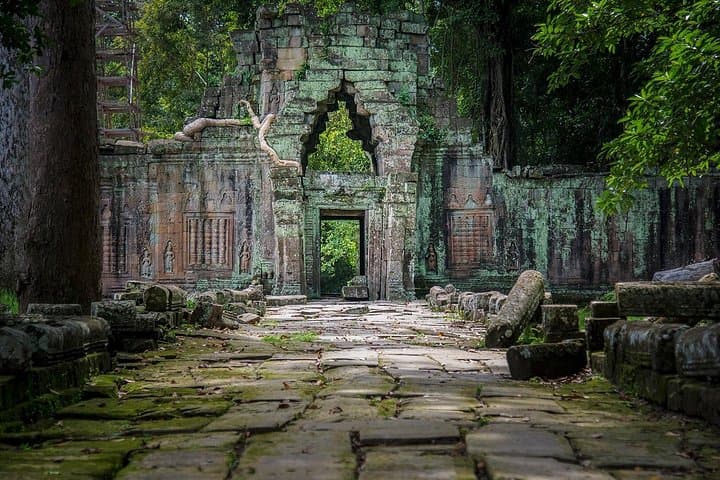
Angkor Wat, raised by Suryavarman II in the early 12th century and dedicated to Vishnu, stands as Southeast Asia’s largest religious monument; nearby Angkor Thom and Ta Prohm show later Khmer innovations and the way jungle and stone contend for space. Day two shifts from carved sandstone to jungle-swollen Phnom Kulen, where the shallow river is incised with the 1000 lingas—ritual motifs that mark the mountain as a cradle of Khmer statehood when Jayavarman II proclaimed independence in 804 CE.
Expect temple steps, uneven flagstones and short walks between sites, punctuated by rest stops and shaded car rides. Temperatures climb quickly; plan sunrise for cooler light and smaller crowds, and leave fragile carvings untouched. Phnom Kulen’s waterfall offers a cooling swim post-hike but currents and slippery rock demand care.
Practicalities: secure an Angkor Pass ahead of time, carry sun protection and ample water, and confirm your hotel pickup details. Local guides supply cultural context that turns carvings and layout into stories — follow their route to maximize time and minimize backtracking.
No—the Angkor Park pass is required for entry and must be purchased separately at the official ticket center or online before your visit.
The tour includes guide and transport but not Angkor Park admission or most meals; confirm any included lunches with the operator when booking.
Yes—children can join but infants must sit on an adult’s lap; the tour involves early starts and stairs so assess your child’s comfort with both.
Yes, swimming is common at designated areas, but exercise caution: currents, uneven rock, and supervised sections vary with season and flow.
Angkor Wat Travel Tour operates guided outdoor trips and adventures with an emphasis on safety, stewardship, and memorable experiences.
The day begins before dawn: a humid Siem Reap sky softens as you step from an air-conditioned minivan onto the causeway framing Angkor Wat. Torches and camera tripods punctuate the reflection pool while the temple’s silhouette sharpens against a pale horizon. Your guide steers you through the quieter corridors, pointing out bas-reliefs and architectural rhythms that are easier to appreciate before the mid-day crowds arrive.
The day begins before dawn: a humid Siem Reap sky softens as you step from an air-conditioned minivan onto the causeway framing Angkor Wat. Torches and camera tripods punctuate the reflection pool while the temple’s silhouette sharpens against a pale horizon. Your guide steers you through the quieter corridors, pointing out bas-reliefs and architectural rhythms that are easier to appreciate before the mid-day crowds arrive.
Angkor Wat, raised by Suryavarman II in the early 12th century and dedicated to Vishnu, stands as Southeast Asia’s largest religious monument; nearby Angkor Thom and Ta Prohm show later Khmer innovations and the way jungle and stone contend for space. Day two shifts from carved sandstone to jungle-swollen Phnom Kulen, where the shallow river is incised with the 1000 lingas—ritual motifs that mark the mountain as a cradle of Khmer statehood when Jayavarman II proclaimed independence in 804 CE.
Expect temple steps, uneven flagstones and short walks between sites, punctuated by rest stops and shaded car rides. Temperatures climb quickly; plan sunrise for cooler light and smaller crowds, and leave fragile carvings untouched. Phnom Kulen’s waterfall offers a cooling swim post-hike but currents and slippery rock demand care.
Practicalities: secure an Angkor Pass ahead of time, carry sun protection and ample water, and confirm your hotel pickup details. Local guides supply cultural context that turns carvings and layout into stories — follow their route to maximize time and minimize backtracking.