THE ADVENTURE COLLECTIVE® · Independent discovery and booking for outdoor travel

Watch sunrise over Angkor Wat, explore Bayon and Banteay Srei, then drift through the floating villages of Tonle Sap on a two-day private tour that blends iconic monuments with quieter local life.
Watch sunrise over Angkor Wat, explore Bayon and Banteay Srei, then drift through the floating villages of Tonle Sap on a two-day private tour that blends iconic monuments with quieter local life.
Dawn arrives slow and orange over the moat; silhouettes of Angkor Wat sharpen as the crowd hushes and the temple seems to breathe. You watch reflection and stone change together, then step away into the cool lanes where roots and ruins trade claims.
Verified experiences and guided adventures in the surrounding area.
Operated by Ta Prohm Temple Tour · Siem Reap, Siem Reap Province
Dawn arrives slow and orange over the moat; silhouettes of Angkor Wat sharpen as the crowd hushes and the temple seems to breathe. You watch reflection and stone change together, then step away into the cool lanes where roots and ruins trade claims.
This two-day circuit moves from Angkor’s grand monuments—Angkor Wat, Bayon, Angkor Thom—into pockets of quieter history: the pink sandstone reliefs of Banteay Srei and the jungle-wrapped Ta Prohm. The complex sits on a low Cambrian plateau carved by seasonal rivers and ancient reservoirs (barays) that supported the Khmer Empire’s hydraulic engineering and dense urban life. Local culture still orbits the temple calendar; nearby Tonle Sap lake paces its own rhythm, swelling in monsoon season and pushing boats into a floating village life.
Expect long, mostly flat walking between sites, frequent staircases on temple terraces, and uneven stone surfaces worn smooth by centuries of feet. Your private guide times visits to catch sunrise and quieter afternoons; a morning boat on Tonle Sap shifts the focus from carved stone to fishing platforms and mangrove channels where waterbirds and macaques show up on cue.
Practical guidance: arrive well before the advertised sunrise pickup, dress respectfully (shoulders and knees covered), and carry sun protection and a refillable water bottle. Bring small bills for market snacks and temple donations. Weather can flip from heat to sudden rain—pack a lightweight rain layer. Pace the days: the itinerary is full but manageable with breaks; preserve energy for climbing temple tiers to take in the view.
Yes. All visitors must buy an Angkor Pass at the official ticket center near the park; options include 1-, 3- and 7-day passes.
No — sunrise visibility depends on weather, but early arrival improves your chance and reduces crowding.
Boat visits typically run 1–2 hours around Kampong Phluk, depending on water levels and how much of the flooded forest you explore.
Many main sites have uneven terrain and steps; some areas are partially accessible, and transport can accommodate wheelchairs, but full access varies by temple.
Ta Prohm Temple Tour operates guided outdoor trips and adventures with an emphasis on safety, stewardship, and memorable experiences.


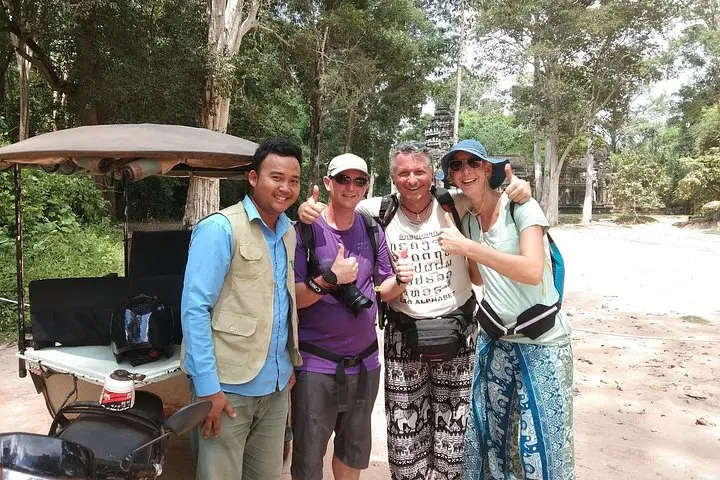
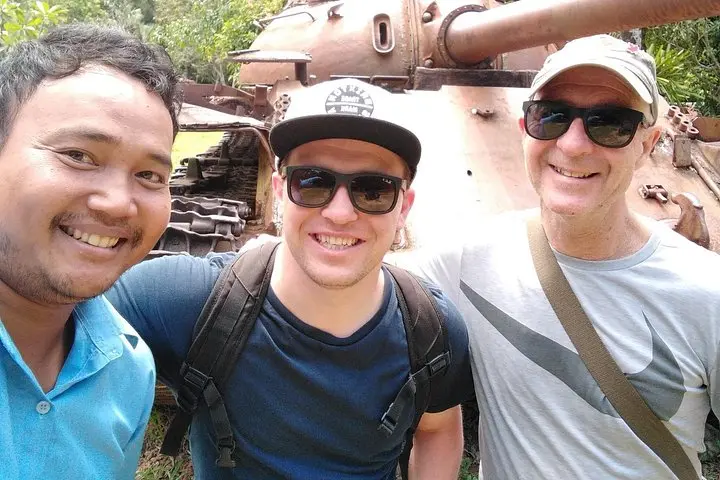
Dawn arrives slow and orange over the moat; silhouettes of Angkor Wat sharpen as the crowd hushes and the temple seems to breathe. You watch reflection and stone change together, then step away into the cool lanes where roots and ruins trade claims.
Dawn arrives slow and orange over the moat; silhouettes of Angkor Wat sharpen as the crowd hushes and the temple seems to breathe. You watch reflection and stone change together, then step away into the cool lanes where roots and ruins trade claims.
This two-day circuit moves from Angkor’s grand monuments—Angkor Wat, Bayon, Angkor Thom—into pockets of quieter history: the pink sandstone reliefs of Banteay Srei and the jungle-wrapped Ta Prohm. The complex sits on a low Cambrian plateau carved by seasonal rivers and ancient reservoirs (barays) that supported the Khmer Empire’s hydraulic engineering and dense urban life. Local culture still orbits the temple calendar; nearby Tonle Sap lake paces its own rhythm, swelling in monsoon season and pushing boats into a floating village life.
Expect long, mostly flat walking between sites, frequent staircases on temple terraces, and uneven stone surfaces worn smooth by centuries of feet. Your private guide times visits to catch sunrise and quieter afternoons; a morning boat on Tonle Sap shifts the focus from carved stone to fishing platforms and mangrove channels where waterbirds and macaques show up on cue.
Practical guidance: arrive well before the advertised sunrise pickup, dress respectfully (shoulders and knees covered), and carry sun protection and a refillable water bottle. Bring small bills for market snacks and temple donations. Weather can flip from heat to sudden rain—pack a lightweight rain layer. Pace the days: the itinerary is full but manageable with breaks; preserve energy for climbing temple tiers to take in the view.