THE ADVENTURE COLLECTIVE® · Independent discovery and booking for outdoor travel

Witness Angkor Wat at sunrise, explore the Small and Big Circuits across two paced days, and finish with the pink-sandstone carvings of Banteay Srei—an immersive, practical itinerary for seeing the highlights without rushing.
Witness Angkor Wat at sunrise, explore the Small and Big Circuits across two paced days, and finish with the pink-sandstone carvings of Banteay Srei—an immersive, practical itinerary for seeing the highlights without rushing.
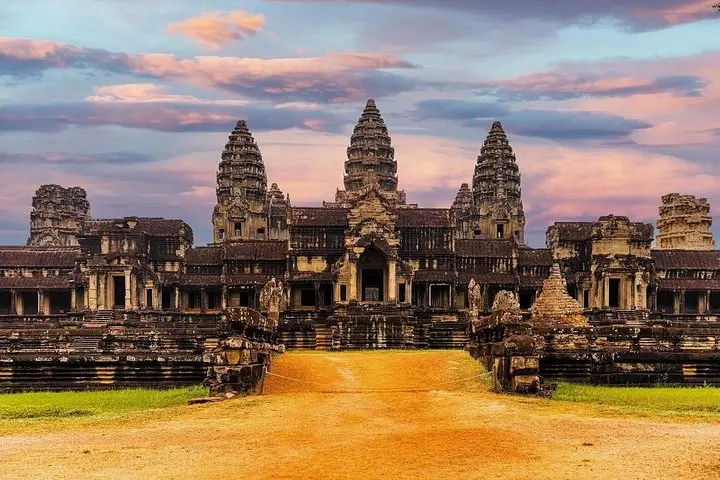
Dawn breaks over the moat and central towers of Angkor Wat, the sky peeling from indigo to a hard, bright gold as the temple’s reflection shivers in the water. You stand beside other early risers while the guide sketches the layout and explains what your next two days will reveal: living stone, living trees, and centuries of human ambition carved into sandstone.
Verified experiences and guided adventures in the surrounding area.
Operated by Mekong Tourist · Siem Reap, Siem Reap Province
Dawn breaks over the moat and central towers of Angkor Wat, the sky peeling from indigo to a hard, bright gold as the temple’s reflection shivers in the water. You stand beside other early risers while the guide sketches the layout and explains what your next two days will reveal: living stone, living trees, and centuries of human ambition carved into sandstone.
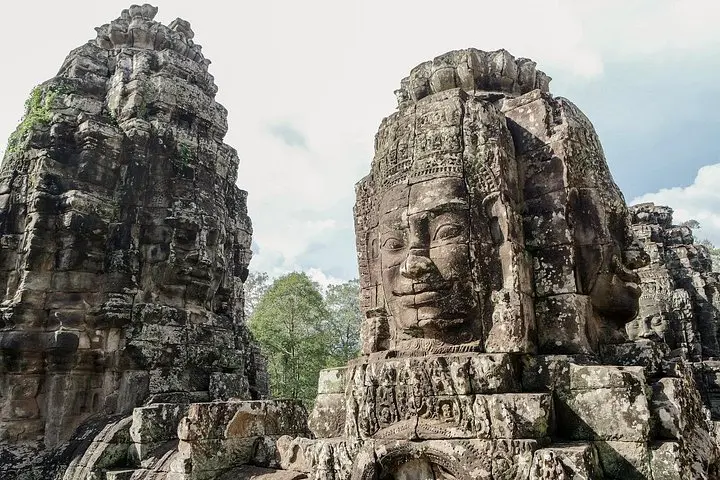
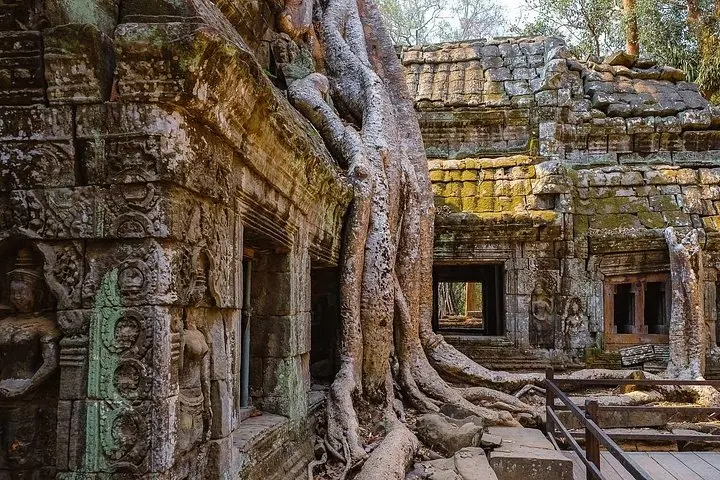
This two-day route splits the complex into approachable circuits. The Small Circuit threads through Ta Prohm’s giant roots and quieter ruins like Ta Nei; the Big Circuit ranges farther, across monastic Preah Khan, the terrace-studded Baphuon, and riverine Neak Pean. Geology matters here—most monuments are built of laterite foundations topped with soft pink sandstone that holds fine bas-relief work and is sensitive to touch and water.
Culturally, Angkor is the apex of the Khmer Empire (9th–15th centuries). Many temples were Hindu, later Buddhist; kings like Jayavarman VII left vast public works, and Banteay Srei’s delicate carvings are a distinct, small-scale masterpiece set off the main roads.
Practical guidance: sunrise at Angkor Wat means a 4:30–5:00 a.m. pickup in peak season—expect long days and lots of walking on uneven, sometimes steep steps. Wear sturdy shoes, cover shoulders and knees for temple entry, carry water, and use a lightweight rain layer in wet months. Respect roped-off areas and avoid touching bas-reliefs; conservation depends on visitor care.
By splitting the complex over two days you trade rush for context: more time to read carvings, watch the jungles reclaim masonry, and leave with a clearer sense of why Angkor still commands attention.
Expect several hours of walking each day on uneven paths and stone steps, typically 5–10 km per day depending on optional stops.
Yes—the itinerary includes an early morning pickup to watch sunrise at Angkor Wat on day two.
Yes—an Angkor Park pass (1-, 3-, or 7-day) is required; confirm who provides or arranges the pass before arrival.
Most temples have uneven stone, steps, and limited accessibility; visitors with mobility concerns should check specific sites and notify the operator in advance.
Mekong Tourist operates guided outdoor trips and adventures with an emphasis on safety, stewardship, and memorable experiences.

Dawn breaks over the moat and central towers of Angkor Wat, the sky peeling from indigo to a hard, bright gold as the temple’s reflection shivers in the water. You stand beside other early risers while the guide sketches the layout and explains what your next two days will reveal: living stone, living trees, and centuries of human ambition carved into sandstone.
Dawn breaks over the moat and central towers of Angkor Wat, the sky peeling from indigo to a hard, bright gold as the temple’s reflection shivers in the water. You stand beside other early risers while the guide sketches the layout and explains what your next two days will reveal: living stone, living trees, and centuries of human ambition carved into sandstone.
This two-day route splits the complex into approachable circuits. The Small Circuit threads through Ta Prohm’s giant roots and quieter ruins like Ta Nei; the Big Circuit ranges farther, across monastic Preah Khan, the terrace-studded Baphuon, and riverine Neak Pean. Geology matters here—most monuments are built of laterite foundations topped with soft pink sandstone that holds fine bas-relief work and is sensitive to touch and water.
Culturally, Angkor is the apex of the Khmer Empire (9th–15th centuries). Many temples were Hindu, later Buddhist; kings like Jayavarman VII left vast public works, and Banteay Srei’s delicate carvings are a distinct, small-scale masterpiece set off the main roads.
Practical guidance: sunrise at Angkor Wat means a 4:30–5:00 a.m. pickup in peak season—expect long days and lots of walking on uneven, sometimes steep steps. Wear sturdy shoes, cover shoulders and knees for temple entry, carry water, and use a lightweight rain layer in wet months. Respect roped-off areas and avoid touching bas-reliefs; conservation depends on visitor care.
By splitting the complex over two days you trade rush for context: more time to read carvings, watch the jungles reclaim masonry, and leave with a clearer sense of why Angkor still commands attention.