THE ADVENTURE COLLECTIVE® · Independent discovery and booking for outdoor travel

Spend two days hiking the High Atlas from Marrakech, walking through Imnan Valley, staying overnight in a Berber guesthouse, and experiencing village life up close. Expect steady trails, dramatic valley views, and meaningful cultural exchange.
Spend two days hiking the High Atlas from Marrakech, walking through Imnan Valley, staying overnight in a Berber guesthouse, and experiencing village life up close. Expect steady trails, dramatic valley views, and meaningful cultural exchange.
A slate-blue morning lifts off Marrakech as the minivan threads toward the High Atlas. By mid-morning you step into Imlil Valley: terraced fields slope away, a creek dares you to follow it, and the trail pitches up through stone villages where laundry flaps like small flags.
Verified experiences and guided adventures in the surrounding area.
Operated by Art de Cuivre Travel · Imlil, Marrakesh-Safi
A slate-blue morning lifts off Marrakech as the minivan threads toward the High Atlas. By mid-morning you step into Imlil Valley: terraced fields slope away, a creek dares you to follow it, and the trail pitches up through stone villages where laundry flaps like small flags.
This two-day route moves through Imnan Valley and multiple Berber hamlets, offering an intimate look at Amazigh life. The High Atlas is geologically young—folded schist and volcanic intrusions shaped by tectonic pressure—and the ridgelines give way to deep river-carved valleys. Local culture centers on seasonal barley and apple cultivation; homestay evenings are built around shared meals and mint tea, long a social currency in mountain homes.
Expect steady walking rather than technical scrambling: most days feature 3–5 hours of trekking on dirt tracks and stone switchbacks, with short steep pitches and several village stops. Nights are spent in a family guesthouse where running water and simple mattresses are common; meals are hearty and often vegetarian-friendly if requested.
Practical notes: start early to avoid midday heat, carry 2–3 liters of water, and bring layered clothing for chilly mountain evenings. Footwear with good traction and a daypack for snacks and rain layers makes the trek comfortable. Respect private spaces in villages and ask before photographing people.
This trip is a compact immersion—part natural history, part cultural exchange—ideal for travelers who want a grounded, walkable introduction to the High Atlas without technical climbing.
No technical experience is required; the route involves steady walking on dirt and stone paths—basic fitness and comfortable hiking shoes are sufficient.
Overnight is in a local Berber guesthouse (homestay) with simple rooms, shared facilities, and family-prepared meals.
Dinner and two breakfasts are included; vegetarian options are available if requested at booking.
Pickup from hotels in Marrakech is included—expect a 1–1.5 hour drive to Imlil depending on traffic and road conditions.
Art de Cuivre Travel operates guided outdoor trips and adventures with an emphasis on safety, stewardship, and memorable experiences.
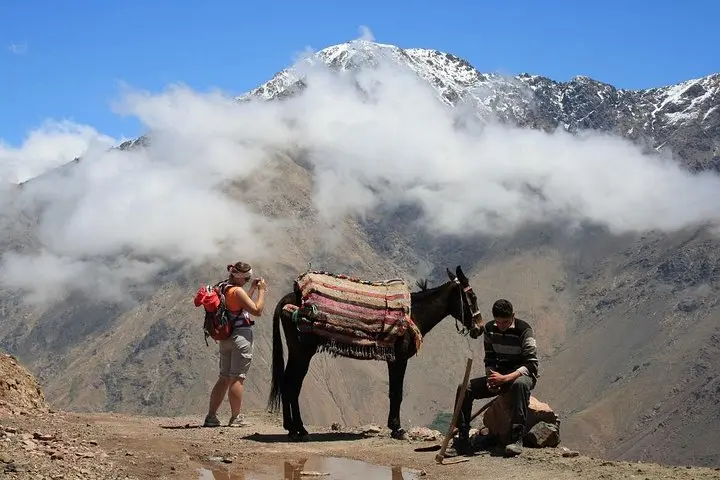
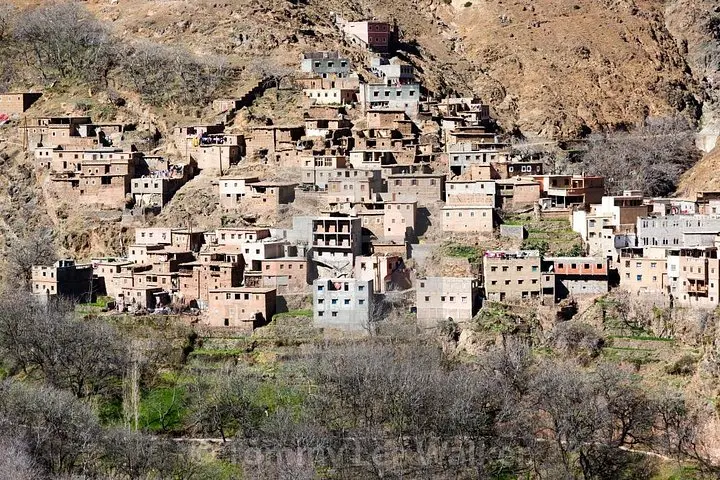
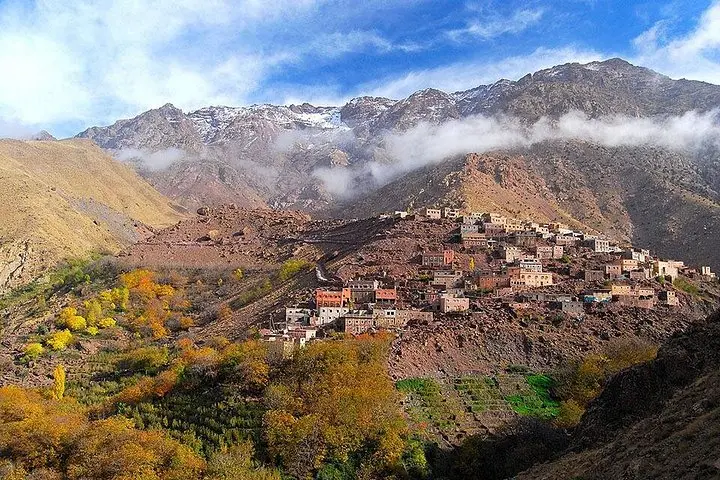
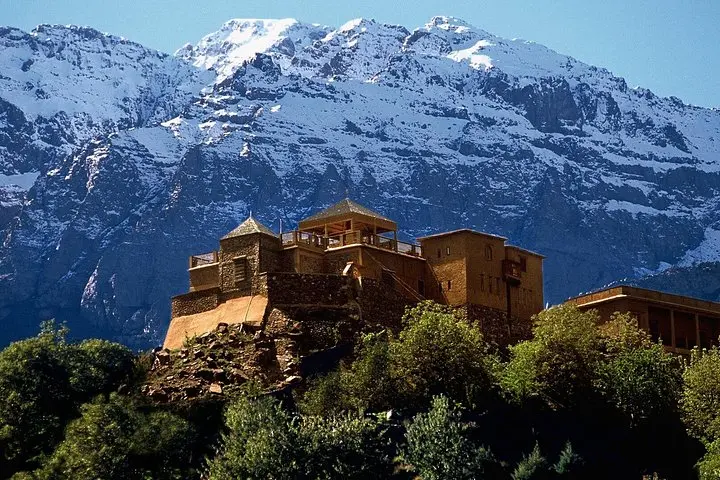
A slate-blue morning lifts off Marrakech as the minivan threads toward the High Atlas. By mid-morning you step into Imlil Valley: terraced fields slope away, a creek dares you to follow it, and the trail pitches up through stone villages where laundry flaps like small flags.
A slate-blue morning lifts off Marrakech as the minivan threads toward the High Atlas. By mid-morning you step into Imlil Valley: terraced fields slope away, a creek dares you to follow it, and the trail pitches up through stone villages where laundry flaps like small flags.
This two-day route moves through Imnan Valley and multiple Berber hamlets, offering an intimate look at Amazigh life. The High Atlas is geologically young—folded schist and volcanic intrusions shaped by tectonic pressure—and the ridgelines give way to deep river-carved valleys. Local culture centers on seasonal barley and apple cultivation; homestay evenings are built around shared meals and mint tea, long a social currency in mountain homes.
Expect steady walking rather than technical scrambling: most days feature 3–5 hours of trekking on dirt tracks and stone switchbacks, with short steep pitches and several village stops. Nights are spent in a family guesthouse where running water and simple mattresses are common; meals are hearty and often vegetarian-friendly if requested.
Practical notes: start early to avoid midday heat, carry 2–3 liters of water, and bring layered clothing for chilly mountain evenings. Footwear with good traction and a daypack for snacks and rain layers makes the trek comfortable. Respect private spaces in villages and ask before photographing people.
This trip is a compact immersion—part natural history, part cultural exchange—ideal for travelers who want a grounded, walkable introduction to the High Atlas without technical climbing.