THE ADVENTURE COLLECTIVE® · Independent discovery and booking for outdoor travel

A two-day private circuit from Siem Reap that visits off-the-beaten-track Angkor-era sites: the overgrown corridors of Beng Mealea, the pyramid-like ruins of Koh Ker and the cliff-top galleries of UNESCO-listed Preah Vihear.
A two-day private circuit from Siem Reap that visits off-the-beaten-track Angkor-era sites: the overgrown corridors of Beng Mealea, the pyramid-like ruins of Koh Ker and the cliff-top galleries of UNESCO-listed Preah Vihear.
Morning light slices through the forest as a private vehicle threads rural roads out of Siem Reap, the city falling away into rice paddies and scrub. On day one the group moves deeper into the Khmer countryside to Beng Mealea, where crumbling sandstone blocks and tree roots create corridors that dare visitors to explore slowly and deliberately.
Verified experiences and guided adventures in the surrounding area.
Operated by Green Era Travel · Siem Reap, Siem Reap Province
Morning light slices through the forest as a private vehicle threads rural roads out of Siem Reap, the city falling away into rice paddies and scrub. On day one the group moves deeper into the Khmer countryside to Beng Mealea, where crumbling sandstone blocks and tree roots create corridors that dare visitors to explore slowly and deliberately.
These sites trace Khmer power and experimentation: Beng Mealea, begun under King Suryavarman II (1113–1150), has architectural echoes of Angkor Wat but fewer bas-reliefs; Koh Ker served briefly as a capital (928–944 AD) and presents stepped-pyramid forms unusual for Cambodia. Geologically the temples sit on sandstone benches uplifted and eroded over millennia, the stones softened by tropical weather and cloaked in secondary forests that give birds and lianas a voice in the ruins.
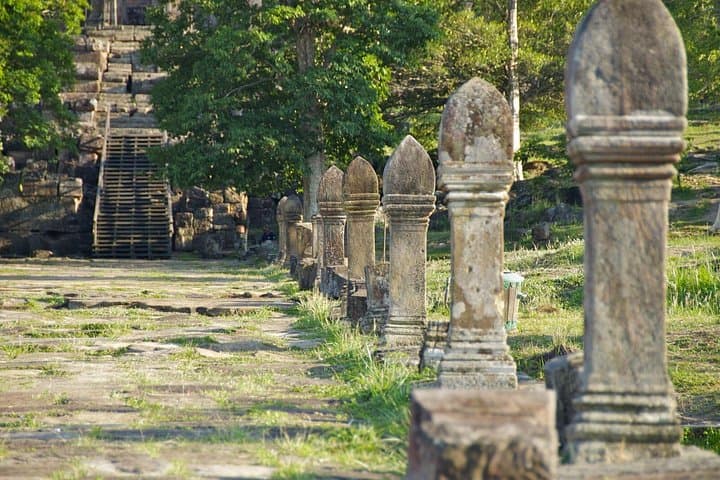
By evening the tour reaches Saem district for a basic overnight; next morning Prasat Preah Vihear crowns a 625 m escarpment, its long galleries framing sweeping views across the plain and toward the Thai border.
Practical guidance: expect long drives (several hours total), uneven stonework and steep steps at Preah Vihear—sturdy footwear and at least moderate fitness are required. Carry photo ID (border area), cash for picnic or small purchases, sun protection and insect repellent. Respect local customs at temple sites: dress modestly, remove hats in sanctuaries, and follow guide directions on fragile areas. The route rewards patience: quiet corners, birdcalls, and the rare feeling of temples still being reclaimed by the landscape.
Admission to Preah Vihear, Beng Mealea and Koh Ker is included by this tour operator, but bring cash for incidental purchases and tips.
Expect multiple hours of driving over two days — Beng Mealea and Koh Ker are day-trip distance, Preah Vihear requires a longer transfer and access via Saem district.
The itinerary includes a one-night stay in a local 3-star hotel in Saem district; amenities are basic compared with Siem Reap but adequate for rest between days.
Carry your passport or national ID — Preah Vihear is near the Thai border and authorities may request ID; visa requirements depend on your nationality.
Green Era Travel operates guided outdoor trips and adventures with an emphasis on safety, stewardship, and memorable experiences.



Morning light slices through the forest as a private vehicle threads rural roads out of Siem Reap, the city falling away into rice paddies and scrub. On day one the group moves deeper into the Khmer countryside to Beng Mealea, where crumbling sandstone blocks and tree roots create corridors that dare visitors to explore slowly and deliberately.
Morning light slices through the forest as a private vehicle threads rural roads out of Siem Reap, the city falling away into rice paddies and scrub. On day one the group moves deeper into the Khmer countryside to Beng Mealea, where crumbling sandstone blocks and tree roots create corridors that dare visitors to explore slowly and deliberately.
These sites trace Khmer power and experimentation: Beng Mealea, begun under King Suryavarman II (1113–1150), has architectural echoes of Angkor Wat but fewer bas-reliefs; Koh Ker served briefly as a capital (928–944 AD) and presents stepped-pyramid forms unusual for Cambodia. Geologically the temples sit on sandstone benches uplifted and eroded over millennia, the stones softened by tropical weather and cloaked in secondary forests that give birds and lianas a voice in the ruins.
By evening the tour reaches Saem district for a basic overnight; next morning Prasat Preah Vihear crowns a 625 m escarpment, its long galleries framing sweeping views across the plain and toward the Thai border.
Practical guidance: expect long drives (several hours total), uneven stonework and steep steps at Preah Vihear—sturdy footwear and at least moderate fitness are required. Carry photo ID (border area), cash for picnic or small purchases, sun protection and insect repellent. Respect local customs at temple sites: dress modestly, remove hats in sanctuaries, and follow guide directions on fragile areas. The route rewards patience: quiet corners, birdcalls, and the rare feeling of temples still being reclaimed by the landscape.