THE ADVENTURE COLLECTIVE® · Independent discovery and booking for outdoor travel

A concentrated High Atlas trek that combines two full days of mountain hiking with visits to Berber villages, terraced fields, and high passes. Ideal for hikers who want cultural contact and high-elevation scenery without a long expedition.
A concentrated High Atlas trek that combines two full days of mountain hiking with visits to Berber villages, terraced fields, and high passes. Ideal for hikers who want cultural contact and high-elevation scenery without a long expedition.
You step out of the minivan into thin, cool air and the High Atlas opens: a ridge of scrub and pine cutting the sky, terraced plots clinging to steep slopes, and a murmur of water in the valley below. The first day climbs from Imi Oughlad toward Tizi n'Tacht (≈2100m), trading cultivated terraces for juniper and rock-strewn passes; by afternoon you descend into Tizi Oussem to an evening among stone homes and shared tagine.
Verified experiences and guided adventures in the surrounding area.
Operated by Toubkal Trekking · Imlil, Marrakech-Safi
You step out of the minivan into thin, cool air and the High Atlas opens: a ridge of scrub and pine cutting the sky, terraced plots clinging to steep slopes, and a murmur of water in the valley below. The first day climbs from Imi Oughlad toward Tizi n'Tacht (≈2100m), trading cultivated terraces for juniper and rock-strewn passes; by afternoon you descend into Tizi Oussem to an evening among stone homes and shared tagine.
Geologically the High Atlas is young and rugged—folded sedimentary layers pushed up by African-European plate collisions—so expect steep gullies, rocky trails, and quartz-streaked outcrops underfoot. Culturally, this region is home to Amazigh (Berber) farming communities whose terraces of barley and corn and groves of walnut and cherry reflect centuries of mountain agriculture; local guides will point out irrigation channels and village ovens and offer chances to visit family-run lodges.
Practical guidance: the trek averages two 5-hour walking days with steep ascents to nearly 2,489m at Tizi Mzik on day two, so bring sturdy boots with ankle support, 2–3 liters of water, layered clothing for big diurnal swings, and sun protection. Trails are well-trodden but uneven; mules transport luggage, so you carry a daypack. Expect simple Berber lodge accommodations and three included meals each day. Start early to avoid midday heat and watch weather forecasts—storms can make high passes slick. This route balances cultural contact and alpine hiking: compact, rewarding, and best for hikers comfortable on sustained uphill sections who want a short but immersive mountain experience.
Expect two full days of walking (about five hours each) with sustained uphill to 2,100–2,489m and uneven rocky sections—moderate fitness is required.
You stay in simple Berber lodges with shared rooms; breakfasts, lunches and dinners are included and often family-style tagines or cooked mountain fare.
Not recommended for very young children or travelers with significant mobility or cardiovascular issues due to elevation changes and uneven terrain.
Luggage is transported by mules and support staff; you carry a daypack with water, layers and personal items during the hikes.
Toubkal Trekking operates guided outdoor trips and adventures with an emphasis on safety, stewardship, and memorable experiences.
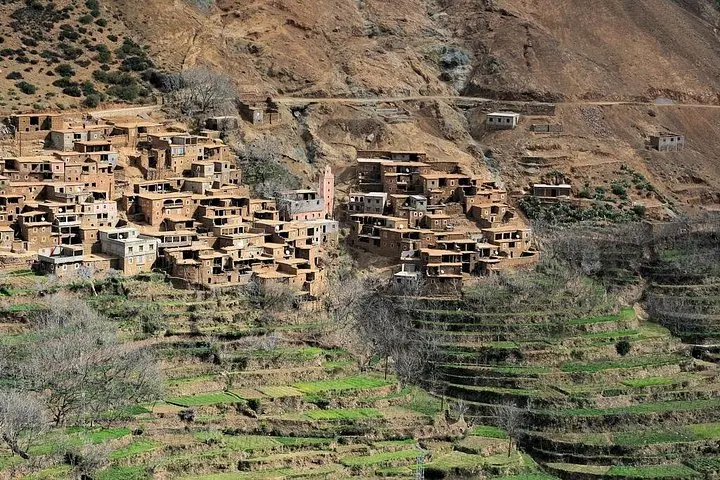
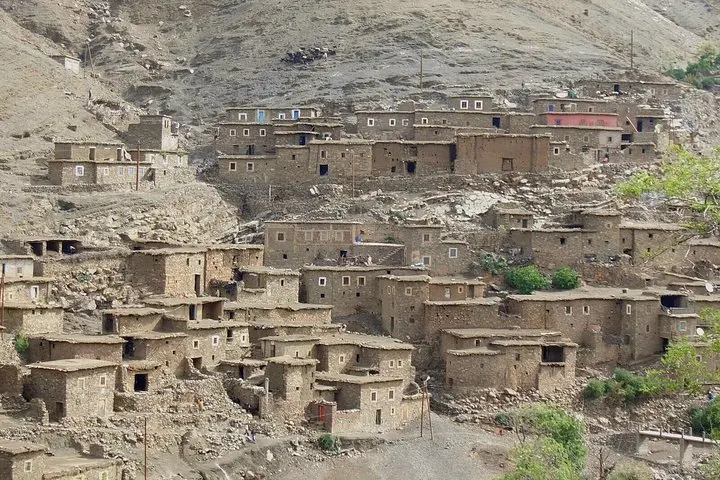
You step out of the minivan into thin, cool air and the High Atlas opens: a ridge of scrub and pine cutting the sky, terraced plots clinging to steep slopes, and a murmur of water in the valley below. The first day climbs from Imi Oughlad toward Tizi n'Tacht (≈2100m), trading cultivated terraces for juniper and rock-strewn passes; by afternoon you descend into Tizi Oussem to an evening among stone homes and shared tagine.
You step out of the minivan into thin, cool air and the High Atlas opens: a ridge of scrub and pine cutting the sky, terraced plots clinging to steep slopes, and a murmur of water in the valley below. The first day climbs from Imi Oughlad toward Tizi n'Tacht (≈2100m), trading cultivated terraces for juniper and rock-strewn passes; by afternoon you descend into Tizi Oussem to an evening among stone homes and shared tagine.
Geologically the High Atlas is young and rugged—folded sedimentary layers pushed up by African-European plate collisions—so expect steep gullies, rocky trails, and quartz-streaked outcrops underfoot. Culturally, this region is home to Amazigh (Berber) farming communities whose terraces of barley and corn and groves of walnut and cherry reflect centuries of mountain agriculture; local guides will point out irrigation channels and village ovens and offer chances to visit family-run lodges.
Practical guidance: the trek averages two 5-hour walking days with steep ascents to nearly 2,489m at Tizi Mzik on day two, so bring sturdy boots with ankle support, 2–3 liters of water, layered clothing for big diurnal swings, and sun protection. Trails are well-trodden but uneven; mules transport luggage, so you carry a daypack. Expect simple Berber lodge accommodations and three included meals each day. Start early to avoid midday heat and watch weather forecasts—storms can make high passes slick. This route balances cultural contact and alpine hiking: compact, rewarding, and best for hikers comfortable on sustained uphill sections who want a short but immersive mountain experience.