THE ADVENTURE COLLECTIVE® · Independent discovery and booking for outdoor travel

Walk ancient mule tracks from Imlil over high Atlas passes to remote Berber villages. This two-day trek pairs alpine scenery with hands-on cultural exchange and overnight stays in a family guesthouse.
Walk ancient mule tracks from Imlil over high Atlas passes to remote Berber villages. This two-day trek pairs alpine scenery with hands-on cultural exchange and overnight stays in a family guesthouse.
You climb out of Marrakech before dawn, the city lights shrinking as your vehicle threads the arid foothills toward Imlil. By mid-morning the path narrows into stony mule tracks; the air sharpens, and the High Atlas lifts around you — ridges cut by winter torrents, terraces clinging to steep slopes, and roofs of flat-stone houses in villages that have traded little for centuries.
Verified experiences and guided adventures in the surrounding area.
Operated by Atlas Trek Experience · Imlil, Marrakesh-Safi
You climb out of Marrakech before dawn, the city lights shrinking as your vehicle threads the arid foothills toward Imlil. By mid-morning the path narrows into stony mule tracks; the air sharpens, and the High Atlas lifts around you — ridges cut by winter torrents, terraces clinging to steep slopes, and roofs of flat-stone houses in villages that have traded little for centuries.
This two-day trek traces routes used by Amazigh (Berber) shepherds and traders. Geologically the High Atlas is young and rugged: metamorphic and volcanic bedrock thrust upward by the African-Eurasian collision, producing steep passes such as Tizi n'Tamatert and Tizi Mzik. Culture here is hands-on — you’ll stay in a family-run guesthouse, share meals flavored with local spices, and pass children heading to school along ancient irrigation channels.
Expect sustained ascents to 2,279–2,489 m, loose scree on higher approaches, and panoramic views of the Toubkal massif. The trek balances walking with moments to learn: how terraces capture water, why muleteers still move luggage, and how seasonal grazing shapes the landscape.
Practical guidance: start early to avoid afternoon sun, carry layered clothing for large temperature swings, and bring a face covering for dusty stretches. Mules transport luggage so you can hike with a daypack; guides handle navigation and local logistics. Hydrate steadily — sources are limited between villages — and be ready for rocky descents that reward careful footing. The route is ideal for hikers with basic mountain experience who want cultural immersion and compact alpine scenery over two active days.
The trek starts in Imlil after pickup from Marrakech and returns to Marrakech via Imlil on day two.
Yes — a muleteer and mules carry main luggage so you can hike with a light daypack.
Moderate fitness is recommended: regular walkers can manage the sustained ascents and descents, and a guide supports pacing.
Overnight lodging is in a local Berber guesthouse with simple rooms and shared facilities, and meals are included.
Atlas Trek Experience operates guided outdoor trips and adventures with an emphasis on safety, stewardship, and memorable experiences.
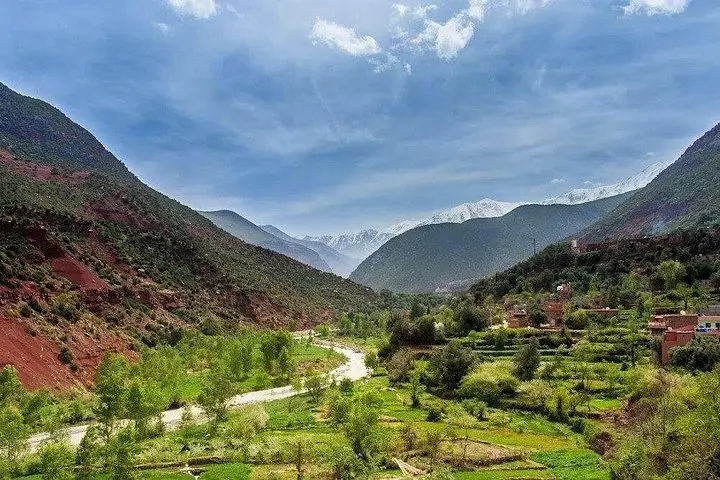
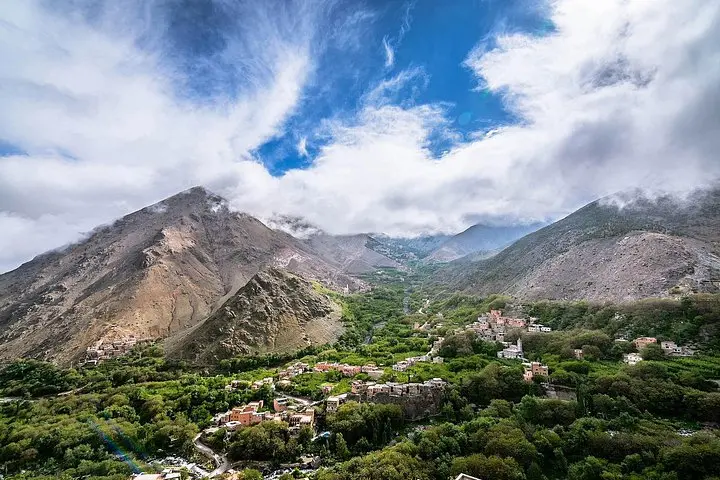
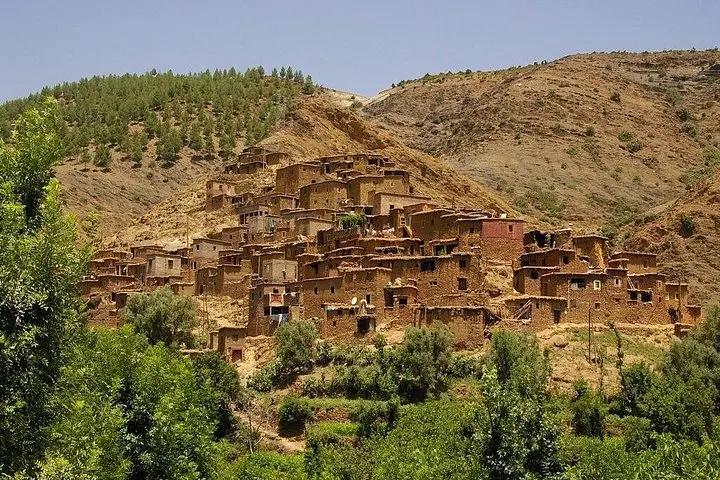
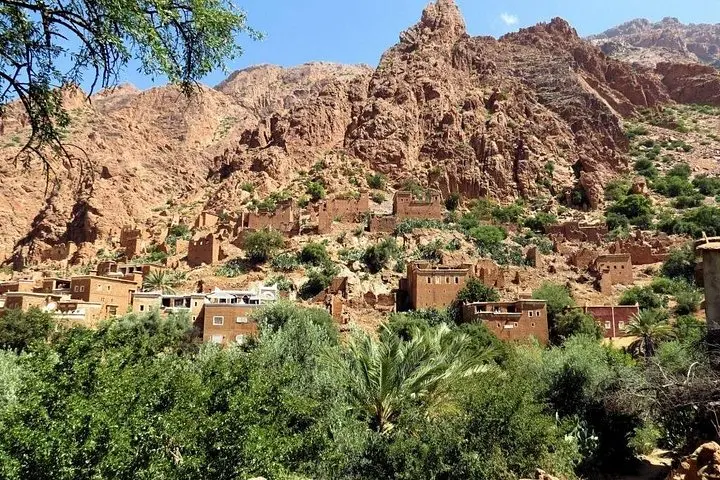
You climb out of Marrakech before dawn, the city lights shrinking as your vehicle threads the arid foothills toward Imlil. By mid-morning the path narrows into stony mule tracks; the air sharpens, and the High Atlas lifts around you — ridges cut by winter torrents, terraces clinging to steep slopes, and roofs of flat-stone houses in villages that have traded little for centuries.
You climb out of Marrakech before dawn, the city lights shrinking as your vehicle threads the arid foothills toward Imlil. By mid-morning the path narrows into stony mule tracks; the air sharpens, and the High Atlas lifts around you — ridges cut by winter torrents, terraces clinging to steep slopes, and roofs of flat-stone houses in villages that have traded little for centuries.
This two-day trek traces routes used by Amazigh (Berber) shepherds and traders. Geologically the High Atlas is young and rugged: metamorphic and volcanic bedrock thrust upward by the African-Eurasian collision, producing steep passes such as Tizi n'Tamatert and Tizi Mzik. Culture here is hands-on — you’ll stay in a family-run guesthouse, share meals flavored with local spices, and pass children heading to school along ancient irrigation channels.
Expect sustained ascents to 2,279–2,489 m, loose scree on higher approaches, and panoramic views of the Toubkal massif. The trek balances walking with moments to learn: how terraces capture water, why muleteers still move luggage, and how seasonal grazing shapes the landscape.
Practical guidance: start early to avoid afternoon sun, carry layered clothing for large temperature swings, and bring a face covering for dusty stretches. Mules transport luggage so you can hike with a daypack; guides handle navigation and local logistics. Hydrate steadily — sources are limited between villages — and be ready for rocky descents that reward careful footing. The route is ideal for hikers with basic mountain experience who want cultural immersion and compact alpine scenery over two active days.