THE ADVENTURE COLLECTIVE® · Independent discovery and booking for outdoor travel

Two days that flip from Busan’s raw coastal energy to Gyeongju’s measured Silla heritage. Expect ocean temples, cliff-top skywalks and UNESCO-era stonework with private transport and local guide included.
Two days that flip from Busan’s raw coastal energy to Gyeongju’s measured Silla heritage. Expect ocean temples, cliff-top skywalks and UNESCO-era stonework with private transport and local guide included.
You arrive first at a temple cut into the surf — Haedong Yonggungsa’s granite steps slick with spray, the sea daring you to close the gap between city and horizon. Throughout two compact days the coast pushes and pulls: glassy beaches give way to cliff-top skywalks, then inland the land softens into the low domes and grassy mounds of the ancient Silla capital, where stone pagodas keep watch.
Verified experiences and guided adventures in the surrounding area.
Operated by Frank Yi · Busan, Busan
You arrive first at a temple cut into the surf — Haedong Yonggungsa’s granite steps slick with spray, the sea daring you to close the gap between city and horizon. Throughout two compact days the coast pushes and pulls: glassy beaches give way to cliff-top skywalks, then inland the land softens into the low domes and grassy mounds of the ancient Silla capital, where stone pagodas keep watch.
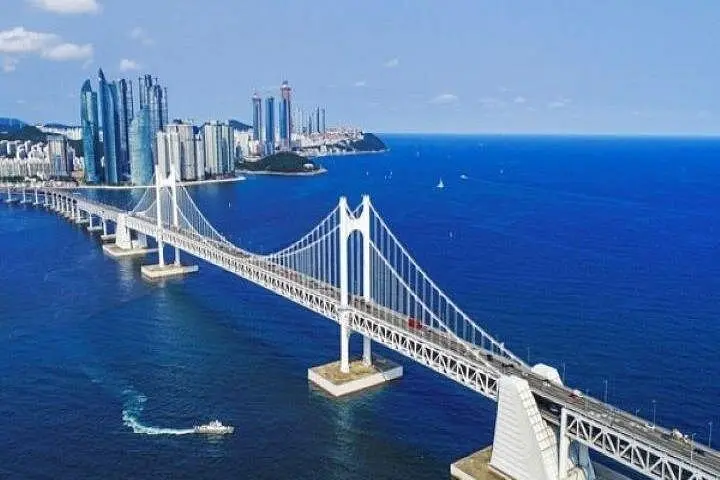
Busan’s modern identity grew from ports and fishing harbors — Jagalchi’s market still hums with ice and shouted prices — while Haeundae, Dongbaekseom and the Diamond Bridge frame a metropolitan seaside culture built for summer and spectacle. Gyeongju, by contrast, is the Silla Kingdom’s archive: Bulguksa’s terraces and Seokguram’s granite grotto embody 8th-century craftsmanship; Cheomseongdae marks medieval astronomy.
Geology is plain in both places: coastal granite and eroded cliffs in Busan versus weathered stonework and man-made ponds in Gyeongju. Local life shows in alleyway vendors, Gamcheon’s painted staircases, and artisans in Gyochon Village keeping centuries-old techniques alive.
Practical: this is a private two-day tour with door-to-door pickup, roughly 1.5 hours drive between Busan and Gyeongju each way. Most entrances are paid on-site; expect several short walks (1–3 km) at each stop — comfortable shoes and layered outerwear help. Morning light is best for Haedong Yonggungsa and Seokguram; evenings suit Busan tower and Jagalchi’s seafood stalls. Bring water, cash for incidental fees, and a power bank. The itinerary balances coastal spectacle with quiet heritage so you see both the city’s pulse and the long arc of Korean history.
No — most temple and museum entrances are paid on-site; the guide can advise prices and arrange tickets for you.
Yes — free pickup and drop-off are provided; confirm exact pickup point and luggage size when booking.
Plan on several short to moderate walks (total 1–3 km per stop) with periods of driving between highlights; there are steps at temples and uneven surfaces in old neighborhoods.
The operator lists wheelchair-accessible transport, but some historic sites have stairs or uneven paths; contact the guide in advance to plan an accessible route.
Frank Yi operates guided outdoor trips and adventures with an emphasis on safety, stewardship, and memorable experiences.
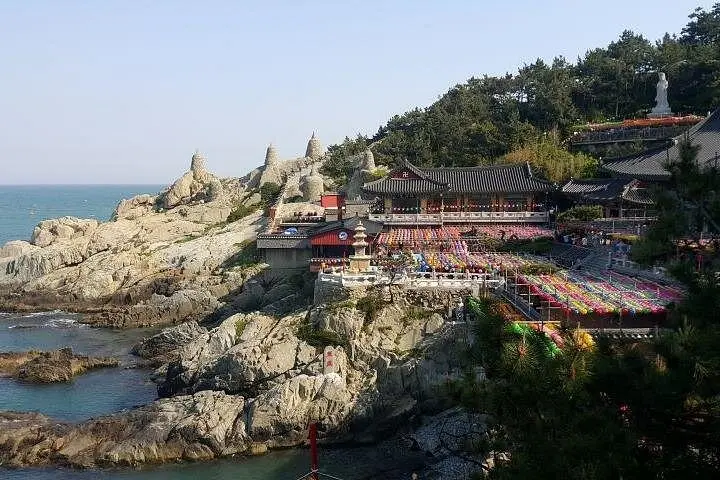
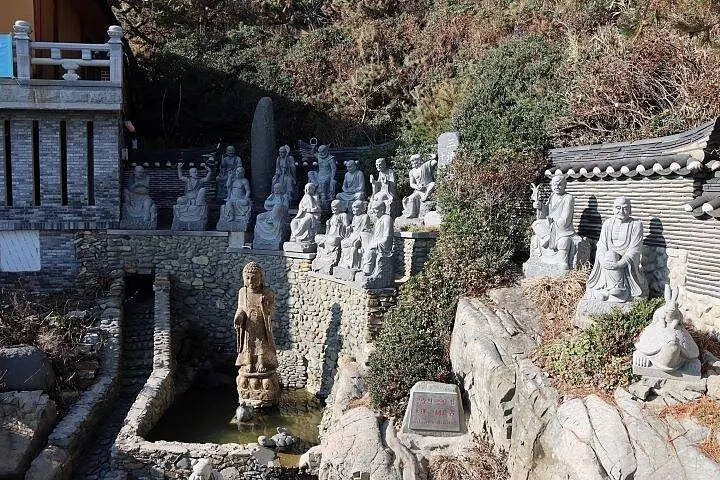
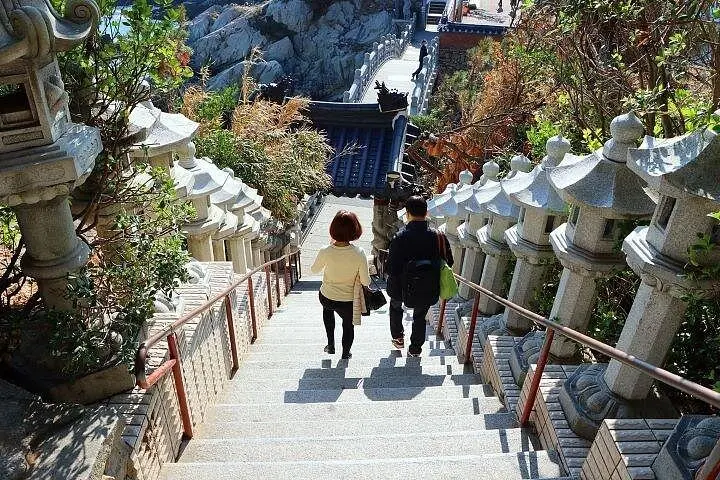
You arrive first at a temple cut into the surf — Haedong Yonggungsa’s granite steps slick with spray, the sea daring you to close the gap between city and horizon. Throughout two compact days the coast pushes and pulls: glassy beaches give way to cliff-top skywalks, then inland the land softens into the low domes and grassy mounds of the ancient Silla capital, where stone pagodas keep watch.
You arrive first at a temple cut into the surf — Haedong Yonggungsa’s granite steps slick with spray, the sea daring you to close the gap between city and horizon. Throughout two compact days the coast pushes and pulls: glassy beaches give way to cliff-top skywalks, then inland the land softens into the low domes and grassy mounds of the ancient Silla capital, where stone pagodas keep watch.
Busan’s modern identity grew from ports and fishing harbors — Jagalchi’s market still hums with ice and shouted prices — while Haeundae, Dongbaekseom and the Diamond Bridge frame a metropolitan seaside culture built for summer and spectacle. Gyeongju, by contrast, is the Silla Kingdom’s archive: Bulguksa’s terraces and Seokguram’s granite grotto embody 8th-century craftsmanship; Cheomseongdae marks medieval astronomy.
Geology is plain in both places: coastal granite and eroded cliffs in Busan versus weathered stonework and man-made ponds in Gyeongju. Local life shows in alleyway vendors, Gamcheon’s painted staircases, and artisans in Gyochon Village keeping centuries-old techniques alive.
Practical: this is a private two-day tour with door-to-door pickup, roughly 1.5 hours drive between Busan and Gyeongju each way. Most entrances are paid on-site; expect several short walks (1–3 km) at each stop — comfortable shoes and layered outerwear help. Morning light is best for Haedong Yonggungsa and Seokguram; evenings suit Busan tower and Jagalchi’s seafood stalls. Bring water, cash for incidental fees, and a power bank. The itinerary balances coastal spectacle with quiet heritage so you see both the city’s pulse and the long arc of Korean history.