THE ADVENTURE COLLECTIVE® · Independent discovery and booking for outdoor travel

A compact, two-day crossing from Ouarzazate to the great dunes of Erg Chegaga: drive through the Anti-Atlas and Draa Valley, ride camels to a remote bivouac, and spend a night under desert stars. Ideal for travelers who want a short, immersive Sahara experience with local culture and guided logistics.
A compact, two-day crossing from Ouarzazate to the great dunes of Erg Chegaga: drive through the Anti-Atlas and Draa Valley, ride camels to a remote bivouac, and spend a night under desert stars. Ideal for travelers who want a short, immersive Sahara experience with local culture and guided logistics.
The road out of Ouarzazate opens into a changing landscape: first the folded ridges of the Anti-Atlas, then the broad, green ribbon of the Draa Valley, and finally the pale sea of sand where Erg Chegaga throws long shadows at dusk.
Verified experiences and guided adventures in the surrounding area.
Operated by Easy Sahara · Ouarzazate, Drâa-Tafilalet
The road out of Ouarzazate opens into a changing landscape: first the folded ridges of the Anti-Atlas, then the broad, green ribbon of the Draa Valley, and finally the pale sea of sand where Erg Chegaga throws long shadows at dusk.
You spend two days moving through living history — fortified kasbahs like Tamnougalte that once watched over caravan routes, palm-lined oases in Zagora, and potters’ workshops where traditional patterns are still pressed by hand. Geologically, the route crosses rocky plateaus and sandy tracks that mark the transition from reg (stony desert) to erg (mobile dunes); seasonal rains can fill shallow basins such as Lake Iriqui, briefly turning arid flats into mirror-like pools.
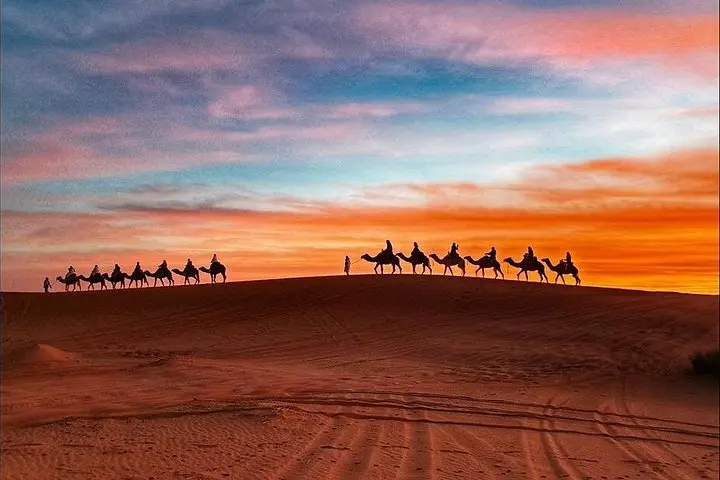
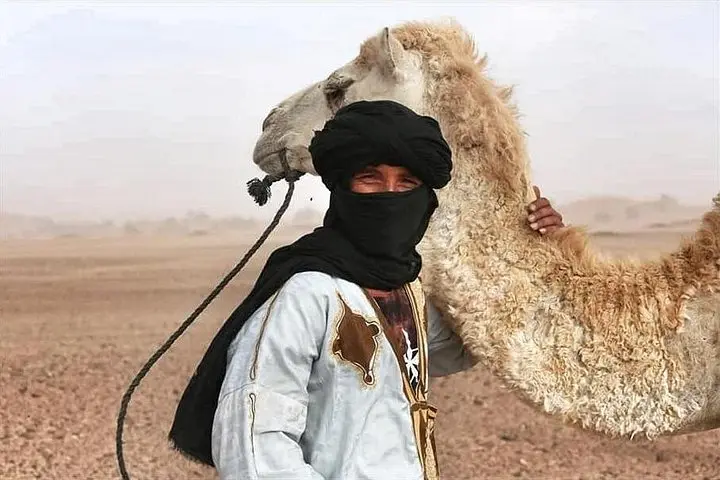
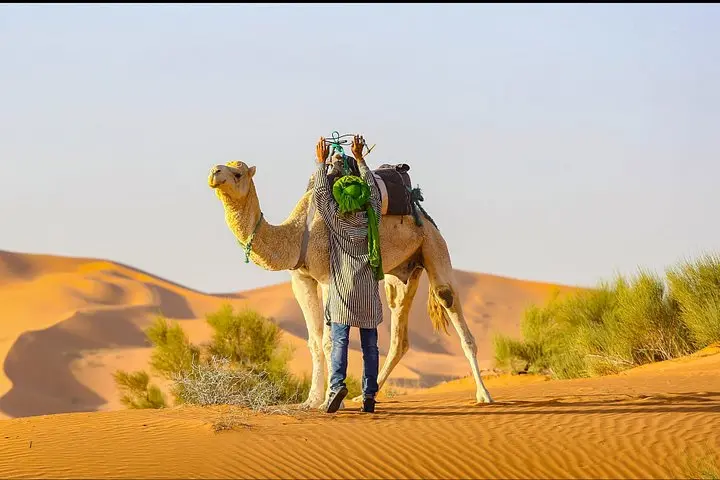
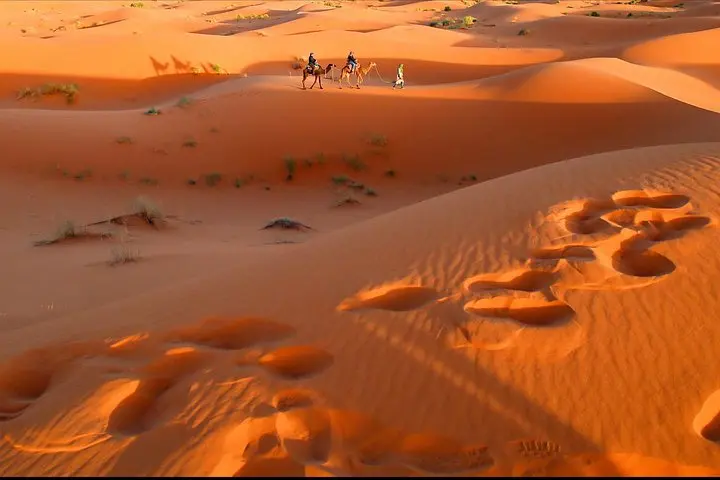
Local culture is tangible: Berber villages, carpet cooperatives in Taznakht, and the nomadic rhythm of M’Hamid. On day one you transfer in an air-conditioned vehicle, reach the desert edge, and ride dromedaries about one hour across rippled sand to a remote bivouac. Sunset paints the dunes; night brings high desert cold and a sky that pushes the stars close.
Practical guidance: the tour is private, includes dinner and breakfast, and is suitable for most fitness levels, but expect uneven sand, short walks, and a one-hour camel leg. Bring layered clothing for hot days and cold nights, sun protection, cash for local purchases and tips, and a headlamp. Time your trip for spring or fall for milder temperatures and clearer tracks.
Yes — the itinerary includes a roughly one-hour dromedary ride to the big dunes to reach the bivouac; shorter ledges may occur depending on sand and guest ability.
Overnight accommodation is in desert tents at a managed bivouac; tents are basic but sheltered, with dinner and breakfast provided by the operator.
The tour is rated easy-to-moderate and fits most fitness levels; children can participate but should be comfortable on camels and with long vehicle transfers.
The tour offers pickup from Ouarzazate hotels; luggage should be limited to a soft duffel or backpack for space on the vehicle and camels — ask the operator for exact size guidance.
Easy Sahara operates guided outdoor trips and adventures with an emphasis on safety, stewardship, and memorable experiences.
The road out of Ouarzazate opens into a changing landscape: first the folded ridges of the Anti-Atlas, then the broad, green ribbon of the Draa Valley, and finally the pale sea of sand where Erg Chegaga throws long shadows at dusk.
The road out of Ouarzazate opens into a changing landscape: first the folded ridges of the Anti-Atlas, then the broad, green ribbon of the Draa Valley, and finally the pale sea of sand where Erg Chegaga throws long shadows at dusk.
You spend two days moving through living history — fortified kasbahs like Tamnougalte that once watched over caravan routes, palm-lined oases in Zagora, and potters’ workshops where traditional patterns are still pressed by hand. Geologically, the route crosses rocky plateaus and sandy tracks that mark the transition from reg (stony desert) to erg (mobile dunes); seasonal rains can fill shallow basins such as Lake Iriqui, briefly turning arid flats into mirror-like pools.
Local culture is tangible: Berber villages, carpet cooperatives in Taznakht, and the nomadic rhythm of M’Hamid. On day one you transfer in an air-conditioned vehicle, reach the desert edge, and ride dromedaries about one hour across rippled sand to a remote bivouac. Sunset paints the dunes; night brings high desert cold and a sky that pushes the stars close.
Practical guidance: the tour is private, includes dinner and breakfast, and is suitable for most fitness levels, but expect uneven sand, short walks, and a one-hour camel leg. Bring layered clothing for hot days and cold nights, sun protection, cash for local purchases and tips, and a headlamp. Time your trip for spring or fall for milder temperatures and clearer tracks.