THE ADVENTURE COLLECTIVE® · Independent discovery and booking for outdoor travel

Ride from Santa Marta along the Caribbean to Palomino and Buritaca over two days of coastal roads, river tubing, jungle trails and a night at El Rio hostel. This tour mixes scenic pavement with short off-road sections and guided access to hidden beaches inside Tayrona National Park.
Ride from Santa Marta along the Caribbean to Palomino and Buritaca over two days of coastal roads, river tubing, jungle trails and a night at El Rio hostel. This tour mixes scenic pavement with short off-road sections and guided access to hidden beaches inside Tayrona National Park.
The engine’s steady thrum becomes part of the coastline’s soundtrack as the convoy peels away from Santa Marta at first light, tires kissing pavement framed by the Caribbean on one side and the abrupt ridges of the Sierra Nevada de Santa Marta on the other. Salt air and diesel mingle; gulls wheel ahead as the road climbs and drops over low coastal hills, offering quick vistas of surf-blackened rocks and a coastline that seems to breathe.
Verified experiences and guided adventures in the surrounding area.
Operated by Adrenaline Addicts Motorcycle Tours and Rentals · Santa Marta, Magdalena
The engine’s steady thrum becomes part of the coastline’s soundtrack as the convoy peels away from Santa Marta at first light, tires kissing pavement framed by the Caribbean on one side and the abrupt ridges of the Sierra Nevada de Santa Marta on the other. Salt air and diesel mingle; gulls wheel ahead as the road climbs and drops over low coastal hills, offering quick vistas of surf-blackened rocks and a coastline that seems to breathe.
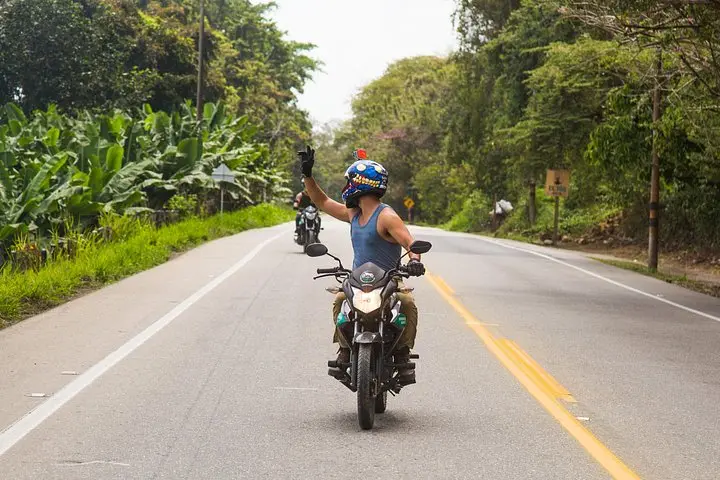
By midday, the group threads through shaded banana groves toward Palomino, where the road narrows, sand creeps in, and the ocean dares you to stop. On day one the ride is equal parts sightseeing and short, playful off-road bursts: river tubing on Buritaca’s lazy bends, lunch at a wood-fired pizzeria, and a night at El Rio hostel where hammocks and river noise rewrite the idea of simple comfort.
The region is layered—geologically young mountains rising out of the sea, a rare coastal range that shapes weather and ecosystems. Culturally, this stretch is long-inhabited territory of Tayrona peoples; their archaeological legacy includes the highland Ciudad Perdida (Lost City), a reminder that the jungle and peaks nearby have always hosted complex networks of human life. Spanish colonial ports later superimposed fishing villages and trade routes that still shape small town rhythms today.
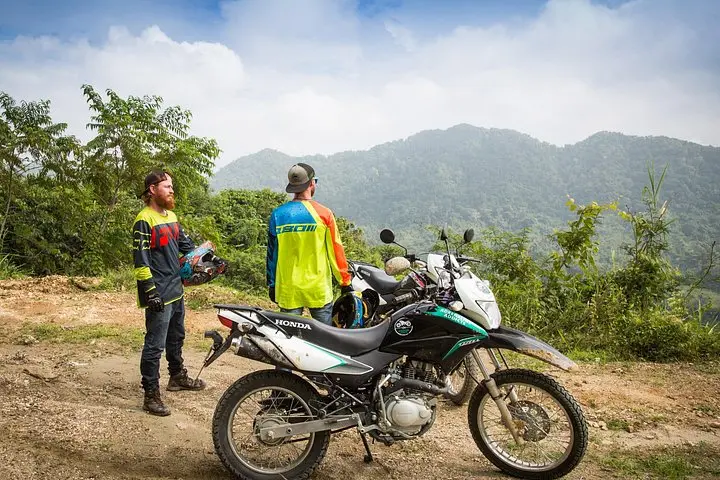
On day two the route leans into jungle: short stretches of dirt lead to Trailheads that prep you for an introduction to off-road riding toward the Lost City trail, waterfall cliff jumps at Quebrada Valencia, and a hidden cove inside Tayrona National Park. The contrast is striking—open sea one hour, dense canopy and tumbling streams the next.
Practical note: expect roughly 48 hours of travel with frequent stops; total riding distances vary by exact itinerary but typically stay under 200 km. Terrain is mostly coastal pavement with planned gravel or single-track sections—short climbs up to ~300 m, otherwise near sea level. Bring a DOT-approved helmet, sturdy boots, and a light, waterproof layer. Hydrate between stops—tropical sun and humid jungle will sap batteries quickly.
Safety and respect are central. Guides know which trails are stable and which rivers swell after rain; follow their briefings. Tayrona is a protected area—stick to marked paths, carry out trash, and avoid disturbing wildlife. For riders, a basic comfort with shifting and handling on dirt is recommended; passengers will find the pace friendly but lively.
By the end, the tour feels like a compressed education in Colombia’s northern edge: seaside speed, jungle hush, community kitchens, and the sense that every bend could reveal another secret beach or waterfall. It’s an active, sensory way to meet the Caribbean coast—fast enough to thrill, intentional enough to connect.
Drivers should have a valid motorcycle license and basic experience; passengers do not need a license—the tour accommodates riders and pillion guests.
The itinerary includes easy off-road sections but is designed for riders with basic handling skills; inexperienced riders should check with the operator about bike choice and support.
Pack light: change of clothes, swimwear, toiletries, a towel, insect repellent and a small flashlight—hostel accommodations provide basic bedding.
Yes—breakfast, lunches and dinners are listed in the itinerary and typically feature local fare and fresh seafood or pizza at local restaurants.
The operator may cancel if there are insufficient travelers; heavy rain can change off-road plans, but coastal pavement sections usually remain rideable—always follow guide instructions.
Age restrictions and suitability vary; the booking asks for age information—contact the operator to confirm family-friendly arrangements.
Adrenaline Addicts Motorcycle Tours and Rentals operates guided outdoor trips and adventures with an emphasis on safety, stewardship, and memorable experiences.
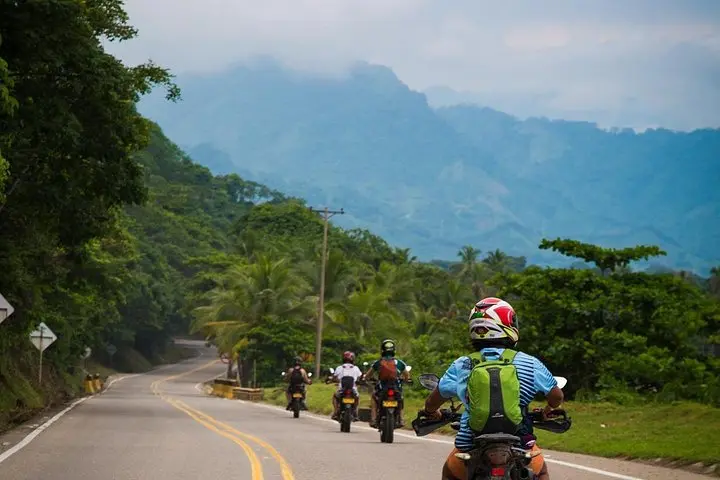
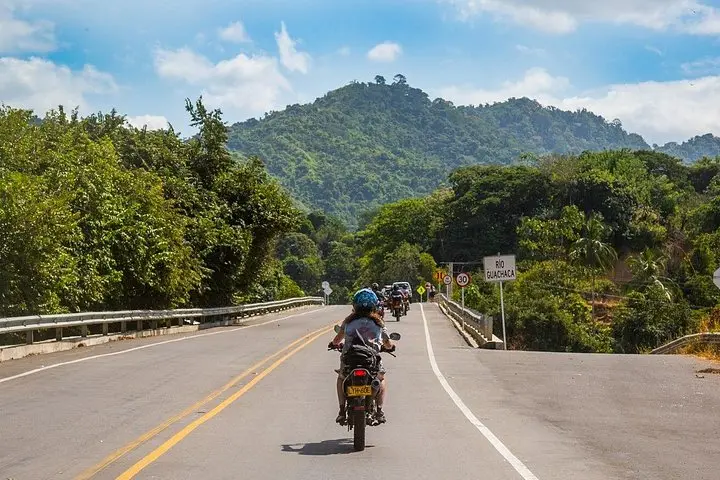
The engine’s steady thrum becomes part of the coastline’s soundtrack as the convoy peels away from Santa Marta at first light, tires kissing pavement framed by the Caribbean on one side and the abrupt ridges of the Sierra Nevada de Santa Marta on the other. Salt air and diesel mingle; gulls wheel ahead as the road climbs and drops over low coastal hills, offering quick vistas of surf-blackened rocks and a coastline that seems to breathe.
The engine’s steady thrum becomes part of the coastline’s soundtrack as the convoy peels away from Santa Marta at first light, tires kissing pavement framed by the Caribbean on one side and the abrupt ridges of the Sierra Nevada de Santa Marta on the other. Salt air and diesel mingle; gulls wheel ahead as the road climbs and drops over low coastal hills, offering quick vistas of surf-blackened rocks and a coastline that seems to breathe.
By midday, the group threads through shaded banana groves toward Palomino, where the road narrows, sand creeps in, and the ocean dares you to stop. On day one the ride is equal parts sightseeing and short, playful off-road bursts: river tubing on Buritaca’s lazy bends, lunch at a wood-fired pizzeria, and a night at El Rio hostel where hammocks and river noise rewrite the idea of simple comfort.
The region is layered—geologically young mountains rising out of the sea, a rare coastal range that shapes weather and ecosystems. Culturally, this stretch is long-inhabited territory of Tayrona peoples; their archaeological legacy includes the highland Ciudad Perdida (Lost City), a reminder that the jungle and peaks nearby have always hosted complex networks of human life. Spanish colonial ports later superimposed fishing villages and trade routes that still shape small town rhythms today.
On day two the route leans into jungle: short stretches of dirt lead to Trailheads that prep you for an introduction to off-road riding toward the Lost City trail, waterfall cliff jumps at Quebrada Valencia, and a hidden cove inside Tayrona National Park. The contrast is striking—open sea one hour, dense canopy and tumbling streams the next.
Practical note: expect roughly 48 hours of travel with frequent stops; total riding distances vary by exact itinerary but typically stay under 200 km. Terrain is mostly coastal pavement with planned gravel or single-track sections—short climbs up to ~300 m, otherwise near sea level. Bring a DOT-approved helmet, sturdy boots, and a light, waterproof layer. Hydrate between stops—tropical sun and humid jungle will sap batteries quickly.
Safety and respect are central. Guides know which trails are stable and which rivers swell after rain; follow their briefings. Tayrona is a protected area—stick to marked paths, carry out trash, and avoid disturbing wildlife. For riders, a basic comfort with shifting and handling on dirt is recommended; passengers will find the pace friendly but lively.
By the end, the tour feels like a compressed education in Colombia’s northern edge: seaside speed, jungle hush, community kitchens, and the sense that every bend could reveal another secret beach or waterfall. It’s an active, sensory way to meet the Caribbean coast—fast enough to thrill, intentional enough to connect.