THE ADVENTURE COLLECTIVE® · Independent discovery and booking for outdoor travel

Spend two days between Arequipa and the Colca Valley—rising to 4,900 m, staying with a Coporaque family, and watching Andean condors wheel over a canyon more than 3,400 m deep. This trip pairs geology and living culture with practical, high-altitude travel advice.
Spend two days between Arequipa and the Colca Valley—rising to 4,900 m, staying with a Coporaque family, and watching Andean condors wheel over a canyon more than 3,400 m deep. This trip pairs geology and living culture with practical, high-altitude travel advice.
You step out of the van into high, thin air and the Andes opens like a raw page—volcanic shoulders Misti, Chachani and distant Sabancaya framing a sky that feels close enough to touch. The road from Arequipa snakes through the Salinas and Aguada Blanca Reserve; herds of llamas and vicuñas graze the puna while wind pushes dust and cold across the plateau.
Verified experiences and guided adventures in the surrounding area.
Operated by Intiperu Travel · Coporaque, Arequipa
You step out of the van into high, thin air and the Andes opens like a raw page—volcanic shoulders Misti, Chachani and distant Sabancaya framing a sky that feels close enough to touch. The road from Arequipa snakes through the Salinas and Aguada Blanca Reserve; herds of llamas and vicuñas graze the puna while wind pushes dust and cold across the plateau.
This two-day loop threads natural history and living culture. Geology here is volcanic and erosional: steep-sided Colca Canyon slices the landscape to depths exceeding 3,400 meters, carved by rivers and time. Human imprint is equally ancient—pre-Inca terraces cling to canyon walls; colonial churches in villages like Coporaque and Chivay recall Spanish-era reorganization of Andean life.
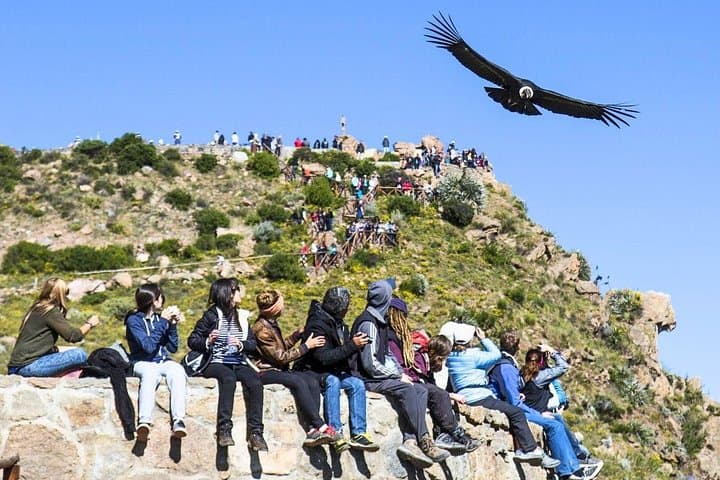
Day one centers on acclimatization and local exchange: coca tea at Patahuasi, a 45-minute guided walk across terraced fields or an archaeological visit to San Antonio, then a homestay dinner and traditional clothing demonstrations. Day two is dawn at Cruz del Cóndor to watch condors ride thermal columns over the gorge, followed by stops in Yanque and Maca to see vibrant local textiles and bustling plazas.
Practical guide: allow 3–4 hours driving each way from Arequipa, expect patapampa at about 4,900 m, and bring layered clothing for dramatic day-to-night swings. Hydrate aggressively before and during the trip, pack sun protection for the high-altitude glare, and wear sturdy footwear for uneven trails. The itinerary is non-technical but altitude-aware—move deliberately, respect local rhythms, and leave extra time for viewpoints and market stalls.
Expect roughly 3–4 hours to Chivay depending on stops; the tour includes scenic viewpoints that add time for photos and wildlife viewing.
Cruz del Cóndor is one of the best viewpoints to see condors; sightings are common at dawn when thermals form, though wildlife is never guaranteed.
Altitude affects people differently—symptoms are usually mild if you acclimatize, hydrate, avoid alcohol and move slowly; the tour carries oxygen and first aid.
Homestays offer simple, family-run accommodations with shared facilities and homemade meals—comfortable but basic, focused on cultural exchange.
Intiperu Travel operates guided outdoor trips and adventures with an emphasis on safety, stewardship, and memorable experiences.



You step out of the van into high, thin air and the Andes opens like a raw page—volcanic shoulders Misti, Chachani and distant Sabancaya framing a sky that feels close enough to touch. The road from Arequipa snakes through the Salinas and Aguada Blanca Reserve; herds of llamas and vicuñas graze the puna while wind pushes dust and cold across the plateau.
You step out of the van into high, thin air and the Andes opens like a raw page—volcanic shoulders Misti, Chachani and distant Sabancaya framing a sky that feels close enough to touch. The road from Arequipa snakes through the Salinas and Aguada Blanca Reserve; herds of llamas and vicuñas graze the puna while wind pushes dust and cold across the plateau.
This two-day loop threads natural history and living culture. Geology here is volcanic and erosional: steep-sided Colca Canyon slices the landscape to depths exceeding 3,400 meters, carved by rivers and time. Human imprint is equally ancient—pre-Inca terraces cling to canyon walls; colonial churches in villages like Coporaque and Chivay recall Spanish-era reorganization of Andean life.
Day one centers on acclimatization and local exchange: coca tea at Patahuasi, a 45-minute guided walk across terraced fields or an archaeological visit to San Antonio, then a homestay dinner and traditional clothing demonstrations. Day two is dawn at Cruz del Cóndor to watch condors ride thermal columns over the gorge, followed by stops in Yanque and Maca to see vibrant local textiles and bustling plazas.
Practical guide: allow 3–4 hours driving each way from Arequipa, expect patapampa at about 4,900 m, and bring layered clothing for dramatic day-to-night swings. Hydrate aggressively before and during the trip, pack sun protection for the high-altitude glare, and wear sturdy footwear for uneven trails. The itinerary is non-technical but altitude-aware—move deliberately, respect local rhythms, and leave extra time for viewpoints and market stalls.