THE ADVENTURE COLLECTIVE® · Independent discovery and booking for outdoor travel

Two days in Colca Valley compress deep canyon scenery, condor viewing, thermal springs and centuries-old terraces into an accessible shared tour from Arequipa. Expect high-altitude drives, short walks, and cultural stops in villages like Chivay.
Two days in Colca Valley compress deep canyon scenery, condor viewing, thermal springs and centuries-old terraces into an accessible shared tour from Arequipa. Expect high-altitude drives, short walks, and cultural stops in villages like Chivay.
Dawn on the high plateau arrives cold and clear. The minivan hums up from Arequipa, and by mid-morning you stand at Patapampa—the road’s high saddle—where wind sculpts the volcanic skyline and Sabancaya exhales steam like a slow breath.
Verified experiences and guided adventures in the surrounding area.
Operated by Abelardo Garrafa Quispe · Chivay, Arequipa
Dawn on the high plateau arrives cold and clear. The minivan hums up from Arequipa, and by mid-morning you stand at Patapampa—the road’s high saddle—where wind sculpts the volcanic skyline and Sabancaya exhales steam like a slow breath.
The Colca Valley is carved by geology and human hands: the canyon is one of the world’s deepest, cut through volcanic and sedimentary rock over millennia, while Inca and pre-Inca terraces cling to slopes, still farmed today. Small towns—Yanque, Maca, Chivay—hold whitewashed churches, markets, and a living folk tradition you’ll glimpse at an optional dinner with dancers and Andean music.
Wildlife defines much of the experience. The Cruz del Cóndor viewpoint stages the condor’s thermals; vicuñas and Andean geese appear along the reserve. Hot springs outside Chivay pulse at 34–38°C, offering a quiet counterpoint to canyon vistas.
Practical guidance: this shared, two-day tour uses road transfers and short walks, so expect long drives at altitude (Patapampa ~4,910 m). Hydrate before departure, take coca tea breaks, and set a relaxed pace to avoid acute altitude effects. Bring layered clothing for sharp temperature swings, sturdy shoes for uneven lookouts, and sun protection—UV is intense here. Carry cash for local snacks and entry fees not included. Morning light is best for condor viewing; arrive early at Cruz del Cóndor. The tour balances scenic stops, cultural encounters, and restful interludes in hot springs—an accessible way to experience Colca’s geology, wildlife, and living Andean culture across two compact days.
Yes—infants must sit on laps; the itinerary involves vehicle time and short walks, but consider altitude effects for very young children.
Condor sightings at Cruz del Cóndor are common in the early morning when thermal currents lift them, though wildlife sightings are never guaranteed.
Breakfast and one night’s lodging are included; lunches and optional dinner shows are generally not included—carry local currency for restaurant stops.
Acclimatize in Arequipa, drink plenty of fluids, use coca tea if offered, and consult a physician about medication if you have cardiac or respiratory concerns.
Abelardo Garrafa Quispe operates guided outdoor trips and adventures with an emphasis on safety, stewardship, and memorable experiences.
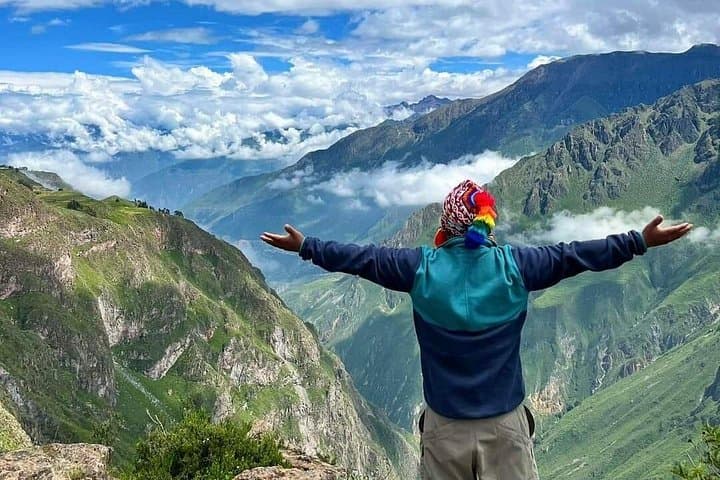


Dawn on the high plateau arrives cold and clear. The minivan hums up from Arequipa, and by mid-morning you stand at Patapampa—the road’s high saddle—where wind sculpts the volcanic skyline and Sabancaya exhales steam like a slow breath.
Dawn on the high plateau arrives cold and clear. The minivan hums up from Arequipa, and by mid-morning you stand at Patapampa—the road’s high saddle—where wind sculpts the volcanic skyline and Sabancaya exhales steam like a slow breath.
The Colca Valley is carved by geology and human hands: the canyon is one of the world’s deepest, cut through volcanic and sedimentary rock over millennia, while Inca and pre-Inca terraces cling to slopes, still farmed today. Small towns—Yanque, Maca, Chivay—hold whitewashed churches, markets, and a living folk tradition you’ll glimpse at an optional dinner with dancers and Andean music.
Wildlife defines much of the experience. The Cruz del Cóndor viewpoint stages the condor’s thermals; vicuñas and Andean geese appear along the reserve. Hot springs outside Chivay pulse at 34–38°C, offering a quiet counterpoint to canyon vistas.
Practical guidance: this shared, two-day tour uses road transfers and short walks, so expect long drives at altitude (Patapampa ~4,910 m). Hydrate before departure, take coca tea breaks, and set a relaxed pace to avoid acute altitude effects. Bring layered clothing for sharp temperature swings, sturdy shoes for uneven lookouts, and sun protection—UV is intense here. Carry cash for local snacks and entry fees not included. Morning light is best for condor viewing; arrive early at Cruz del Cóndor. The tour balances scenic stops, cultural encounters, and restful interludes in hot springs—an accessible way to experience Colca’s geology, wildlife, and living Andean culture across two compact days.