THE ADVENTURE COLLECTIVE® · Independent discovery and booking for outdoor travel

Two days of highland panoramas and living Andean culture: travel the Sun Route from Cusco to Puno, visit Raqchi and Andahuaylillas, then cross Lake Titicaca to the Uros reed islands and Taquile. Expect high elevations, cultural immersion, and hands-on history.
Two days of highland panoramas and living Andean culture: travel the Sun Route from Cusco to Puno, visit Raqchi and Andahuaylillas, then cross Lake Titicaca to the Uros reed islands and Taquile. Expect high elevations, cultural immersion, and hands-on history.
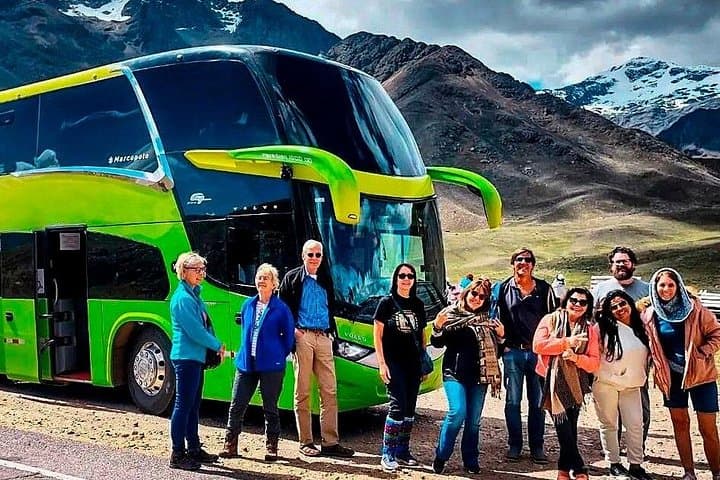
The bus slips out of Cusco before dawn, headlights cutting through thin Andean air as the altiplano opens into wide, wind-swept plains. By mid-morning the convoy reaches La Raya pass (4,335 m / 14,222 ft): snow-scratched peaks ring the horizon, and alpacas pick at the short grass while the wind seems to push you forward.
Verified experiences and guided adventures in the surrounding area.
Operated by Machupicchu Peru Journeys · Puno, Puno Region
The bus slips out of Cusco before dawn, headlights cutting through thin Andean air as the altiplano opens into wide, wind-swept plains. By mid-morning the convoy reaches La Raya pass (4,335 m / 14,222 ft): snow-scratched peaks ring the horizon, and alpacas pick at the short grass while the wind seems to push you forward.
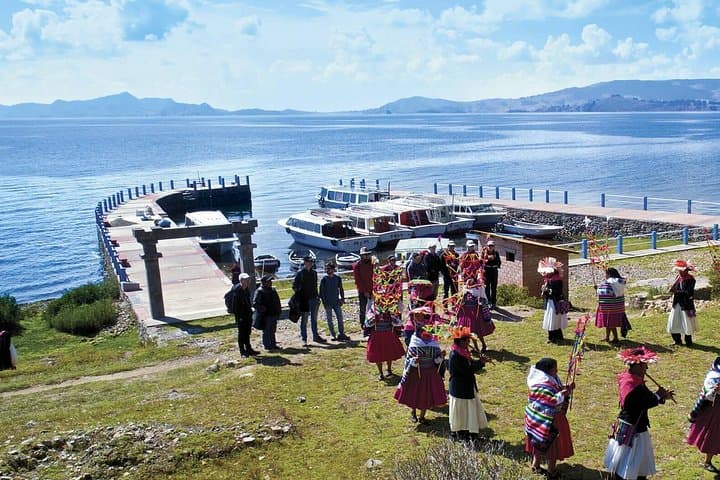
This two-day itinerary threads colonial, pre-Inca and living Indigenous cultures. Visit Andahuaylillas, the 16th-century church famed for baroque murals and a Spanish organ; Raqchi, the massive adobe temple of Wiracocha and its colcas; and the Pukara museum tracing societies that predate the Inca. The journey ends on Lake Titicaca — the highest navigable lake on Earth — where Uros reed islands and Taquile's terraced shores show resilience and craftsmanship: reed houses float and Taquile knitters maintain a communal textile system recognized by UNESCO.
Geologically the route crosses the Andean Altiplano, where glacially carved valleys give way to volcanic and sedimentary ridges; hydrology here feeds clear highland streams into Titicaca's basin. Culturally, expect direct exchanges: guided island visits include home-cooked lunch and demonstrations of reed construction and weaving.
Practical guardrails: plan for altitude (48 hours of light acclimatization recommended), pack layers and sunscreen, and bring cash for local markets. Walks on Taquile are steep and uneven — good hiking shoes matter. Boats are usually motorized with short crossings; motion-sickness remedies help. Finally, support local guides and crafts: responsible visits preserve both economy and lake ecology.
The route reaches 4,335 m at La Raya pass; many travelers feel mild symptoms. Hydrate, rest the day before, and use coca tea or tablets if advised by a doctor.
Taquile includes a 30–60 minute uphill walk with steps and terraces; Uros involves short flat strolls on reed platforms—comfortable shoes recommended.
Two lunches are included: one en route (Sicuani) and one on Taquile, typically local trout or vegetarian options.
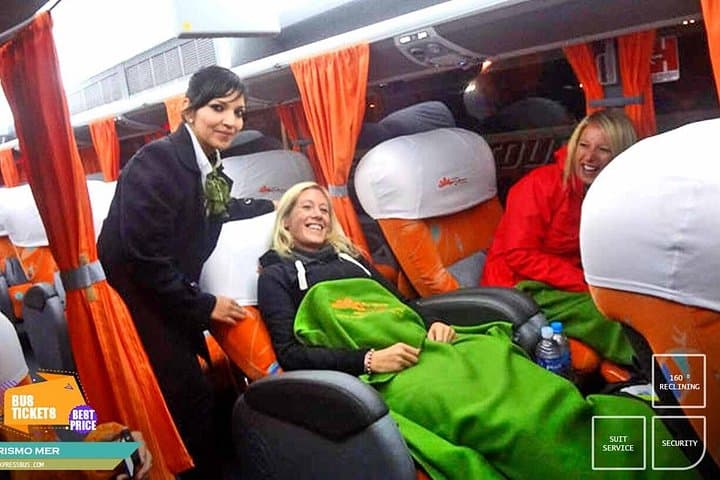
The tour uses modern buses with scheduled bathroom stops; however, high altitude and some walking may be challenging for those with cardiovascular issues.
Machupicchu Peru Journeys operates guided outdoor trips and adventures with an emphasis on safety, stewardship, and memorable experiences.

The bus slips out of Cusco before dawn, headlights cutting through thin Andean air as the altiplano opens into wide, wind-swept plains. By mid-morning the convoy reaches La Raya pass (4,335 m / 14,222 ft): snow-scratched peaks ring the horizon, and alpacas pick at the short grass while the wind seems to push you forward.
The bus slips out of Cusco before dawn, headlights cutting through thin Andean air as the altiplano opens into wide, wind-swept plains. By mid-morning the convoy reaches La Raya pass (4,335 m / 14,222 ft): snow-scratched peaks ring the horizon, and alpacas pick at the short grass while the wind seems to push you forward.
This two-day itinerary threads colonial, pre-Inca and living Indigenous cultures. Visit Andahuaylillas, the 16th-century church famed for baroque murals and a Spanish organ; Raqchi, the massive adobe temple of Wiracocha and its colcas; and the Pukara museum tracing societies that predate the Inca. The journey ends on Lake Titicaca — the highest navigable lake on Earth — where Uros reed islands and Taquile's terraced shores show resilience and craftsmanship: reed houses float and Taquile knitters maintain a communal textile system recognized by UNESCO.
Geologically the route crosses the Andean Altiplano, where glacially carved valleys give way to volcanic and sedimentary ridges; hydrology here feeds clear highland streams into Titicaca's basin. Culturally, expect direct exchanges: guided island visits include home-cooked lunch and demonstrations of reed construction and weaving.
Practical guardrails: plan for altitude (48 hours of light acclimatization recommended), pack layers and sunscreen, and bring cash for local markets. Walks on Taquile are steep and uneven — good hiking shoes matter. Boats are usually motorized with short crossings; motion-sickness remedies help. Finally, support local guides and crafts: responsible visits preserve both economy and lake ecology.