THE ADVENTURE COLLECTIVE® · Independent discovery and booking for outdoor travel

Travel from Marrakech over the High Atlas to Erg Lihoudi for a one-night Berber camp and camel trek. Experience dunes at sunset, a sunrise over Sahara sands, and local Amazigh hospitality on this compact desert escape.
Travel from Marrakech over the High Atlas to Erg Lihoudi for a one-night Berber camp and camel trek. Experience dunes at sunset, a sunrise over Sahara sands, and local Amazigh hospitality on this compact desert escape.
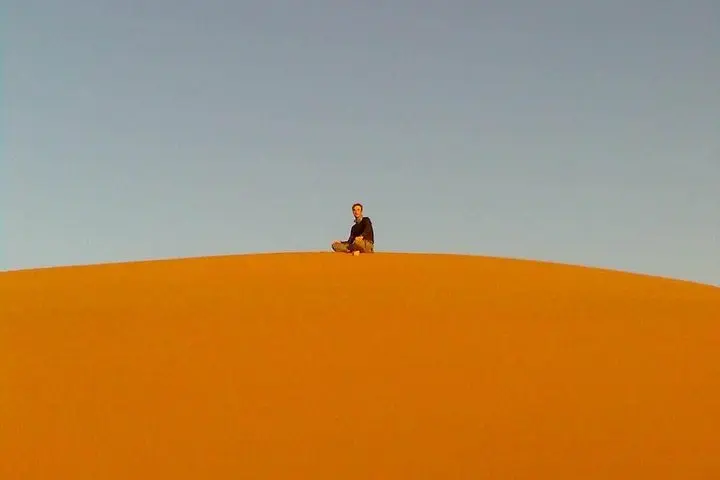
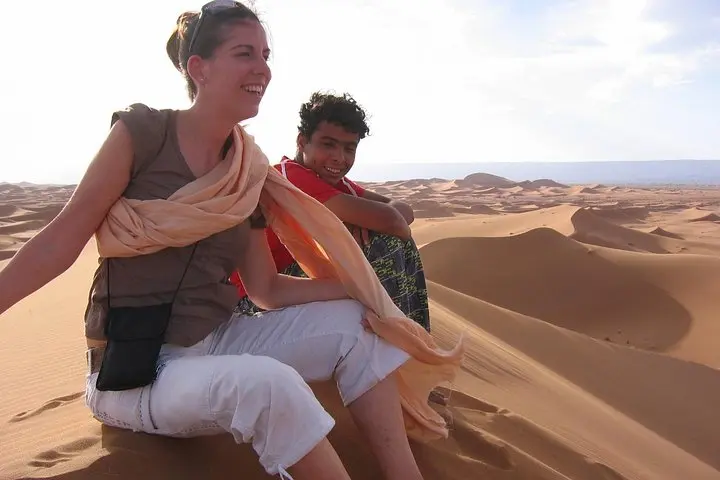
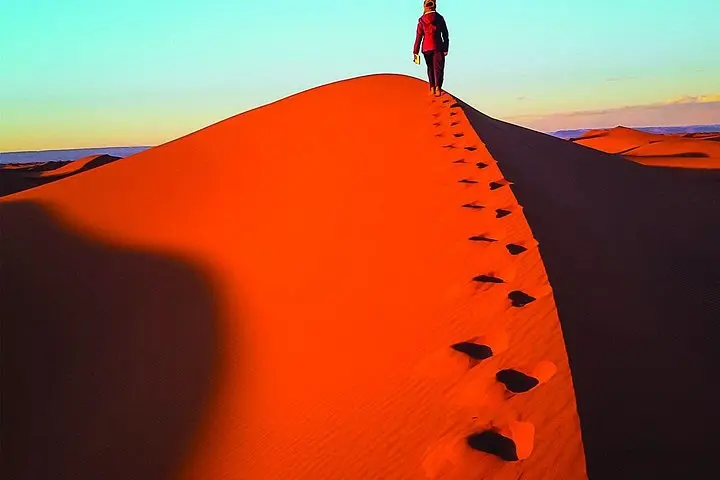
The sun slants low as the road to the Sahara unwinds from Marrakech — red earth gives way to scrub and then to the long ribs of the High Atlas. By mid-afternoon the highway climbs Tizi n’Tichka pass; the atlas wind pulls at your jacket and the view opens into terraces and stone Berber villages. The true quiet arrives at M’Hamid where camels kneel like patient engines and the dunes of Erg Lihoudi wait to receive your footprints.
Verified experiences and guided adventures in the surrounding area.
Operated by Zagora Desert Travel · M'Hamid El Ghizlane, Drâa-Tafilalet
The sun slants low as the road to the Sahara unwinds from Marrakech — red earth gives way to scrub and then to the long ribs of the High Atlas. By mid-afternoon the highway climbs Tizi n’Tichka pass; the atlas wind pulls at your jacket and the view opens into terraces and stone Berber villages. The true quiet arrives at M’Hamid where camels kneel like patient engines and the dunes of Erg Lihoudi wait to receive your footprints.
This route follows ancient caravan corridors that once linked Marrakech to Timbuktu; Ait Ben Haddou appears midway, a mud-brick kasbah that records the region’s fortified trade history. Geologically the dunes are mobile sand sheets deposited by wind over millennia, sitting atop alluvial fans from the Draa Valley. Local culture is rooted in Amazigh (Berber) traditions — guides and camp hosts share tea, stories, and music around the fire under a broad Saharan sky.
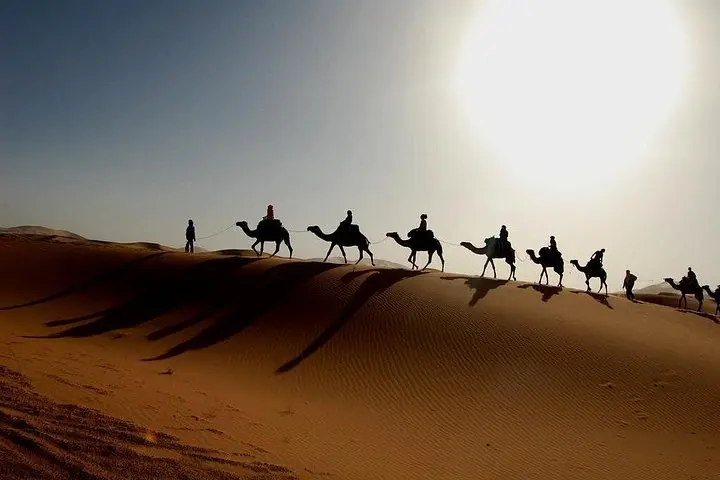
Expect long, scenic driving across the High Atlas and Draa palm oases, a one-hour camel trek to camp, a night in a tented Berber camp, and sunrise over the dunes. Meals are local and often vegetarian-friendly; guides often speak multiple languages.
Practical notes: bring layered clothing for hot days and cold nights, sun protection, and a refillable water bottle. Footwear should handle sand and rocky roadside stops. If you’re sensitive to motion, prepare for long vehicle stretches over mountain passes. The itinerary suits travelers seeking an accessible but authentic short desert immersion.
The camel trek to the camp is typically about one hour each way — paced for comfort rather than speed.
Yes; guides request dietary needs at booking and camps usually offer vegetarian options and local fare.
Camps provide basic tents and bedding; it’s comfortable enough for most travelers but expect rustic facilities and shared wash areas.
Pick-up and drop-off are arranged in Marrakech; exact timing and pickup point are confirmed at booking.
Zagora Desert Travel operates guided outdoor trips and adventures with an emphasis on safety, stewardship, and memorable experiences.
The sun slants low as the road to the Sahara unwinds from Marrakech — red earth gives way to scrub and then to the long ribs of the High Atlas. By mid-afternoon the highway climbs Tizi n’Tichka pass; the atlas wind pulls at your jacket and the view opens into terraces and stone Berber villages. The true quiet arrives at M’Hamid where camels kneel like patient engines and the dunes of Erg Lihoudi wait to receive your footprints.
The sun slants low as the road to the Sahara unwinds from Marrakech — red earth gives way to scrub and then to the long ribs of the High Atlas. By mid-afternoon the highway climbs Tizi n’Tichka pass; the atlas wind pulls at your jacket and the view opens into terraces and stone Berber villages. The true quiet arrives at M’Hamid where camels kneel like patient engines and the dunes of Erg Lihoudi wait to receive your footprints.
This route follows ancient caravan corridors that once linked Marrakech to Timbuktu; Ait Ben Haddou appears midway, a mud-brick kasbah that records the region’s fortified trade history. Geologically the dunes are mobile sand sheets deposited by wind over millennia, sitting atop alluvial fans from the Draa Valley. Local culture is rooted in Amazigh (Berber) traditions — guides and camp hosts share tea, stories, and music around the fire under a broad Saharan sky.
Expect long, scenic driving across the High Atlas and Draa palm oases, a one-hour camel trek to camp, a night in a tented Berber camp, and sunrise over the dunes. Meals are local and often vegetarian-friendly; guides often speak multiple languages.
Practical notes: bring layered clothing for hot days and cold nights, sun protection, and a refillable water bottle. Footwear should handle sand and rocky roadside stops. If you’re sensitive to motion, prepare for long vehicle stretches over mountain passes. The itinerary suits travelers seeking an accessible but authentic short desert immersion.