THE ADVENTURE COLLECTIVE® · Independent discovery and booking for outdoor travel

Cross cedar forests and palm oases from Fez to the dunes of Erg Chebbi on a compact two-day excursion. Ride camels to a desert camp, sleep under the stars, and climb the dunes at dawn for a classic Sahara sunrise.
Cross cedar forests and palm oases from Fez to the dunes of Erg Chebbi on a compact two-day excursion. Ride camels to a desert camp, sleep under the stars, and climb the dunes at dawn for a classic Sahara sunrise.
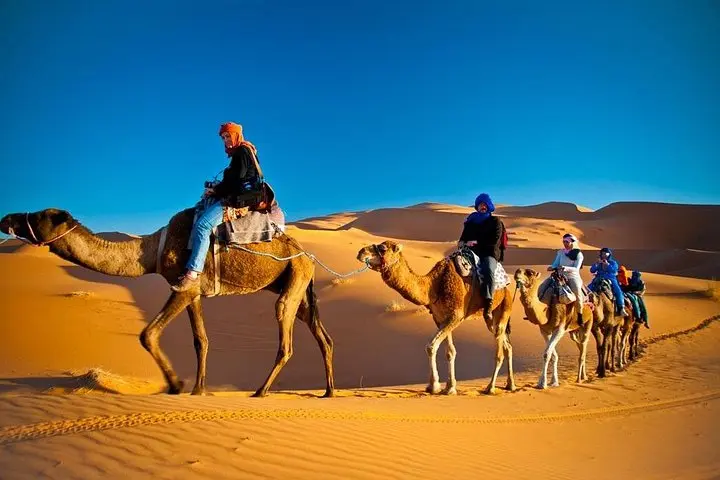
Sunlight thins as the Atlas range gives way to ochre and wind-sculpted ridges; by late afternoon the dunes of Erg Chebbi rise like a living wall, their slopes catching the gold of sunset. On this two-day route from Fez, the landscape changes from cedar forests and French-built chalet architecture in Ifrane to the palm-lined gorges of the Ziz Valley, finishing with the hummocked sand of Merzouga where camels and a Berber camp await.
Verified experiences and guided adventures in the surrounding area.
Operated by Morocco Easy Travel · Merzouga, Drâa-Tafilalet
Sunlight thins as the Atlas range gives way to ochre and wind-sculpted ridges; by late afternoon the dunes of Erg Chebbi rise like a living wall, their slopes catching the gold of sunset. On this two-day route from Fez, the landscape changes from cedar forests and French-built chalet architecture in Ifrane to the palm-lined gorges of the Ziz Valley, finishing with the hummocked sand of Merzouga where camels and a Berber camp await.
The route traces centuries of trans-Saharan movement; Rissani’s market town marks old caravan paths and Midelt’s fossil-rich outcrops speak to the region’s deep geological past. Culture here is Berber—simple keramics, tea rituals and tents pitched under a wide sky. Geologically, the Middle Atlas is folded limestone and sandstone; farther southeast the Sahara’s aeolian processes build the tall, shifting dunes of Erg Chebbi.
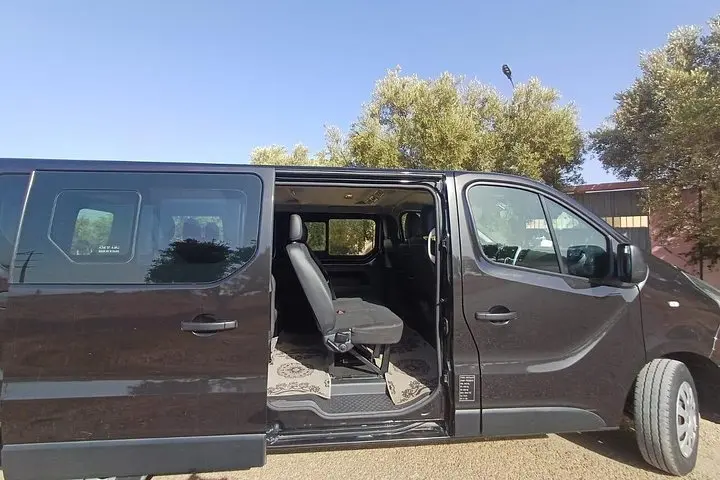
Practically, expect roughly 7–8 hours of driving on day one with stops (Fez to Merzouga), a late-afternoon two-hour camel trek to camp, an evening meal and open-sky sleeping in desert tents, and a pre-dawn dune climb for sunrise before returning by 4x4 to Fez. Pack sun protection, wind layers for the cool desert night, and a small daypack for essentials. Hydrate before and during drives, wear closed shoes for dune walking, and keep motion-sickness remedies if long drives unsettle you.
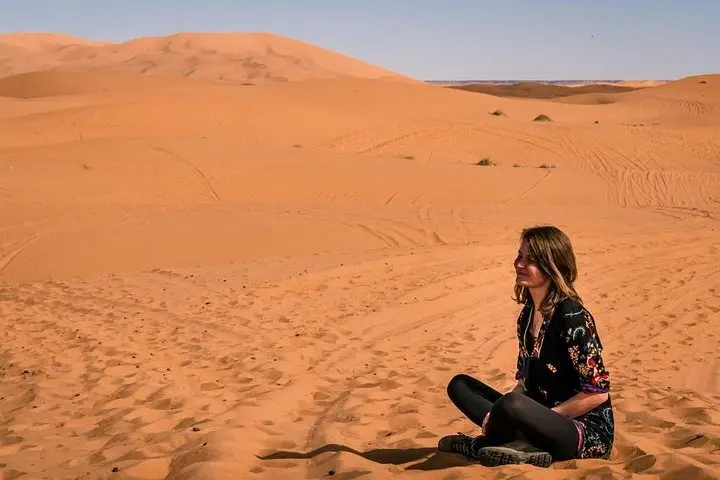
This itinerary is accessible to most travelers but rewards basic preparation: strong shoes for sand, a warm layer for chilly nights, and an early wake for one of Morocco’s most cinematic sunrises.
The camel trek is about 1.5–2 hours from Merzouga to the camp, timed to arrive for sunset.
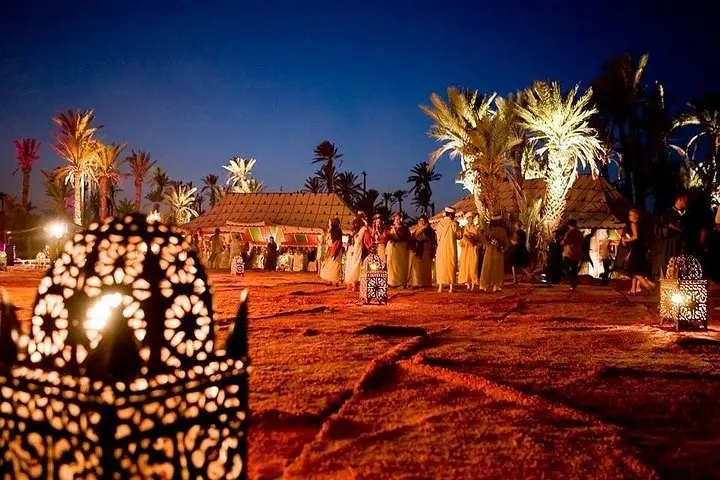
Camps provide desert tents with sleeping pads or simple beds, a shared dinner and wash facilities; expect rustic comfort and communal spaces.
Visa requirements depend on your nationality—check Moroccan entry rules before travel and carry a photocopy of your passport during the trip.
Yes; the tour lists as suitable for most fitness levels, but notify the operator of special needs and consider the camel ride and early start for sunrise.
Morocco Easy Travel operates guided outdoor trips and adventures with an emphasis on safety, stewardship, and memorable experiences.
Sunlight thins as the Atlas range gives way to ochre and wind-sculpted ridges; by late afternoon the dunes of Erg Chebbi rise like a living wall, their slopes catching the gold of sunset. On this two-day route from Fez, the landscape changes from cedar forests and French-built chalet architecture in Ifrane to the palm-lined gorges of the Ziz Valley, finishing with the hummocked sand of Merzouga where camels and a Berber camp await.
Sunlight thins as the Atlas range gives way to ochre and wind-sculpted ridges; by late afternoon the dunes of Erg Chebbi rise like a living wall, their slopes catching the gold of sunset. On this two-day route from Fez, the landscape changes from cedar forests and French-built chalet architecture in Ifrane to the palm-lined gorges of the Ziz Valley, finishing with the hummocked sand of Merzouga where camels and a Berber camp await.
The route traces centuries of trans-Saharan movement; Rissani’s market town marks old caravan paths and Midelt’s fossil-rich outcrops speak to the region’s deep geological past. Culture here is Berber—simple keramics, tea rituals and tents pitched under a wide sky. Geologically, the Middle Atlas is folded limestone and sandstone; farther southeast the Sahara’s aeolian processes build the tall, shifting dunes of Erg Chebbi.
Practically, expect roughly 7–8 hours of driving on day one with stops (Fez to Merzouga), a late-afternoon two-hour camel trek to camp, an evening meal and open-sky sleeping in desert tents, and a pre-dawn dune climb for sunrise before returning by 4x4 to Fez. Pack sun protection, wind layers for the cool desert night, and a small daypack for essentials. Hydrate before and during drives, wear closed shoes for dune walking, and keep motion-sickness remedies if long drives unsettle you.
This itinerary is accessible to most travelers but rewards basic preparation: strong shoes for sand, a warm layer for chilly nights, and an early wake for one of Morocco’s most cinematic sunrises.