THE ADVENTURE COLLECTIVE® · Independent discovery and booking for outdoor travel

A compact two-day loop from Marrakech across the High Atlas to Ait Ben Haddou and down into the Draa Valley and Zagora dunes. Expect mountain passes, a UNESCO kasbah visit, a camel ride at sunset, and an overnight in a Berber desert camp.
A compact two-day loop from Marrakech across the High Atlas to Ait Ben Haddou and down into the Draa Valley and Zagora dunes. Expect mountain passes, a UNESCO kasbah visit, a camel ride at sunset, and an overnight in a Berber desert camp.
A cool dawn light slides off the High Atlas as the minivan climbs Tizi n'Tichka; terraces and mud-brick villages pass like frames in a slow film. By midmorning, Ait Ben Haddou’s earthen kasbahs rise from the valley floor—walls warmed by the sun, alleys that once sheltered caravans now hosting film crews and local guides.
Verified experiences and guided adventures in the surrounding area.
Operated by Dream Voyage Touristique - Day Tours · Marrakech, Marrakesh-Safi
A cool dawn light slides off the High Atlas as the minivan climbs Tizi n'Tichka; terraces and mud-brick villages pass like frames in a slow film. By midmorning, Ait Ben Haddou’s earthen kasbahs rise from the valley floor—walls warmed by the sun, alleys that once sheltered caravans now hosting film crews and local guides.
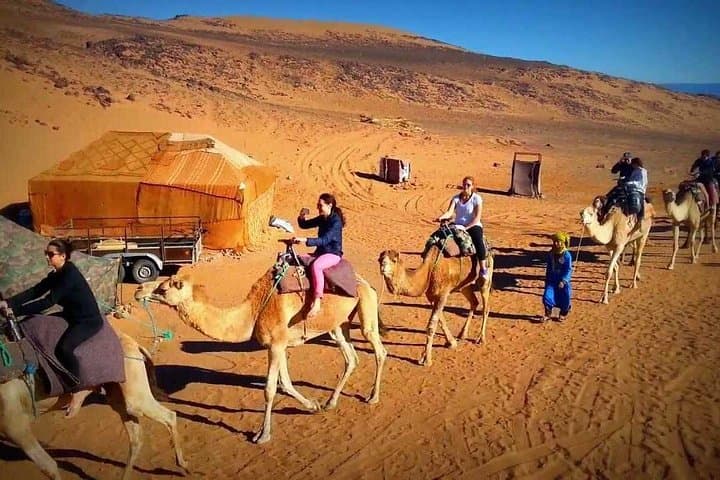
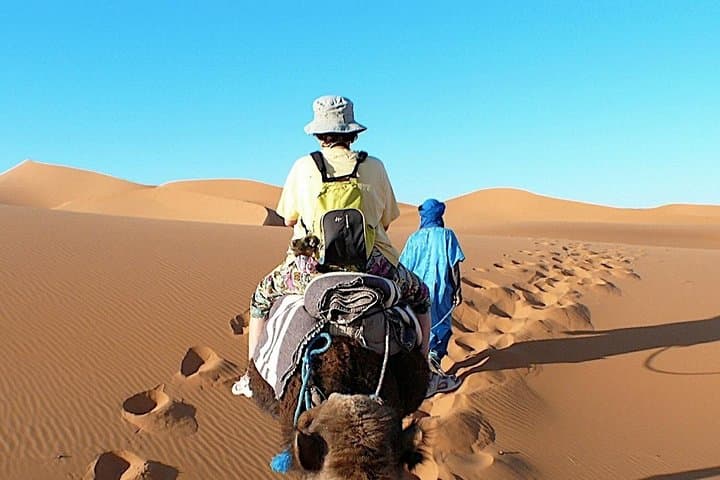
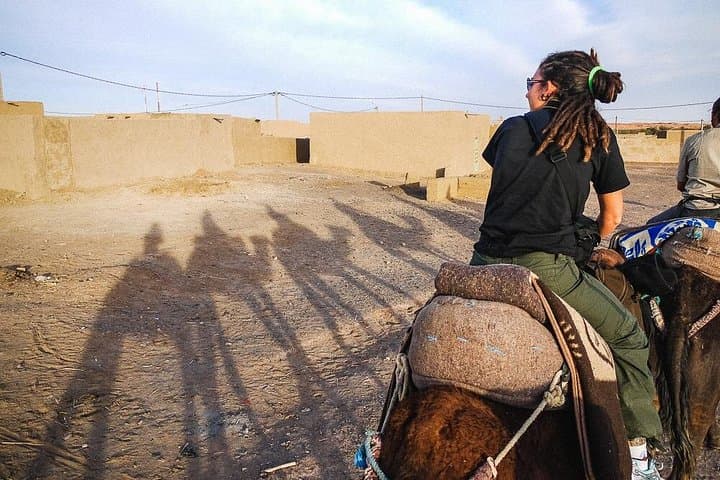
The second day trades high passes for the long, green ribbon of the Draa—date palms leaning into the river’s rare moisture—and finally the Zagora dunes, where camels steady riders for a sunset that turns sand to copper. The camp is simple: Berber tents, a communal fire, and a horizon that refuses to stop changing.
Geology here is blunt and readable: folded Atlas ranges of metamorphic rock give way to alluvial fans and wind-sculpted siliciclastic dunes. Culturally, kasbahs mark the legacy of trans-Saharan trade and local defense; many sites are maintained by families whose crafts supply the region. Expect guide-led history at Ait Ben Haddou and light interpretation en route.
Practical guidance: depart early from Marrakech to avoid midday heat in summer, allow a light jacket for mountain passes where temperatures drop, and bring at least 2–3 liters of water per day. Footwear should handle uneven village streets and short dune walks; pack motion-sickness remedies for winding passes. Camel rides are gentle but bring sunscreen and a dust buff for the saddle.
This two-day loop balances cultural stops and quiet desert time—ideal for travelers who want accessible wilderness with structured logistics and a clear rhythm of movement and rest.
The tour departs from Marrakech (hotel pickup) and returns to Marrakech on day two; pickup details are confirmed at booking.
Yes; camel treks are short and designed for novices—guides assist mounting and pacing, and you can walk instead if you prefer.
Bring a small to medium duffel; space in the vehicle is limited and large suitcases are discouraged—your driver can advise on volume limits.
Half-board (dinner and breakfast) and bottled water are included; plan for lunches and any personal purchases en route.
Dream Voyage Touristique - Day Tours operates guided outdoor trips and adventures with an emphasis on safety, stewardship, and memorable experiences.
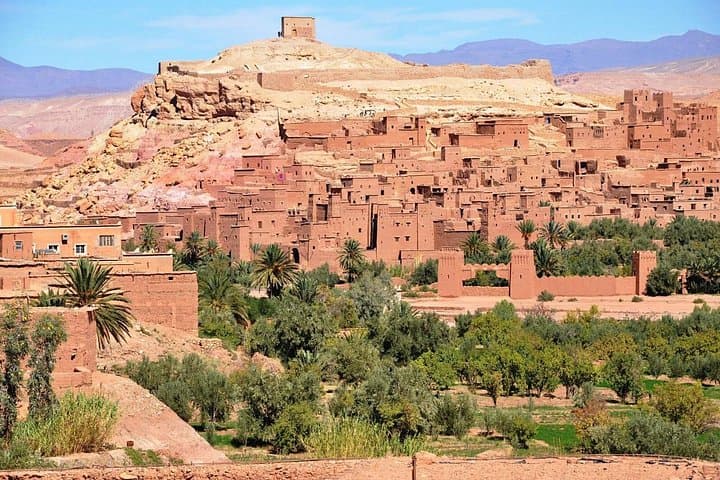
A cool dawn light slides off the High Atlas as the minivan climbs Tizi n'Tichka; terraces and mud-brick villages pass like frames in a slow film. By midmorning, Ait Ben Haddou’s earthen kasbahs rise from the valley floor—walls warmed by the sun, alleys that once sheltered caravans now hosting film crews and local guides.
A cool dawn light slides off the High Atlas as the minivan climbs Tizi n'Tichka; terraces and mud-brick villages pass like frames in a slow film. By midmorning, Ait Ben Haddou’s earthen kasbahs rise from the valley floor—walls warmed by the sun, alleys that once sheltered caravans now hosting film crews and local guides.
The second day trades high passes for the long, green ribbon of the Draa—date palms leaning into the river’s rare moisture—and finally the Zagora dunes, where camels steady riders for a sunset that turns sand to copper. The camp is simple: Berber tents, a communal fire, and a horizon that refuses to stop changing.
Geology here is blunt and readable: folded Atlas ranges of metamorphic rock give way to alluvial fans and wind-sculpted siliciclastic dunes. Culturally, kasbahs mark the legacy of trans-Saharan trade and local defense; many sites are maintained by families whose crafts supply the region. Expect guide-led history at Ait Ben Haddou and light interpretation en route.
Practical guidance: depart early from Marrakech to avoid midday heat in summer, allow a light jacket for mountain passes where temperatures drop, and bring at least 2–3 liters of water per day. Footwear should handle uneven village streets and short dune walks; pack motion-sickness remedies for winding passes. Camel rides are gentle but bring sunscreen and a dust buff for the saddle.
This two-day loop balances cultural stops and quiet desert time—ideal for travelers who want accessible wilderness with structured logistics and a clear rhythm of movement and rest.